Tyres and wheels for Audi S4, wheel size on Ауди С4
Подбор шин и дисков по автомобилю Ауди С4

Другие модели Audi
Audi 100, Audi 200, Audi 4000, Audi 5+5, Audi 5000, Audi 80, Audi 90, Audi A1, Audi A1 allstreet, Audi A1 citycarver, Audi A2, Audi A3, Audi A3 allstreet, Audi A3L, Audi A4, Audi A4 Allroad, Audi A4L, Audi A5, Audi A5L, Audi A6, Audi A6 Allroad, Audi A6 e-tron, Audi A6L, Audi A7, Audi A7L, Audi A8, Audi A8L, Audi Allroad, Audi Cabriolet, Audi Coupe, Audi e-tron, Audi e-tron GT, Audi e-tron S, Audi e-tron S Sportback, Audi e-tron Sportback, Audi Q2, Audi Q2L, Audi Q2L e-tron, Audi Q3, Audi Q3 Sportback, Audi Q4, Audi Q4 Sportback, Audi Q5, Audi Q5 e-tron, Audi Q5 Sportback, Audi Q5L, Audi Q5L Sportback, Audi Q6, Audi Q6 e-tron, Audi Q6 Sportback e-tron, Audi Q6L e-tron, Audi Q6L Sportback e-tron, Audi Q7, Audi Q8, Audi Q8 e-tron, Audi Q8 Sportback e-tron, Audi R8, Audi RS e-tron GT, Audi RS Q3, Audi RS Q3 Sportback, Audi RS Q8, Audi RS2, Audi RS3, Audi RS4, Audi RS5, Audi RS6, Audi RS7, Audi S e-tron GT, Audi S1, Audi S2, Audi S3, Audi S4, Audi S5, Audi S6, Audi S6 e-tron, Audi S7, Audi S8, Audi S8L, Audi SQ2, Audi SQ5, Audi SQ5 Sportback, Audi SQ6 e-tron, Audi SQ6 Sportback e-tron, Audi SQ7, Audi SQ8, Audi SQ8 e-tron, Audi SQ8 Sportback e-tron, Audi TT, Audi TT RS, Audi TTS, Audi V8,
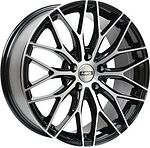
Tires on Audi S4
- Tyre size from R15 to R19, width from 195 to 245 and profile from 35 to 65.
- Minimum tyre size: 195/65 R15, maximum: 245/40 R18







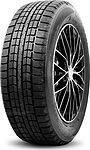
Tires on Audi S4 (Ауди)
Currently, the Audi S4 is part of the compact car lineup A4, representing a high-performance version of the standard model. It has been in production since 1991.Initial Version
The car's debut in the German brand's production lineup took place in August 1991. The car was positioned as a successor to the outdated 200 turbo at that time and was created based on the 100th model with the C4 index, belonging to the D segment. The key feature was the engine, inherited from its predecessor. The inline gasoline "five" with 4 valves per cylinder with a volume of 2.2 liters had a turbocharger with intermediate cooling, thanks to which its power was 230 horsepower, and the torque was 350 Nm. The power unit worked in "pair" with a 6-speed manual transmission and an all-wheel-drive system Quattro with Torsen of the first generation, already present in the standard configuration. Later, the manufacturer introduced an even more powerful version Plus, which was released in a very small number of copies. It differed in the presence of a V8 with a volume of 4.2 liters under the hood, as well as an upgraded braking system.Type B5
In 1997, the German brand introduced the next generation of the car. It no longer had any connection with its predecessor, being created based on the more compact A4, where the B5 platform was used. It differed from the standard model primarily in the engine - a 2.7-liter gasoline V6 with a cylinder bank angle of 90 degrees and two turbochargers, a 30-valve cylinder head. The power of the power unit was 247 horsepower, and the torque was 350 Nm. In the "base" versions, the power unit worked with a 6-speed manual transmission and an all-wheel-drive system Quattro. In the list of options, for the first time in the history of this model, a 5-speed "automatic" Tiptronic was available. Another difference was the chassis. In the front, each wheel had 4 separate levers, and in the rear, the suspension was 2-lever, but with elements of different lengths.Type B6 and B7
In 2003, the next-generation car debuted, updated shortly after the standard A4. And already at the start of sales, this was a line of models that, in addition to the sedan and station wagon, included a 2-door convertible with four seats. The new platform made it possible to install an even more powerful power unit. This time it was an aluminum V8 with a volume of 4.2 liters, taken from the flagship A8 sedan, developing 344 horsepower and 410 Nm. Due to the small space under the hood, engineers had to significantly redo the row of attached equipment. In particular, the alternator received not only separate radiators on the sides but also water cooling.Two years later, the German brand introduced a car of the next generation. In essence, it was a restyling, since it mainly affected the external appearance of the model. On the technical side, the key difference was the use of an upgraded all-wheel-drive system, where "by default" the traction was distributed asymmetrically along the axes in a ratio of 40/60 in favor of the rear wheels. In addition, the equipment has significantly improved. In particular, the previously available Bose acoustics for a fee became part of the standard configuration.
Type B8
The car presented in 2009, on the contrary, differed more technically than externally. To a large extent, this was due to the desire to compete with similar models from BMW, which the predecessor conceded in handling. To do this, the front axle was shifted forward, which improved the weight distribution along the axes. Instead of a fairly heavy and massive V8 under the hood, a more lightweight and compact V6 with a volume of 3 liters with a mechanical supercharger Eaton was installed, which worked together with the Quattro all-wheel-drive system and, depending on the configuration, with a 6-speed "mechanics" or a 7-speed "robot" available for a fee. This "set" was most effective in combination with active steering, adaptive chassis, and a sports differential on the rear axle, which were also offered as additional options.Type B9
In 2015, the German brand introduced the car of the current generation. It differed from its predecessor in a more angular body, a new wheel design, and a significantly changed set of mechanical and electronic components. First of all, this is the engine, which retained the architecture of its predecessor, representing a classic V6, but at the same time was a new development, created jointly with Porsche. It differs in the location of the exhaust manifolds and turbocharger inside the block. In 2019, the line of versions was supplemented with a modification with a diesel engine with a volume of 3 liters with combined boost and hybrid "superstructure" - a starter-generator, which adds 11 horsepower to the 347 horsepower of the main power unit when starting from a place and the first seconds of acceleration. This component increases the operating time of the "start-stop" system to 40 seconds, allowing you to save fuel when driving with a rollback at a speed of less than 22 km/h. Another feature of the car is its equipment with special wheels and tires designed for higher loads. Such products can be easily found in the online store "Mosavtoshina".Advantages of selecting tires for Audi S4 on our website:
- a wide range of tires developed specifically for "charged" versions of compact luxury cars is offered in the assortment;- a large selection of wheel rims designed for use in sports sedans and station wagons of the German brand;
- an automated selection system allows you to quickly find on our website at least several suitable options;
- experienced managers will provide all possible assistance in choosing the optimal wheels and tires for this car, taking into account all its technical features and characteristics.