Tyres and wheels for Nissan Skyline, wheel size on Ниссан Скайлайн
Подбор шин и дисков по автомобилю Ниссан Скайлайн
Другие модели Nissan
Nissan 180SX, Nissan 200SX, Nissan 240SX, Nissan 280ZX, Nissan 300ZX, Nissan 350Z, Nissan 350Z Roadster, Nissan 370Z, Nissan AD, Nissan Almera, Nissan Almera Classic, Nissan Almera Tino, Nissan Altima, Nissan Aprio, Nissan Ariya, Nissan Armada, Nissan Aura, Nissan Avenir, Nissan Avenir Salut, Nissan Bassara, Nissan Be-1, Nissan Bluebird, Nissan Bluebird Sylphy, Nissan Caravan, Nissan Cedric, Nissan Cedric Cima, Nissan Cefiro, Nissan Cima, Nissan Clipper, Nissan Clipper EV, Nissan Clipper Rio, Nissan Crew, Nissan Cube, Nissan Cube Cubic, Nissan Cube I, Nissan Cube II, Nissan Cube III, Nissan Datsun, Nissan Dayz, Nissan Dayz Roox, Nissan Dualis, Nissan Dualis+2, Nissan e-NV200, Nissan Elgrand, Nissan Evalia, Nissan Expert, Nissan Fairlady Z, Nissan Figaro, Nissan Frontier, Nissan Fuga, Nissan Gloria, Nissan Grand Livina, Nissan Gravite, Nissan GT-R, Nissan Homy Coach, Nissan Infiniti Q45, Nissan Interstar, Nissan Juke, Nissan Kait, Nissan Kicks, Nissan Kicks Play, Nissan Kix, Nissan Kubistar, Nissan Lafesta, Nissan Lannia, Nissan Largo, Nissan Latio, Nissan Laurel, Nissan Leaf, Nissan Leopard, Nissan Liberty, Nissan Livina, Nissan Lucino, Nissan Magnite, Nissan March, Nissan March Active, Nissan March Box, Nissan Maxima, Nissan Micra, Nissan Micra Active, Nissan Micra C+C, Nissan Mistral, Nissan Moco, Nissan Murano, Nissan N6, Nissan N7, Nissan Navara, Nissan Note, Nissan NP200, Nissan NP300, Nissan NP300 Frontier, Nissan NP300 Hardbody, Nissan NP300 Navara, Nissan NP300 Pick Up, Nissan NT100 Clipper, Nissan NV Cargo, Nissan NV Passenger, Nissan NV100 Clipper, Nissan NV100 Clipper Rio, Nissan NV150 AD, Nissan NV1500, Nissan NV200, Nissan NV200 Vanette, Nissan NV250, Nissan NV2500, Nissan NV300, Nissan NV350, Nissan NV350 Caravan, Nissan NV350 Urvan, Nissan NV3500, Nissan NV400, Nissan NX, Nissan NX8, Nissan Otti, Nissan Paladin, Nissan Pao, Nissan Pathfinder, Nissan Patrol, Nissan Patrol Cab Chassis, Nissan Patrol Safari, Nissan Pickup, Nissan Pino, Nissan Pixo, Nissan Platina, Nissan Prairie, Nissan Prairie Joy, Nissan Prairie Liberty, Nissan Presage, Nissan Presea, Nissan President, Nissan Primastar, Nissan Primera, Nissan Pulsar, Nissan Qashqai, Nissan Qashqai+2, Nissan Quest, Nissan R'nessa, Nissan R'nessa, Nissan Rasheen, Nissan Rogue, Nissan Rogue Plug-in, Nissan Rogue Select, Nissan Rogue Sport, Nissan Roox, Nissan S-Cargo, Nissan Safari, Nissan Sakura, Nissan Sentra, Nissan Serena, Nissan Silvia, Nissan Skyline, Nissan Skyline Crossover, Nissan Skystar, Nissan Stagea, Nissan Sunny, Nissan Sunny Box, Nissan Sunny California, Nissan Sunny RZ-1, Nissan Sunny Traveller, Nissan Sylphy, Nissan Sylphy Classic, Nissan Teana, Nissan Terra, Nissan Terrano, Nissan Terrano 2, Nissan Terrano Regulus, Nissan Tiida, Nissan Tiida Latio, Nissan Tino, Nissan Titan, Nissan Titan XD, Nissan Townstar, Nissan Truck, Nissan Tsuru, Nissan Urvan, Nissan V-Drive, Nissan V16, Nissan Vanette, Nissan Versa, Nissan Versa Note, Nissan Wingroad, Nissan X-Terra, Nissan X-Trail, Nissan X-Trail x-treme, Nissan XTerra, Nissan Z,Параметры дисков на Ниссан Скайлайн
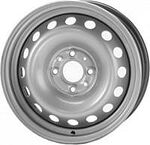
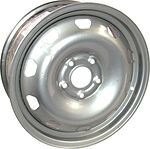
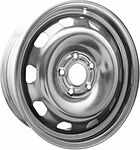
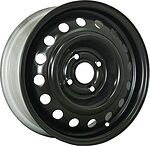
- PCD 4x114.3 диаметром от 15 до 15, шириной от 6.5 до 6.5 и профилем от ET40 до ET40как у Chery Fora
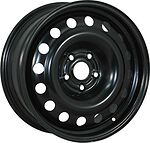
- PCD 5x114.3 диаметром от 17 до 19, шириной от 7.5 до 8.5 и профилем от ET45 до ET50как у Acura MDX
Tires on Nissan Skyline
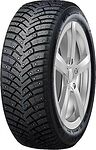
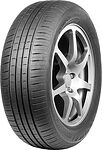
- Tyre size from R14 to R19, width from 175 to 265 and profile from 35 to 80.
- Minimum tyre size: 165S R14, maximum: 245/45 R18







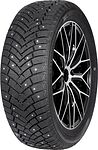
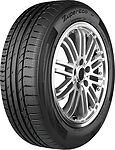
Tires on Nissan Skyline (Ниссан)
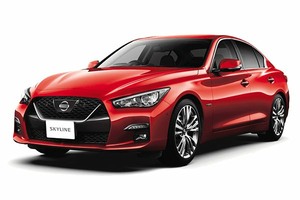
The Nissan Skyline sedan borrowed its name from the production line of the Japanese company Prince, which existed until 1967. After merging with Nissan, some models, including the Skyline, continued to be produced, but under a different brand. The car turned out to be iconic for it, being the only mid-size sedan available in the Japanese domestic market, the main one for this model.First Generation
The car debuted in 1968, developed by Prince before being acquired by Nissan. This led to a technical connection with its predecessor, using a large number of components from it. First and foremost, it was a 1.5-liter engine, which was later complemented by its upgraded version with a volume of 1.8 liters. The car was available in a "station wagon" body, representing a renamed Prince Skyway. In the fall of 1970, the lineup expanded with the addition of a coupe with a hardtop. A common feature of all versions was a "leaning" towards luxury. At the time, the model was positioned as a "junior companion" to the flagship President limousine, which largely determined the use of a fairly advanced chassis with MacPherson struts at the front and a semi-dependent rear axle with longitudinal links. This provided the car with comfortable handling for most people, with precise reactions to the driver's actions and a smooth ride, as well as allowing for further modernization, including the installation of a more powerful engine. Such was the case in the fall of 1971, when a 2-liter inline-six gasoline engine appeared, producing 130 horsepower.Second Generation
In 1972, the Japanese brand introduced a car of the next iteration with the C110 index. This was again a lineup of versions with three body types - sedan, station wagon, and coupe. But the design turned out to be quite unusual, especially in the five-door modification, which had no glazing on the sides of the trunk. The launch of sales was accompanied by a very successful advertising campaign, after which the car received the unofficial name "Kenmary" in honor of the names of a young couple, the main characters of the commercials, which largely predetermined the popularity of this model in the Japanese market. Technically, it was a modernized version of the predecessor, using approximately the same set of components.Third Generation
Launched into mass production in 1977, the third-generation car was developed with consideration of the 1973 fuel crisis, when most potential buyers were forced to switch their attention to more economical models. As a result, it became much simpler than its predecessor, both in design and in technology. Under the hood were 4-cylinder engines, which were combined with 3-, 4-, and 5-speed manual transmissions, or with a 3-range "automatic". The engine range included an economical 2-liter diesel engine with 65 horsepower, available for the station wagon modification.Fourth Generation
In 1981, sales of the fourth-generation car began. It was created on the basis of the Laurel sedan, which Nissan offered in European countries as a representative-class model. The existing lineup of variants was added with another one - a 5-door liftback. The body design retained the characteristic features of the predecessors, retaining square shapes and square rear lights. The coupe still had a hardtop with "frameless" doors. The passenger windows in the back could only be lowered by a quarter. The engine range consisted of power units from the previous model, with the exception of the 4-cylinder FJ20, which for the first time in the history of Japanese car manufacturing had more than 2 valves per cylinder. Another innovation was the electronic shock absorbers, which allowed changing the smoothness of the ride while driving, which was also a first, but already for mass-produced passenger cars.Fifth Generation
In 1985, the next-generation car debuted. Compared to its predecessor, it significantly increased in size, retaining the square shapes of the body. Technically, the key innovation was the appearance of RB-series engines, which differed in increased performance at low revs and excellent fuel economy for their class. No less important change was the debut of the HICAS all-wheel steering system.Sixth Generation
A modified version of the all-wheel steering system was used in the sixth-generation car, introduced in 1989. This time, the rear wheels were connected to the front wheels via hydraulics. Another important technical innovation was the appearance of a 5-speed "automatic", which was combined with a 2.5-liter inline-six. The car's exterior was influenced by Japanese laws that "tied" taxes to vehicle sizes. It is for this reason that this model is considered compact. To give buyers more opportunities to save on taxes, the engine range included 1.8- and 2-liter engines.Seventh Generation
In 1993, the seventh-generation sedan and coupe were released. In addition to the design and the absence of a "link" to Japanese legislation from its predecessor, it differed in a much higher level of safety. Already in the standard equipment, there were airbags and safety arches located in the body cavities. Another important difference was the return to the concept of models of the first generations, which were located in the lineup a step below the flagships. For this reason, the engine range consisted exclusively of 6-cylinder engines. The all-wheel steering system was again updated, receiving computer control, and in the list of additional equipment, an active differential with increased friction on the drive axle appeared.Eighth Generation
In 1998, one of the most popular "Skylines" - R34 - appeared, with characteristic double circular rear lights. A significant part of sales was brought by the most expensive versions with 2.5-liter inline-four engines, which had one or two turbochargers. Along with these power units, they offered a 4-speed "automatic" with paddle shifters under the steering wheel, Sumitomo brake mechanisms with 4-piston calipers at the front and 2-piston at the rear, as well as a differential with increased friction on the rear drive axle. In August 2000, this set was added with a more rounded body design with other bumpers, xenon headlights, side airbags in the front seats, and inflatable curtains in the door openings. In the salon, there were aluminum pedals, a steering wheel and gearshift knob made of natural leather of two colors, along with decorative elements of silver color.Ninth and Tenth Generations
In 2001, the next-generation car appeared. Compared to its predecessor, it differed in the use of a platform from the 350Z sports coupe, along with a large number of technical components from it, including a 3.5-liter 6-cylinder engine. To a significant extent, the model's exterior was determined by the Japanese brand's desire to make the North American market the key one for it, where it was offered under the "luxury" Infiniti brand. The move to a different platform led to the rejection of inline-six engines under the hood, including turbocharged ones. The lineup lacked a "charged" GT-R version, which was allocated to a separate model. As a result, the only category of buyers who ignored the V35-indexed model were Japanese tuners, for whom it became a huge disappointment, as well as the car of the next generation, which turned out to be a modernized version of the predecessor.Eleventh Generation
The sedan that appeared in 2014 was a copy of the Infiniti Q50 model, which could be distinguished externally by the logos and nameplates on the body and in the salon. The only difference was the Safety Shield complex of systems to assist the driver, with the function of automatic braking, adaptive "cruise", lane control, and "blind spots". The engine range started with a Mercedes-Benz-developed 2-liter turbocharged inline-four, producing 211 horsepower. As an alternative, a hybrid powerplant was offered, consisting of Nissan's own 3.5-liter V6 engine with 306 horsepower and a 68-horsepower electric motor. This modification was the only one in the lineup that could be equipped with an all-wheel-drive system, unlike the base one, for which only rear-wheel drive was available. Both power units were combined exclusively with a 7-speed "automatic".In 2019, the car received a significant update, affecting primarily the exterior. At the front, a massive radiator grille with an integrated letter V appeared, and at the rear, there were lights with circular glowing sections, referring to the models of previous generations. In terms of equipment, the key innovation was the appearance of an "autopilot" - the second-generation ProPilot system, which allows not holding hands on the steering wheel, but a special camera monitors the driver's eyes, which must be directed at the road. In the absence of this, a sound signal is first given, and then a smooth stop of the car is carried out. When overtaking and changing lanes, confirmation is required in the form of hands on the steering wheel. Depending on the version and year of production, the standard wheels for this car are from 18 inches in diameter. Such products can be easily found in the catalog of the "Mosavtoshina" online store.
Advantages of selecting tires for the Nissan Skyline on our website:
- the possibility of qualitatively performing a search for suitable options on your own, using the simplicity and comfort of the interface and the automation of most processes of the built-in selection system on our site;- our employees will help with the selection of optimal wheels and tires for your "Skyline", based on the year of its production and the version of execution;
- the assortment offers a significant number of tires for mid-size sedans, including models intended for the internal Japanese market;
- a large selection of wheel disks with a diameter of 18 inches or more, both from the number of original components for this car and from the assortment of similar products from third-party brands.