Tyres and wheels for Nissan Lannia, wheel size on Ниссан Ланниа
Другие модели Nissan
Nissan 180SX, Nissan 200SX, Nissan 240SX, Nissan 280ZX, Nissan 300ZX, Nissan 350Z, Nissan 350Z Roadster, Nissan 370Z, Nissan AD, Nissan Almera, Nissan Almera Classic, Nissan Almera Tino, Nissan Altima, Nissan Aprio, Nissan Ariya, Nissan Armada, Nissan Aura, Nissan Avenir, Nissan Avenir Salut, Nissan Bassara, Nissan Be-1, Nissan Bluebird, Nissan Bluebird Sylphy, Nissan Caravan, Nissan Cedric, Nissan Cedric Cima, Nissan Cefiro, Nissan Cima, Nissan Clipper, Nissan Clipper EV, Nissan Clipper Rio, Nissan Crew, Nissan Cube, Nissan Cube Cubic, Nissan Cube I, Nissan Cube II, Nissan Cube III, Nissan Datsun, Nissan Dayz, Nissan Dayz Roox, Nissan Dualis, Nissan Dualis+2, Nissan e-NV200, Nissan Elgrand, Nissan Evalia, Nissan Expert, Nissan Fairlady Z, Nissan Figaro, Nissan Frontier, Nissan Fuga, Nissan Gloria, Nissan Grand Livina, Nissan Gravite, Nissan GT-R, Nissan Homy Coach, Nissan Infiniti Q45, Nissan Interstar, Nissan Juke, Nissan Kait, Nissan Kicks, Nissan Kicks Play, Nissan Kix, Nissan Kubistar, Nissan Lafesta, Nissan Lannia, Nissan Largo, Nissan Latio, Nissan Laurel, Nissan Leaf, Nissan Leopard, Nissan Liberty, Nissan Livina, Nissan Lucino, Nissan Magnite, Nissan March, Nissan March Active, Nissan March Box, Nissan Maxima, Nissan Micra, Nissan Micra Active, Nissan Micra C+C, Nissan Mistral, Nissan Moco, Nissan Murano, Nissan N6, Nissan N7, Nissan Navara, Nissan Note, Nissan NP200, Nissan NP300, Nissan NP300 Frontier, Nissan NP300 Hardbody, Nissan NP300 Navara, Nissan NP300 Pick Up, Nissan NT100 Clipper, Nissan NV Cargo, Nissan NV Passenger, Nissan NV100 Clipper, Nissan NV100 Clipper Rio, Nissan NV150 AD, Nissan NV1500, Nissan NV200, Nissan NV200 Vanette, Nissan NV250, Nissan NV2500, Nissan NV300, Nissan NV350, Nissan NV350 Caravan, Nissan NV350 Urvan, Nissan NV3500, Nissan NV400, Nissan NX, Nissan NX8, Nissan Otti, Nissan Paladin, Nissan Pao, Nissan Pathfinder, Nissan Patrol, Nissan Patrol Cab Chassis, Nissan Patrol Safari, Nissan Pickup, Nissan Pino, Nissan Pixo, Nissan Platina, Nissan Prairie, Nissan Prairie Joy, Nissan Prairie Liberty, Nissan Presage, Nissan Presea, Nissan President, Nissan Primastar, Nissan Primera, Nissan Pulsar, Nissan Qashqai, Nissan Qashqai+2, Nissan Quest, Nissan R'nessa, Nissan R'nessa, Nissan Rasheen, Nissan Rogue, Nissan Rogue Plug-in, Nissan Rogue Select, Nissan Rogue Sport, Nissan Roox, Nissan S-Cargo, Nissan Safari, Nissan Sakura, Nissan Sentra, Nissan Serena, Nissan Silvia, Nissan Skyline, Nissan Skyline Crossover, Nissan Skystar, Nissan Stagea, Nissan Sunny, Nissan Sunny Box, Nissan Sunny California, Nissan Sunny RZ-1, Nissan Sunny Traveller, Nissan Sylphy, Nissan Sylphy Classic, Nissan Teana, Nissan Terra, Nissan Terrano, Nissan Terrano 2, Nissan Terrano Regulus, Nissan Tiida, Nissan Tiida Latio, Nissan Tino, Nissan Titan, Nissan Titan XD, Nissan Townstar, Nissan Truck, Nissan Tsuru, Nissan Urvan, Nissan V-Drive, Nissan V16, Nissan Vanette, Nissan Versa, Nissan Versa Note, Nissan Wingroad, Nissan X-Terra, Nissan X-Trail, Nissan X-Trail x-treme, Nissan XTerra, Nissan Z,Параметры дисков на Ниссан Ланниа
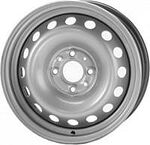
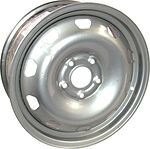
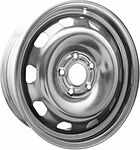
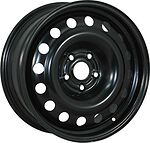
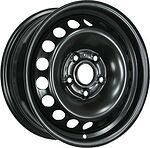
Tires on Nissan Lannia
- Tyre size from R16 to R17, width from 195 to 205 and profile from 50 to 60.
- Minimum tyre size: 195/60 R16, maximum: 205/50 R17
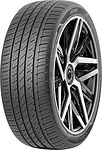





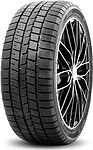
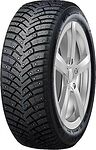


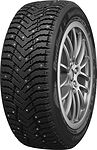

Tires on Nissan Lannia (Ниссан)
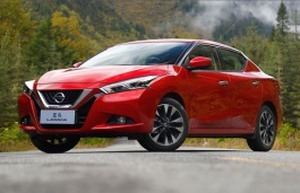
The compact sedan Nissan Lannia was part of the Japanese brand's lineup from 2015 to 2022. The car was created as part of a joint venture with Dongfeng and was intended exclusively for the Chinese domestic market. Its target audience was young people who preferred individual transport with emotional design and good equipment. For this reason, the sedan stood out with its aggressive front-end design featuring a distinctive V-shaped radiator grille, a sloping roofline, and elements stylistically close to the brand's concepts of those years. Inside, the model also tried to distance itself from the usual Asian sedans in its segment, offering a more sporty seating position, digital interface elements, and rich equipment even in the "mid-range" trim levels. In the Nissan lineup, it was positioned between the "global" Sentra and Sylphy, essentially differing little from these cars.Design as the main promotion tool
In the mid-2010s, most sedans in the C-segment in China were perceived as practical transport for family and corporate use. The model was an attempt to change this attitude through its expressive exterior, which favorably distinguished it from bestsellers like the Hyundai Elantra, Kia K4, and Toyota Corolla. This was mainly due to the narrowed "slanted" headlights, the massive bumper extending to the wings, with an integrated V-Motion radiator grille. The body sides received pronounced ribs, and the rear pillar created a sense of a "floating" roof. The aerodynamic drag coefficient turned out to be relatively low for this class, which positively affected fuel consumption and acoustic comfort at high speeds.
Depending on the version, 16- or 17-inch wheels were used, and even the base models did not look too simplified. In the more expensive modifications, LED optics, chrome decor elements, and two-tone body trim were applied. For the Chinese market, such a set of visual solutions was especially important, as it was often the external appearance that became one of the key factors in choosing a car.
Platform and chassis
In terms of positioning as a standalone model, the Lannia was deeply unified with most compact cars from the Renault-Nissan alliance. First and foremost, with the Sylphy, from which the platform and chassis with MacPherson struts at the front and a semi-independent beam at the rear were borrowed. The difference lay in the settings, where they tried to achieve a compromise between ride smoothness and handling, taking into account the quality of road surfaces in Chinese regions. The suspension differed in its increased travel, and the steering had increased accuracy and response speed. To this was added a large amount of noise and vibration insulation, which was present even in the wheel arches. As a result, the car was perceived as "adult" compared to its competitors.
Most specimens were released with a 1.6-liter gasoline "four" with 126 horsepower and 154 Nm of torque, which was combined with a 5-speed "mechanics" or an Xtronic variator. Both "links" did not offer high dynamics. Their strong points were moderate fuel consumption, reliability, and smooth operation at "urban" speeds, which corresponded to the preferences of the majority of the "target" audience. Later, versions with a 1.8-liter engine were added to the lineup, which developed 139 horsepower and 174 Nm. They were significantly different, mainly on highways and when using the sedan with a full load.
Interior with an emphasis on young buyers
The model's strong point was its salon, which lacked a significant part of conservatism. Mainly due to the front console, the central zone of which was turned towards the driver's seat. This was supplemented by the "sporty" design of the ventilation deflectors. Even in the standard equipment, there was a multimedia system with a 7- or 8-inch display. Bluetooth, navigation, and smartphone integration were supported. In more expensive versions, there was a 360-degree view system, the Around View Monitor, which for this segment was considered quite rare equipment.
The instrument panel combined analog scales and a color display of the on-board computer. The trim materials were selected with regard to local preferences: soft plastic on the front panel was combined with decorative metal inserts and contrasting stitching of the seats.
The front seats had pronounced lateral support, and the rear row provided sufficient space for two adult passengers. Thanks to the Sylphy platform, the sedan had a wheelbase of 2700 mm, most of which fell on the second row, whose passengers had a large reserve of space in the leg area.
Compared to its competitors, the sedan offered a wide range of equipment. Even in the "mid-range" versions, there were keyless entry, engine start button, climate control, rear-view camera, and electric parking brake. In the top trim levels, systems for warning about frontal collisions and monitoring "blind" zones were offered. In the interior, contrasting trim options were used, which harmoniously complemented the non-standard body colors and additional packages of decorative elements. As a result, the model was perceived as less utilitarian compared to traditional sedans in the segment.
16- and 17-inch wheels and tires with a profile height of 50 to 60% were standard. An important feature of such models is the ability to provide a balance between ride smoothness and handling. In the "Mosavtoshina" online store's assortment, both original sets and alternative wheel options are available for more comfortable or dynamic operation of the sedan.
Advantages of selecting tires for Nissan Lannia on our website:
- a large number of tires are constantly available, capable of emphasizing all the strong points of the model;
- the range of 16- and 17-inch wheels includes both standard options for preserving the factory style and more expressive alternatives that harmonize with the sedan's unusual exterior;
- the possibility of making the purchase of wheel products more rational due to the long warranty;
- specialists can always help with finding sets with optimal parameters depending on the year of manufacture and the sedan's trim level.