Tyres and wheels for Ford Thunderbird, wheel size on Форд Тандербёрд
Подбор шин и дисков по автомобилю Форд Тандербёрд
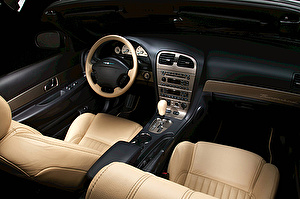
Другие модели Ford
Ford Aerostar, Ford Aspire, Ford B-Max, Ford Bronco I, Ford Bronco I, Ford Bronco II, Ford Bronco Sport, Ford C-Max, Ford Capri, Ford Capri EV, Ford Classic, Ford Club Wagon, Ford Contour, Ford Cortina, Ford Cougar, Ford Courier, Ford Crown Victoria, Ford E-150 Econoline, Ford E-250 Econoline, Ford E-350 Econoline, Ford E-Transit, Ford Ecosport, Ford Edge, Ford Edge L, Ford Edge Plus, Ford Endeavour, Ford Endura, Ford Equator, Ford Equator Sport, Ford Escape, Ford Escort, Ford Escort ZX2, Ford Everest, Ford Evos, Ford Excursion, Ford Expedition, Ford Explorer, Ford Explorer EV, Ford Explorer Sport Trac, Ford F-100, Ford F-150, Ford F-150 Lightning, Ford F-150 SVT Lightning, Ford F-250, Ford F-350, Ford F-450 Super Duty, Ford F150, Ford Fairlane, Ford Fairmont, Ford Falcon, Ford Festiva, Ford Fiesta, Ford Fiesta Active, Ford Fiesta Classic, Ford Fiesta Ikon, Ford Figo, Ford Five Hundred, Ford Flex, Ford Focus, Ford Focus Active, Ford Focus C-MAX, Ford Focus Electric, Ford Focus Shooting Brake, Ford Freestar, Ford Freestyle, Ford Fusion, Ford Fusion USA, Ford Galaxie 500, Ford Galaxy, Ford Gran Torino, Ford Granada, Ford Grand C-MAX, Ford Grand Tourneo Connect, Ford GT, Ford Ikon, Ford Ka, Ford Ka Freestyle, Ford Ka+ Active, Ford Kuga, Ford Laser, Ford Lobo, Ford LTD, Ford Maverick, Ford Mondeo, Ford Mondeo Sport, Ford Mustang, Ford Mustang Boss 302, Ford Mustang Cobra, Ford Mustang Mach 1, Ford Mustang Mach-E, Ford Mustang Roush, Ford Mustang Saleen, Ford Mustang Shelby GT350, Ford Mustang Shelby GT350, Ford Mustang Shelby GT500, Ford Orion, Ford P100, Ford Probe, Ford Puma, Ford Ranchero, Ford Ranger, Ford Ranger Sport, Ford S-Max, Ford Scorpio, Ford Sierra, Ford Sport Trac, Ford SportKa, Ford StreetKa, Ford Taurus, Ford Taurus SE/SEL, Ford Taurus SHO, Ford Taurus X, Ford Territory, Ford Thunderbird, Ford Tourneo, Ford Tourneo Connect, Ford Tourneo Courier, Ford Tourneo Custom, Ford Transit, Ford Transit 150, Ford Transit 250, Ford Transit 350, Ford Transit 350 HD, Ford Transit Connect, Ford Transit Courier, Ford Transit Custom, Ford Transit T8, Ford Windstar,
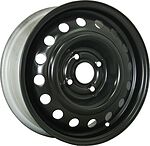
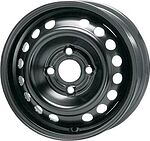
Tires on Ford Thunderbird
- Tyre size from R14 to R19, width from 195 to 245 and profile from 35 to 75S.
- Minimum tyre size: 195/75 R14, maximum: 245/35 R19
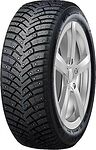




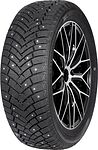


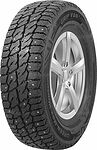



Tires on Ford Thunderbird (Форд)
Introduced in 1955, the Ford Thunderbird proved to be an iconic model not only for the American brand but also for the entire automotive industry. It became the founder of a whole class of cars, so-called personal luxury cars, combining a sporty image with a high level of comfort. The model appeared as a response to the success of the Chevrolet Corvette, but Ford engineers made a different emphasis: instead of pure sportiness, the Thunderbird offered a higher level of equipment and practicality. It was this concept that allowed attracting a wider audience of buyers. Over the decades of production, it went through eleven generations, repeatedly changing its technical philosophy and size. From a compact two-seat convertible, it gradually transformed into a luxury coupe and then returned to the classic roadster.First Generation: Comfortable Roadster
The first Thunderbird was created as an alternative to European and American sports cars, but it did not strive to fully replicate their philosophy. The design included a frame chassis, rear-wheel drive, and a long hood — classic features of American cars in the mid-20th century. Under the hood was a V8 Y-block series engine with a volume of 4.8 liters and a power of around 193 horsepower, which later increased to 215 horsepower. A three-speed manual transmission and an automatic Ford-O-Matic transmission were offered in pair with the engine.
The main difference between the Thunderbird and the Corvette was the focus on comfort. Even in the basic configuration, there were electric windows, a radio receiver, an adjustable steering wheel, and a developed ventilation system in the cabin. The buyer could choose a removable hard top or a soft tent.
Second Generation: Transition to a Four-Seat Format
In the next generation, presented in 1958, the car became significantly larger and received a full-fledged four-seat salon. This decision proved to be strategically correct: the model's sales soared, as the car became more practical for everyday use. FE series engines with a volume of up to 5.8 liters provided a high level of dynamics. The power reached 300 horsepower, which allowed the large coupe to confidently accelerate even by American standards of those years. The automatic transmission became the most popular choice. The equipment included air conditioning, power steering, electric seat adjustments, and rich interior trim.
Third Generation: Design Elegance and Engineering Solutions
The car that appeared in 1961, the third generation, became one of the most recognizable in the entire history of this model. It was distinguished by smooth body lines, as well as the famous rear doors with reverse opening in the Landau version. Engineers paid great attention to ergonomics. The dashboard had an aviation style, and the Swing-Away steering column could be moved aside, making it easier for the driver to get in. Under the hood was a 6.4-liter V8 engine with a power of around 300 horsepower, providing a decent dynamics while maintaining a smooth ride.
Fourth Generation: Growth in Size and Luxury
The car of the next generation, presented in 1964, was again larger than its predecessors and differed from them also by a higher level of comfort and equipment. In turn, the design lost much of the originality of the third generation, in favor of a more conservative part of the buyers. The change in the target audience was also reflected in the equipment, where there were leather seats, an improved air conditioning system, electric window and seat drives. In terms of technology, V8 FE series engines with a volume of 390 and 428 cubic inches were used.
Fifth Generation: Stylish Muscle Car
In 1967, the car underwent a change in its exterior. The fifth generation stood out with a characteristic external appearance of the second half of the 60s — a long hood, hidden headlights, and a wide radiator grille. Despite the external aggressiveness, the car remained focused on comfort. The engine range included V8s with a volume of up to 7.0 liters. The Thunderbird of this period competed with models like the Buick Riviera and the Oldsmobile Toronado, but unlike the latter, it retained the classic rear-wheel drive layout.
Sixth and Seventh Generations: The Peak of Full-Size Luxury
At the beginning of the 1970s, the car was a true symbol of American automotive comfort. The sixth generation, released in 1972, was distinguished by enormous dimensions, a long wheelbase, and a soft suspension. This trend continued in the seventh generation, which prevailed with straight lines and angles, along with a massive chrome radiator grille. Behind it were gasoline V8s of the 429 and 460 series. The salon offered a wide range of options: climate control, cruise control, electric seat adjustments, premium audio systems, and decorative wood trim.
Eighth Generation: Response to the Fuel Crisis
The development of the eighth-generation model took place against the backdrop of the fuel crisis that broke out at the turn of the 1970s and 1980s. The 1980 car turned out to be significantly smaller and lighter than its predecessors, using a new Fox platform at that time. The engine range lost massive V8s, switching to compact 6- and 8-cylinder power units. The only thing that remained unchanged was the equipment, which again turned out to be quite extensive by the standards of this segment.
Ninth Generation: Aerodynamics and Turbocharging
In 1983, the production of the ninth-generation model began, which became one of the most technological. The body received streamlined shapes, thanks to which the aerodynamic drag coefficient decreased significantly. The "Turbo Coupe" version with a turbocharged 2.3 four-cylinder engine and independent rear suspension deserves special attention. This solution allowed for a significant improvement in handling.
Tenth Generation: New Platform and Improved Handling
The car of the next generation, presented in 1989, was created on the MN12 platform, which was distinguished by a fully independent suspension of all wheels. For American coupes of that time, this was a fairly progressive solution. The engine range included a 3.8 V6 and a 4.6 Modular V8. Thanks to the new suspension, the car demonstrated significantly more stable behavior at high speeds compared to previous generations. In 1997, the car was discontinued, without a direct successor.
Eleventh Generation: Return to the Classic Idea
After a 5-year hiatus, in 2002, the model returned to the production lineup of the brand, but already in the format of a 2-seat roadster, executed in a retro style. The car's design was inspired by the original 1955 model: round headlights, smooth body lines, and characteristic chrome elements. The technical basis was the DEW98 platform. Under the hood was a 3.9-liter V8 engine with a power of 280 horsepower, working in pair with a 5-speed automatic transmission. The equipment included a leather salon, climate control, a premium audio system, cruise control, as well as a removable hard top. In character, the car was more like a comfortable gran turismo than a sports roadster, and this distinguished it from models like the BMW Z4 or the Mercedes-Benz SLK-Class.
Depending on the generation of production, the standard wheels for this car were wheel disks with a mounting diameter of 14, 15, 16, 17, and 18 inches, and the most common tire sizes were 235/50 R18, 205/75 R14, 215/70 R15, 225/60 R16, 235/55 R17. Properly selected wheels allow preserving the characteristic smoothness of the ride and stability, which the Thunderbird has been famous for throughout its history. You can always find such wheels in the "Mosavtoshina" online store.
Advantages of selecting tires for the Ford Thunderbird on our website:
- The catalog contains a large number of tires suitable for this car, including its very first generations;
- The possibility of preserving the original stylistics of the model due to a wide selection of 14-18 inch disks, many of which are executed in a retro design;
- An optimized pricing system with discounts and special promotions allows you to purchase high-quality wheel products at a more favorable cost;
- Managers will be able to quickly select the most suitable models of wheels and tires from the assortment for this car.