Tyres and wheels for Ford Mustang, wheel size on Форд Мустанг
Подбор шин и дисков по автомобилю Форд Мустанг
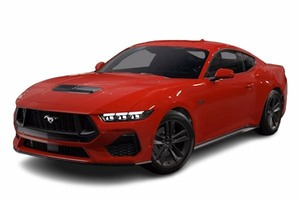
Другие модели Ford
Ford Aerostar, Ford Aspire, Ford B-Max, Ford Bronco I, Ford Bronco I, Ford Bronco II, Ford Bronco Sport, Ford C-Max, Ford Capri, Ford Capri EV, Ford Classic, Ford Club Wagon, Ford Contour, Ford Cortina, Ford Cougar, Ford Courier, Ford Crown Victoria, Ford E-150 Econoline, Ford E-250 Econoline, Ford E-350 Econoline, Ford E-Transit, Ford Ecosport, Ford Edge, Ford Edge L, Ford Edge Plus, Ford Endeavour, Ford Endura, Ford Equator, Ford Equator Sport, Ford Escape, Ford Escort, Ford Escort ZX2, Ford Everest, Ford Evos, Ford Excursion, Ford Expedition, Ford Explorer, Ford Explorer EV, Ford Explorer Sport Trac, Ford F-100, Ford F-150, Ford F-150 Lightning, Ford F-150 SVT Lightning, Ford F-250, Ford F-350, Ford F-450 Super Duty, Ford F150, Ford Fairlane, Ford Fairmont, Ford Falcon, Ford Festiva, Ford Fiesta, Ford Fiesta Active, Ford Fiesta Classic, Ford Fiesta Ikon, Ford Figo, Ford Five Hundred, Ford Flex, Ford Focus, Ford Focus Active, Ford Focus C-MAX, Ford Focus Electric, Ford Focus Shooting Brake, Ford Freestar, Ford Freestyle, Ford Fusion, Ford Fusion USA, Ford Galaxie 500, Ford Galaxy, Ford Gran Torino, Ford Granada, Ford Grand C-MAX, Ford Grand Tourneo Connect, Ford GT, Ford Ikon, Ford Ka, Ford Ka Freestyle, Ford Ka+ Active, Ford Kuga, Ford Laser, Ford Lobo, Ford LTD, Ford Maverick, Ford Mondeo, Ford Mondeo Sport, Ford Mustang, Ford Mustang Boss 302, Ford Mustang Cobra, Ford Mustang Mach 1, Ford Mustang Mach-E, Ford Mustang Roush, Ford Mustang Saleen, Ford Mustang Shelby GT350, Ford Mustang Shelby GT350, Ford Mustang Shelby GT500, Ford Orion, Ford P100, Ford Probe, Ford Puma, Ford Ranchero, Ford Ranger, Ford Ranger Sport, Ford S-Max, Ford Scorpio, Ford Sierra, Ford Sport Trac, Ford SportKa, Ford StreetKa, Ford Taurus, Ford Taurus SE/SEL, Ford Taurus SHO, Ford Taurus X, Ford Territory, Ford Thunderbird, Ford Tourneo, Ford Tourneo Connect, Ford Tourneo Courier, Ford Tourneo Custom, Ford Transit, Ford Transit 150, Ford Transit 250, Ford Transit 350, Ford Transit 350 HD, Ford Transit Connect, Ford Transit Courier, Ford Transit Custom, Ford Transit T8, Ford Windstar,Параметры дисков на Форд Мустанг
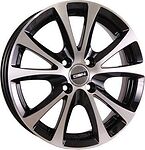
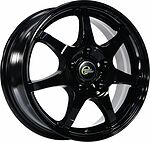
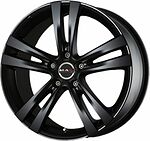
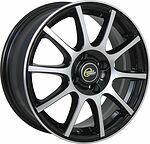
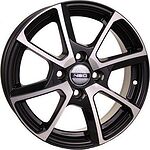
- PCD 4x10⁸ диаметром от 14 до 15, шириной от 5.5 до 7 и профилем от ET22.4 до ET28.4как у Mercury Cougar
- PCD 5x114.3 диаметром от 15 до 19, шириной от 6.5 до 9.5 и профилем от ET24 до ET52.5как у Lexus IS
Tires on Ford Mustang
- Tyre size from R14 to R20, width from 185 to LT275 and profile from 30 to 75S
- Minimum tyre size: 195/75 R14, maximum: 295/25 R22
Favorite summer tires
Favorite winter tires
Наиболее популярные модели шин






Photos of tyres on Ford Mustang
![Автомобильные шины Winrun R330 W-Silent на автомобиле ford mustang [2318]](/i/w2a/21583051.jpg "Автомобильные шины Winrun R330 W-Silent на автомобиле ford mustang [2318]")
Tires on Ford Mustang (Форд)
The Ford Mustang is a line of sports cars that have been continuously produced since 1964. It is one of the best-selling models of the American brand. Initially, it was a sports coupe and convertible, distinguished by a disproportion in appearance due to the elongated hood and shortened wheelbase. The extremely successful sales led to the emergence of a whole range of cars with a similar concept from other American brands, most of which are now considered legends of car manufacturing.Creation History
The car owes its appearance to numerous roadsters and coupes of European companies that became very popular from the turn of the 1950s and 1960s. The first prototype had exactly the same concept and mid-engine layout, being a compact 2-seat roadster with a very bold design for an American brand and expensive to produce. Nevertheless, work in this direction continued, and immediately by three teams from Ford, Lincoln, and Advanced Design. The car being designed, according to the technical specification, had to accommodate at least 4 people, have bucket seats and a floor gearshift, weigh no more than 1100 kg, be no longer than 5 meters, and its cost should not exceed $2500. The car, which was put into mass production in 1964, was a classic coupe with a front-engine and rear-wheel drive, having mechanical components from the Ford Falcon and Mercury Cornets and being assembled with them on the same conveyor. Later, a convertible and fastback appeared in the lineup. Since the model belonged to the economy segment, in the first years of production, the base engine was an in-line "six" with a volume of 2.8 liters, working in pair with a 3-speed manual transmission. Already a year after the start of production, the car had a fairly wide range of engines, which ended with a V8 with a volume of 4.7 liters and a power of 200 horsepower.Second Generation
By the beginning of the 1970s, the leadership of Ford had changed, and Lee Iacocca, who led the development of the first-generation car, became the president of the company. Starting from 1965, this model was constantly modernized, becoming larger, heavier, and more powerful, losing its conceptual connection with the car that appeared in 1964. As a result, the development of the second-generation coupe took place under the slogan "return to roots." The project was handled by Italians from the recently acquired Ford company Ghia, who took the more compact Pinto as the basis, not the Maverick, as planned. The decision was extremely successful, since immediately after the premiere in 1974, an oil crisis broke out, after which the demand for large cars with uneconomical engines sharply decreased. Technically, the model was extremely close to European and Japanese analogs, differing from them in engines with a larger volume by their standards. In the first year of production, it was offered with an in-line "four" with a volume of 2.3 liters and a 2.8-liter V6. Later, modifications with a gasoline V8 Windsor with a volume of 4.9 liters became available, which worked in pair with a 4-speed automatic transmission. Another difference of this version was the presence of a vacuum brake booster and hydraulic power steering.Third Generation
The car presented in 1978 was developed in the American department of Ford, which introduced a certain specificity into its design. The model was created on the new Fox platform and received a larger body and an elongated wheelbase compared to its predecessor. This provided much more space inside the cabin, especially in the second row, as well as increased the volume of the trunk and engine compartment. Initially, the car was available with two body types - coupe and hatchback. The convertible, after a nine-year absence, appeared in the lineup in 1982. The engine range almost completely "moved" from the previous model, including the old in-line "four" with a volume of 2.3 liters from the Ford Pinto. But already by 1983, it was completely replaced as new engines began to be produced. With minor technical changes, the car was produced until 1994.Fourth Generation
In November 1993, the manufacturer presented the car of the next iteration. This was the first deep modernization in 15 years, affecting both the technical part and the external appearance, which changed radically. At the same time, the platform of the predecessor was used, although in an improved form. Another difference was the reduction of the lineup, which now included only a coupe and convertible. Already in the standard configuration, they had disc brakes on all four wheels, a front suspension "MacPherson" and a solid axle at the back. The engine range had a V-shaped "six" Essex with a volume of 3.8 liters as the base, working in pair with a 5-speed manual transmission. A 4-range "automatic" was offered for an additional fee.Model S197
The car presented in 2004 was again radically different from its predecessor. Stylistically, it was similar to the model of the first generation in the fastback body and was built on a new platform D2C. It represented one of the variations of DEW98, modernized due to the need to install a solid rear axle instead of a multi-link independent suspension. Externally, the car looked more compact than its predecessor, but its dimensions actually did not change. The engine range started with a new V6 with a volume of 4 liters and a power of 210 horsepower with a cast-iron block, which in the standard configuration worked in pair with a 5-speed "mechanics", and for an additional fee with a 5-range "automatic". In turn, the "charged" version GT offered a gasoline V8 Modular with a volume of 4.6 liters with 3 valves per cylinder and a variable valve timing system, developing 300 horsepower.Model S550
The car of the sixth generation was presented in December 2013. It still used the platform D2C from the predecessor, but with a number of changes. Some of them were caused by the use of an independent rear suspension, which debuted for the first time in the history of the model. Another debut was the appearance of modifications with right-hand drive. Stylistically, the car retained a connection with the predecessor, but at the same time acquired a more aggressive and at the same time more effective aerodynamic appearance. Another important innovation was the appearance in the engine range of gasoline engines of the Ecoboost family, starting with an in-line turbocharged "four" with a volume of 2.3 liters, which was equipped with basic versions. The most dynamic modifications still offered the canonical V8 Coyote with a volume of 5 liters.Seventh Generation
In 2022, the manufacturer presented the model of the seventh iteration. Conceptually and stylistically, the car changed little, remaining in the form of classic coupes and convertibles. The engine range was reduced to two engines, the base of which was still an in-line "four" Ecoboost with a volume of 2.3 liters. However, its design was significantly changed, receiving two turbochargers and a more efficient fuel injection system. As a result, the power increased to 315 horsepower. The top versions also retained the engine from the previous model - the V8 Coyote with a volume of 5 liters. But here, too, changes were made, allowing it to be accelerated to 480 horsepower. To date, more than 10 million copies of this model have been produced. In our country, the car of the 7th generation has received the greatest distribution, which can be judged by the number of orders for tires and wheels with certain parameters in the online store "Mosavtoshina".Advantages of selecting tires for the Ford Mustang on our website:
- the catalog can find a large number of tires and wheels for sports cars of American brands;- the fully automated work of the search system allows you to make an independent selection for any version of this car;
- a guarantee for all items from our catalog;
- employees will quickly resolve all difficulties related to the choice of tires and wheels for this sports model.