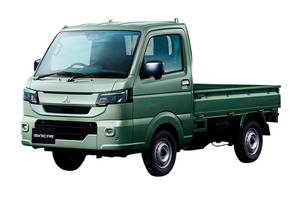
Tyres and wheels for Mitsubishi Minicab Truck, wheel size on Митсубисхи Минисаб Труск
Подбор шин и дисков по автомобилю Митсубисхи Минисаб Труск
Другие модели Mitsubishi
Mitsubishi 3000 GT, Mitsubishi Airtrek, Mitsubishi Aspire, Mitsubishi ASX, Mitsubishi Attrage, Mitsubishi Bravo, Mitsubishi Carisma, Mitsubishi Challenger, Mitsubishi Chariot, Mitsubishi Chariot Grandis, Mitsubishi Colt, Mitsubishi Colt CZC, Mitsubishi Colt L300, Mitsubishi Colt Plus, Mitsubishi Debonair, Mitsubishi Debonair V, Mitsubishi Delica, Mitsubishi Delica Cargo, Mitsubishi Delica D:2, Mitsubishi Delica D:3, Mitsubishi Delica D:5, Mitsubishi Delica Mini, Mitsubishi Delica Space Gear, Mitsubishi Delica Star Wagon, Mitsubishi Delica Truck, Mitsubishi Delica Van, Mitsubishi Destinator, Mitsubishi Diamante, Mitsubishi Diamante Wagon, Mitsubishi Dignity, Mitsubishi Dingo, Mitsubishi Dion, Mitsubishi Eclipse, Mitsubishi Eclipse Cross, Mitsubishi Eclipse Spider, Mitsubishi eK, Mitsubishi eK Active, Mitsubishi ek Classy, Mitsubishi eK Custom, Mitsubishi eK Space, Mitsubishi eK Space Custom, Mitsubishi eK Wagon, Mitsubishi eK X, Mitsubishi eK X Space, Mitsubishi Emeraude, Mitsubishi Endeavor, Mitsubishi Eterna, Mitsubishi Eterna Sava, Mitsubishi Eterna Sigma, Mitsubishi Expo, Mitsubishi Expo LRV, Mitsubishi Express, Mitsubishi FTO, Mitsubishi Galant, Mitsubishi Galant Fortis, Mitsubishi Galant Fortis Sportback, Mitsubishi Galant Sigma, Mitsubishi Galant Sports, Mitsubishi Grand Lancer, Mitsubishi Grandis, Mitsubishi GTO, Mitsubishi i, Mitsubishi i-MiEV, Mitsubishi Jeep, Mitsubishi L100 EV, Mitsubishi L200, Mitsubishi L300, Mitsubishi L400, Mitsubishi Lancer, Mitsubishi Lancer Cargo, Mitsubishi Lancer Cedia, Mitsubishi Lancer Cedia Wagon, Mitsubishi Lancer Evo IX, Mitsubishi Lancer Evo VII, Mitsubishi Lancer Evo VIII, Mitsubishi Lancer Evo X, Mitsubishi Lancer Evolution, Mitsubishi Lancer Fortis, Mitsubishi Lancer Wagon, Mitsubishi Legnum, Mitsubishi Libero, Mitsubishi Magna, Mitsubishi Maven, Mitsubishi Minica, Mitsubishi Minica Toppo, Mitsubishi Minicab Truck, Mitsubishi Minicab Van, Mitsubishi Minicab-MiEV, Mitsubishi Mirage, Mitsubishi Mirage Asti, Mitsubishi Mirage G4, Mitsubishi Montero, Mitsubishi Montero Sport, Mitsubishi Nativa, Mitsubishi Nimbus, Mitsubishi Outlander, Mitsubishi Outlander Sport, Mitsubishi Outlander XL, Mitsubishi Pajero, Mitsubishi Pajero iO, Mitsubishi Pajero Jr, Mitsubishi Pajero Mini, Mitsubishi Pajero Pinin, Mitsubishi Pajero Sport, Mitsubishi Pajero TR4, Mitsubishi Pistachio, Mitsubishi Proudia, Mitsubishi Raider, Mitsubishi RVR, Mitsubishi RVR Roadest, Mitsubishi Shogun, Mitsubishi Shogun Sport, Mitsubishi Sigma, Mitsubishi Space Gear, Mitsubishi Space Runner, Mitsubishi Space Star, Mitsubishi Space Wagon, Mitsubishi Starion, Mitsubishi Strada, Mitsubishi Toppo, Mitsubishi Toppo BJ, Mitsubishi Toppo BJ Wide, Mitsubishi Town Box, Mitsubishi Town Box Wide, Mitsubishi Triton, Mitsubishi Verada, Mitsubishi Xforce, Mitsubishi Xpander, Mitsubishi Xpander Cross,Параметры дисков на Митсубисхи Минисаб Труск
- PCD 4x100 диаметром от 12 до 12, шириной от 3.5B до 3.5B и профилем от ET45 до ET45как у Mazda Scrum Truck
Tires on Mitsubishi Minicab Truck
- Tyre size from to , width from to and profile from to .
- Minimum tyre size: 145 R12, maximum: LT145 R12



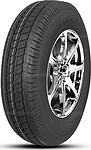
Tires on Mitsubishi Minicab Truck (Митсубисхи)
Mitsubishi Minicab Truck has been part of the Japanese brand's production line since 1966. The vehicle belongs to the subcompact commercial models designed for cargo transportation in urban conditions.First Generation
The car, presented in 1966, was similar in design to classic pickups, using a frame platform with a leaf spring suspension, differing only in its small dimensions. This was due to its area of application - the narrow streets of Japanese cities. The engine range consisted of one engine - a two-stroke air-cooled "two" with a volume of 0.4 liters, which developed 26 horsepower. Other features of the model include the use of a cargo platform with fold-down sides on three sides. In this form, the car existed until 1976, with minimal modifications.Second Generation
In 1972, the second-generation truck was released. It differed from its predecessor in its updated interior design of the 2-seat cabin and an extended cargo platform. In technical terms, the key innovation was the appearance of a more powerful 30-horsepower engine with water cooling, as well as a chassis where double levers with shock absorbers and springs were used in the front, and a non-cutting leading bridge with leaf springs and shock absorbers in the back. All this significantly improved the smoothness of the ride and handling.Third Generation
The next generation of the model appeared in the spring of 1976. It differed significantly from its predecessor due to changes in Japan's tax rules, which allowed the car's dimensions to be significantly increased and more productive components to be used. In particular, a 471-cubic centimeter diesel engine Vulcan S appeared. The cabin received a new ventilation and heating system, which significantly improved the level of comfort and safety in adverse weather conditions.Fourth Generation
In the summer of 1984, the Japanese brand presented the fourth-generation car. As before, it was unified with the updated van of the same time, having the same front design. While preserving the previous concept, the key difference from the predecessor was a significant expansion of the line - more than a dozen versions. A year later, there were even more due to the addition of modifications with an automatic transmission and all-wheel drive system. Most of the subsequent changes affected the engine range. In particular, the 2-cylinder Vulcan engines were replaced with a gasoline "three" Cyclon, including versions with turbocharging.Fifth Generation
In the beginning of 1991, the next generation model debuted. This was a completely redesigned car, created taking into account the newly revised Japanese tax rules, which allowed its dimensions and engine power to be significantly increased. The engine range consisted of three variants of the 660-cubic centimeter engine, differing in the number of valves per cylinder - from two to five. Depending on the version, the power unit was combined with 4- and 5-speed manual transmissions, 3- and 4-range "automatics", as well as rear-wheel drive or all-wheel drive. The lineup of modifications included more than six dozen versions.Sixth Generation
The release of the sixth-generation car took place at the beginning of 1999. Compared to its predecessor, the car stood out with a completely redesigned cabin design with characteristic trapezoidal headlights. In technical terms, the model practically did not differ, using the same chassis and power unit with a volume of 657 "cubes". Perhaps the only difference was the absence of a 4-range "automatic" and a reduction in engine options to two - 4 valves per cylinder, with or without turbocharging. In terms of equipment, the truck stood out against the background of the van with a much greater asceticism. The salon had areas without plastic trim, and maximally practical and inexpensive finishing materials were used.Seventh Generation
The car of the seventh generation, presented in 2014, was a copy of the Suzuki Carry of the 11th generation, which debuted a year earlier. It differed from its predecessor in its original layout with the power unit located behind the passenger seats. This was a compact gasoline "three" with a volume of 0.6 liters, which was combined with a 5-speed manual transmission or a 3- and 4-range "automatic". In other respects, the car represented a classic truck with fold-down sides on three sides, a non-cutting bridge, and springs in the back, double front levers with shock absorbers and springs. Standard for this model were 12-inch disks and tires, which, among other wheel products, are presented in the online store "Mosavtoshina".Advantages of selecting tires for the Mitsubishi Minicab Truck on our website:
- the catalog is often updated with new products from the tire industry for subcompact light trucks of Japanese brands;- a guarantee for a long time for all wheel products offered;
- stamped 12-inch disks, designed for long-term use with high loads, are always available;
- specialists will help find the most suitable options for this commercial vehicle, providing the most detailed information about each model.