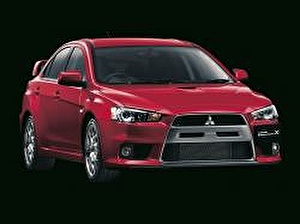
Tyres and wheels for Mitsubishi Lancer Evolution, wheel size on Митсубисхи Лансер Еволутион
Подбор шин и дисков по автомобилю Митсубисхи Лансер Еволутион
Другие модели Mitsubishi
Mitsubishi 3000 GT, Mitsubishi Airtrek, Mitsubishi Aspire, Mitsubishi ASX, Mitsubishi Attrage, Mitsubishi Bravo, Mitsubishi Carisma, Mitsubishi Challenger, Mitsubishi Chariot, Mitsubishi Chariot Grandis, Mitsubishi Colt, Mitsubishi Colt CZC, Mitsubishi Colt L300, Mitsubishi Colt Plus, Mitsubishi Debonair, Mitsubishi Debonair V, Mitsubishi Delica, Mitsubishi Delica Cargo, Mitsubishi Delica D:2, Mitsubishi Delica D:3, Mitsubishi Delica D:5, Mitsubishi Delica Mini, Mitsubishi Delica Space Gear, Mitsubishi Delica Star Wagon, Mitsubishi Delica Truck, Mitsubishi Delica Van, Mitsubishi Destinator, Mitsubishi Diamante, Mitsubishi Diamante Wagon, Mitsubishi Dignity, Mitsubishi Dingo, Mitsubishi Dion, Mitsubishi Eclipse, Mitsubishi Eclipse Cross, Mitsubishi Eclipse Spider, Mitsubishi eK, Mitsubishi eK Active, Mitsubishi ek Classy, Mitsubishi eK Custom, Mitsubishi eK Space, Mitsubishi eK Space Custom, Mitsubishi eK Wagon, Mitsubishi eK X, Mitsubishi eK X Space, Mitsubishi Emeraude, Mitsubishi Endeavor, Mitsubishi Eterna, Mitsubishi Eterna Sava, Mitsubishi Eterna Sigma, Mitsubishi Expo, Mitsubishi Expo LRV, Mitsubishi Express, Mitsubishi FTO, Mitsubishi Galant, Mitsubishi Galant Fortis, Mitsubishi Galant Fortis Sportback, Mitsubishi Galant Sigma, Mitsubishi Galant Sports, Mitsubishi Grand Lancer, Mitsubishi Grandis, Mitsubishi GTO, Mitsubishi i, Mitsubishi i-MiEV, Mitsubishi Jeep, Mitsubishi L100 EV, Mitsubishi L200, Mitsubishi L300, Mitsubishi L400, Mitsubishi Lancer, Mitsubishi Lancer Cargo, Mitsubishi Lancer Cedia, Mitsubishi Lancer Cedia Wagon, Mitsubishi Lancer Evo IX, Mitsubishi Lancer Evo VII, Mitsubishi Lancer Evo VIII, Mitsubishi Lancer Evo X, Mitsubishi Lancer Evolution, Mitsubishi Lancer Fortis, Mitsubishi Lancer Wagon, Mitsubishi Legnum, Mitsubishi Libero, Mitsubishi Magna, Mitsubishi Maven, Mitsubishi Minica, Mitsubishi Minica Toppo, Mitsubishi Minicab Truck, Mitsubishi Minicab Van, Mitsubishi Minicab-MiEV, Mitsubishi Mirage, Mitsubishi Mirage Asti, Mitsubishi Mirage G4, Mitsubishi Montero, Mitsubishi Montero Sport, Mitsubishi Nativa, Mitsubishi Nimbus, Mitsubishi Outlander, Mitsubishi Outlander Sport, Mitsubishi Outlander XL, Mitsubishi Pajero, Mitsubishi Pajero iO, Mitsubishi Pajero Jr, Mitsubishi Pajero Mini, Mitsubishi Pajero Pinin, Mitsubishi Pajero Sport, Mitsubishi Pajero TR4, Mitsubishi Pistachio, Mitsubishi Proudia, Mitsubishi Raider, Mitsubishi RVR, Mitsubishi RVR Roadest, Mitsubishi Shogun, Mitsubishi Shogun Sport, Mitsubishi Sigma, Mitsubishi Space Gear, Mitsubishi Space Runner, Mitsubishi Space Star, Mitsubishi Space Wagon, Mitsubishi Starion, Mitsubishi Strada, Mitsubishi Toppo, Mitsubishi Toppo BJ, Mitsubishi Toppo BJ Wide, Mitsubishi Town Box, Mitsubishi Town Box Wide, Mitsubishi Triton, Mitsubishi Verada, Mitsubishi Xforce, Mitsubishi Xpander, Mitsubishi Xpander Cross,Параметры дисков на Митсубисхи Лансер Еволутион
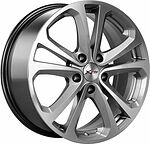
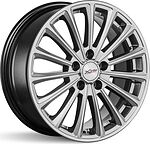
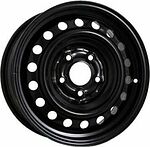
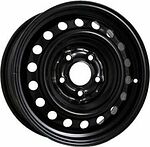
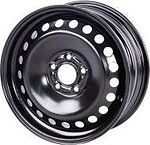
- PCD 5x114.3 диаметром от 15 до 18, шириной от 6 до 8.5 и профилем от ET38 до ET46как у Mazda CX-7
Tires on Mitsubishi Lancer Evolution
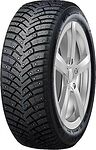
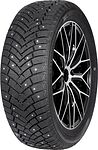
- Tyre size from R15 to R18, width from 195 to 245 and profile from 40 to 65.
- Minimum tyre size: 195/55 R15, maximum: 245/40 R18







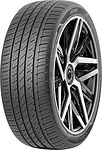
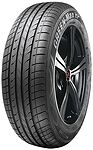
Tires on Mitsubishi Lancer Evolution (Митсубисхи)
The Mitsubishi Lancer Evolution began production in 1992 and remained on the assembly line until 2016, evolving from a "rally-tuned" family sedan to a full-fledged benchmark among "charged" sedans. Initially, the idea was simple: take the base Lancer, strengthen the body, install a turbo engine and sports transmission, and then bring everything to a state in which the car turns into a sports device for asphalt and gravel. Gradually, the car accumulated technologies, expanded its audience, and became not just a road version of a rally car, but a standalone model with unique charisma and appeal.First Iteration (Evolution I)
The first generation became the foundation of the entire line - a lightweight body, a turbocharged 4G63 with a power of around 250 horsepower, permanent all-wheel drive, and a manual transmission. The car was created without regard for comfort: the main thing was stability and acceleration. The body was strengthened, the suspension was made stiff, and the aerodynamics received elements whose design was borrowed from rally cars.
Second Iteration (Evolution II)
The next version was not so much a new car as a deep modernization of it. The distribution of the car's mass along the axes was improved, the stiffness of the suspension was increased again, and the wheel angles were changed for more precise control. The power increased to approximately 260 horsepower, which, together with the other changes, gave a more collected and stable behavior at high speeds.
Third Iteration (Evolution III)
Here, for the first time, serious work was done on aerodynamics: the spoiler on the trunk lid was increased, the shape of the bumpers was changed, and larger air intakes were added. The turbine and intake were redesigned to increase power - it approached 270 horsepower. The car became noticeably faster on straight roads and more dynamic during acceleration.
Fourth Iteration (Evolution IV)
The car of the next generation used the body from the standard Lancer sedan of the current iteration. However, much more important was the appearance of an all-wheel-drive system with active redistribution of torque between the rear wheels. It radically changed the handling of the Evo, turning it into a car that literally "self-steers" in a turn. Additionally, the engine control unit settings were changed, which added traction in the low-rev range.
Fifth Iteration (Evolution V)
The fifth-generation car differed from its predecessor with increased wheel arches, due to the expansion of the wheelbase and the installation of larger wheels, suspension settings, and a more productive braking system. The power unit underwent another cycle of modernization, which, with the same power, became more torquey - up to 373 Nm under peak loads. Inside, there were sports seats with a profile very close to the racing "buckets" of WRC championship cars.
Sixth Iteration (Evolution VI)
This version became another stage in the development of the model. First and foremost, the car received a new body with more harmonious proportions than before. In technical terms, an important innovation was a more efficient turbo cooling system.
Seventh Iteration (Evolution VII)
The transition to a new platform increased the car's weight, but at the same time allowed for a significant expansion of the number of electronic systems. In particular, the all-wheel-drive control system gained the ability to change its operating modes depending on driving conditions. The number of comfort options was significantly expanded, which noticeably increased the car's audience, making it one of the most popular in its class.
Eighth Iteration (Evolution VIII)
The key feature of the car in this iteration was a turbine with a different blade profile, along with a weight distribution along the axes in a proportion close to 50/50, as well as changed settings for the ride modes of the all-wheel-drive, braking, and engine systems. For the first time in the lineup, there were modifications with an automated transmission controlled by "paddles" under the steering wheel.
Ninth Iteration (Evolution IX)
The ninth-generation car stood out with a modernized engine equipped with the MIVEC system. It reduced the so-called "turbo lag," providing more linear responses to the gas pedal, along with a significant increase in power and torque - 291 horsepower and 392 Nm.
Tenth Iteration (Evolution X)
The tenth iteration became the final one for the model. The car was distinguished by the presence of a new "aluminum" 4B11T engine, which was lighter and had better thermal stability. The body became wider and stiffer, the interior more comfortable and technologically advanced, and the handling more stable under high loads. The wheel disks and tires for the Evolution are a crucial part of its character. The all-wheel-drive transmission and rigid kinematics of the suspension are extremely sensitive to the width of the tread, the weight of the wheel, and the profile of the tire. Optimal diameters are considered to be 17 and 18 inches - they combine the right stiffness, reliability, and stability. In the "Mosavtoshina" online store, you can easily select wheels with ideal parameters, avoiding incompatibility and preserving the Evo's handling at its signature level.
The advantages of selecting tires for the Mitsubishi Lancer Evolution on our website include:
- a catalog that is frequently updated with tires designed for sports sedans with turbocharging and all-wheel drive, which helps maintain the dynamics and traction of the Evo at a high level;
- the possibility of purchasing original 17-18 inch disks and lightweight analogs, which provides an increase in handling precision and a reduction in unsprung mass;
- an extended warranty is in effect for the products, which is especially important for owners who operate the car actively and with high loads on the tires;
- specialists will select sets, taking into account the "Evo" generation, its all-wheel-drive operating modes, and suspension features, ensuring stability and safety in any conditions.