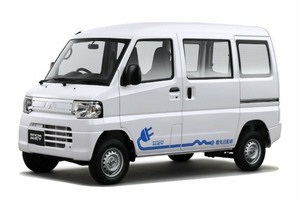
Tyres and wheels for Mitsubishi Minicab-MiEV, wheel size on Митсубисхи Минисаб-МиЕВ
Подбор шин и дисков по автомобилю Митсубисхи Минисаб-МиЕВ
Другие модели Mitsubishi
Mitsubishi 3000 GT, Mitsubishi Airtrek, Mitsubishi Aspire, Mitsubishi ASX, Mitsubishi Attrage, Mitsubishi Bravo, Mitsubishi Carisma, Mitsubishi Challenger, Mitsubishi Chariot, Mitsubishi Chariot Grandis, Mitsubishi Colt, Mitsubishi Colt CZC, Mitsubishi Colt L300, Mitsubishi Colt Plus, Mitsubishi Debonair, Mitsubishi Debonair V, Mitsubishi Delica, Mitsubishi Delica Cargo, Mitsubishi Delica D:2, Mitsubishi Delica D:3, Mitsubishi Delica D:5, Mitsubishi Delica Mini, Mitsubishi Delica Space Gear, Mitsubishi Delica Star Wagon, Mitsubishi Delica Truck, Mitsubishi Delica Van, Mitsubishi Destinator, Mitsubishi Diamante, Mitsubishi Diamante Wagon, Mitsubishi Dignity, Mitsubishi Dingo, Mitsubishi Dion, Mitsubishi Eclipse, Mitsubishi Eclipse Cross, Mitsubishi Eclipse Spider, Mitsubishi eK, Mitsubishi eK Active, Mitsubishi ek Classy, Mitsubishi eK Custom, Mitsubishi eK Space, Mitsubishi eK Space Custom, Mitsubishi eK Wagon, Mitsubishi eK X, Mitsubishi eK X Space, Mitsubishi Emeraude, Mitsubishi Endeavor, Mitsubishi Eterna, Mitsubishi Eterna Sava, Mitsubishi Eterna Sigma, Mitsubishi Expo, Mitsubishi Expo LRV, Mitsubishi Express, Mitsubishi FTO, Mitsubishi Galant, Mitsubishi Galant Fortis, Mitsubishi Galant Fortis Sportback, Mitsubishi Galant Sigma, Mitsubishi Galant Sports, Mitsubishi Grand Lancer, Mitsubishi Grandis, Mitsubishi GTO, Mitsubishi i, Mitsubishi i-MiEV, Mitsubishi Jeep, Mitsubishi L100 EV, Mitsubishi L200, Mitsubishi L300, Mitsubishi L400, Mitsubishi Lancer, Mitsubishi Lancer Cargo, Mitsubishi Lancer Cedia, Mitsubishi Lancer Cedia Wagon, Mitsubishi Lancer Evo IX, Mitsubishi Lancer Evo VII, Mitsubishi Lancer Evo VIII, Mitsubishi Lancer Evo X, Mitsubishi Lancer Evolution, Mitsubishi Lancer Fortis, Mitsubishi Lancer Wagon, Mitsubishi Legnum, Mitsubishi Libero, Mitsubishi Magna, Mitsubishi Maven, Mitsubishi Minica, Mitsubishi Minica Toppo, Mitsubishi Minicab Truck, Mitsubishi Minicab Van, Mitsubishi Minicab-MiEV, Mitsubishi Mirage, Mitsubishi Mirage Asti, Mitsubishi Mirage G4, Mitsubishi Montero, Mitsubishi Montero Sport, Mitsubishi Nativa, Mitsubishi Nimbus, Mitsubishi Outlander, Mitsubishi Outlander Sport, Mitsubishi Outlander XL, Mitsubishi Pajero, Mitsubishi Pajero iO, Mitsubishi Pajero Jr, Mitsubishi Pajero Mini, Mitsubishi Pajero Pinin, Mitsubishi Pajero Sport, Mitsubishi Pajero TR4, Mitsubishi Pistachio, Mitsubishi Proudia, Mitsubishi Raider, Mitsubishi RVR, Mitsubishi RVR Roadest, Mitsubishi Shogun, Mitsubishi Shogun Sport, Mitsubishi Sigma, Mitsubishi Space Gear, Mitsubishi Space Runner, Mitsubishi Space Star, Mitsubishi Space Wagon, Mitsubishi Starion, Mitsubishi Strada, Mitsubishi Toppo, Mitsubishi Toppo BJ, Mitsubishi Toppo BJ Wide, Mitsubishi Town Box, Mitsubishi Town Box Wide, Mitsubishi Triton, Mitsubishi Verada, Mitsubishi Xforce, Mitsubishi Xpander, Mitsubishi Xpander Cross,Параметры дисков на Митсубисхи Минисаб-МиЕВ
- PCD 4x100 диаметром от 12 до 12, шириной от 3.5B до 4B и профилем от ET38 до ET45как у Suzuki Every
Tires on Mitsubishi Minicab-MiEV
- Tyre size from to , width from to and profile from to .
- Minimum tyre size: 145 R12, maximum: LT145 R12

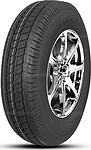
Tires on Mitsubishi Minicab-MiEV (Митсубисхи)
Serial Production of Mitsubishi Minicab-MiEV
The serial production of the Mitsubishi Minicab-MiEV began in 2011. The model proved to be a landmark for the entire Japanese automotive industry, as it became one of the first in the segment of commercial kei-cars with an electric powertrain. The machine was created on the basis of the Minicab of the 6th generation, however, the use of other technical components significantly changed the concept of its use. Its serial production was discontinued in 2021. Already in the next, 2022, the car returned to the assembly line due to the next tightening of environmental standards and the need that arose among numerous transport companies, service services, and municipal organizations to minimize the costs of their activities. Demand was high and sustainable enough to prompt the Japanese company to modernize the model in 2023, which, in addition to an updated power plant and a more capacious traction battery, received a new name - Minicab EV. The car was produced in parallel with the Nissan Clipper EV as part of the OEM cooperation between the two companies. As a result, it actually turned not just into another Mitsubishi experiment, but into a full-fledged family of commercial kei-cars, which continued to evolve even after the completion of the initial life cycle of the model.Specific Body Layout
The model was created on the basis of the Minicab of the 6th generation, preserving the classic proportions of a Japanese kei-van: a short hood, a high body, and maximally vertical walls of the cargo compartment. The length was only 3395 mm, the width was 1475 mm, and the height, depending on the modification, reached 1915 mm. Despite such modest dimensions, a fairly capacious cargo space was organized inside, which is especially important for urban delivery operation. Sliding side doors greatly simplified loading in narrow alleys and on narrow parking lots. The high roof allowed for the transportation of bulky boxes and equipment without the need to switch to a larger commercial vehicle. For Japanese cities with dense development, such a layout turned out to be practically ideal.
As with commercial equipment, the exterior of the machine remained deliberately functional. There were no decorative elements in the design, characteristic of passenger models. At the same time, solutions aimed at reducing air resistance were used as a resource to increase the range.
Features of the Power Plant
A single-motor electric powertrain was used in the van, the power of which was limited by state regulatory acts. In the base versions, it was 41 hp, and in the top versions, it was the maximum allowed 64 hp. In both versions, the torque reached 196 Nm, being available already from a standstill, thanks to the transmission of torque to the wheels through a planetary reducer. At the initial stage of serial production, the van was equipped with a traction battery with a capacity of 10 or 16 kWh, providing a range of up to 150 kilometers. The maximum speed was limited to 100 km/h, which fully fit into the concept of using this model primarily in urban conditions.
An important feature was the support for fast charging CHAdeMO. For the beginning of the 2010s, the presence of such a system in a compact commercial electric vehicle looked like a serious advantage. Charging up to 80% took approximately 35-40 minutes when using a DC charging station. From a household network, replenishing the energy reserve took significantly longer, however, for corporate parks with night parking, this was not a problem.
Salon and Driver Workplace
The interior is almost entirely functional. The front panel received a simple architecture with large buttons and a minimal number of decorative elements. The main instruments are read quickly even during intensive urban operation. The instrument panel included indicators of the charge level, regeneration mode, and residual range. The central display had a modest diagonal and performed exclusively informational functions. The designers consciously abandoned expensive electronics in favor of reducing the cost and increasing reliability.
The seating is distinguished by an emphasis on a vertical position. In addition to increasing the space reserve, this solution, in combination with a short hood and practically absent overhangs, provided comfort when maneuvering in narrow yards, warehouses, and streets, ensuring a low level of fatigue even after a multi-hour stay behind the wheel. To this, it is worth adding the absence of jerks when switching gears and the quiet operation of the power plant, which made everyday operation less tiring compared to gasoline kei-vans.
Specific Market Positioning
For the beginning of the 2010s, the car was essentially an experiment by the Japanese brand with an unpredictable final result. For this reason, the emphasis was placed on maximally simple and inexpensive technical solutions, as they allowed minimizing expenses and accelerating the development of the model. As a result, the target audience came to appreciate this model for its extremely low maintenance cost and reliability, allowing them to turn a blind eye to the small range and dependence on charging infrastructure. The standard 12-inch wheels with 145 R12 LT and 145/80 R12 tires, which were part of the "factory" configuration and for gasoline versions, made a significant contribution to reducing operating costs. Such products had balanced properties, offering high strength and resistance to weight loads on the one hand, and low rolling resistance and reliable coupling properties at "urban" speeds on the other. In the online store "Mosavtoshina", you can easily pick up a wheel set for such vans, based on specific operating conditions.
Advantages of Selecting Tires for Mitsubishi Minicab-MiEV on Our Site:
- The catalog constantly features specialized tires for Japanese vans based on kei-cars, adapted to the complex conditions of constant commercial operation in the city; - A wide range of high-strength disks that cope well with the high weight load on the wheels; - Long warranty service for all wheel products purchased from us; - Managers will help you choose the most suitable kits for this commercial equipment, taking into account the use of an electric powertrain in it.