Tyres and wheels for Mazda B-Series, wheel size on Мазда Би-серия
Подбор шин и дисков по автомобилю Мазда Би-серия
Другие модели Mazda
Mazda 121, Mazda 2, Mazda 3, Mazda 323, Mazda 5, Mazda 6, Mazda 626, Mazda 6e, Mazda 929, Mazda Allegro, Mazda Atenza, Mazda Axela, Mazda Axela Speed, Mazda AZ Offroad, Mazda AZ Wagon, Mazda AZ-1, Mazda AZ-3, Mazda B-Series, Mazda Biante, Mazda Bongo, Mazda Bongo Brawny, Mazda Bongo Friendee, Mazda Bongo Truck, Mazda Bongo Van, Mazda Bravo, Mazda BT-50, Mazda Capella, Mazda Carol, Mazda Clef, Mazda Cronos, Mazda CX-3, Mazda CX-30, Mazda CX-30 EV, Mazda CX-4, Mazda CX-5, Mazda CX-50, Mazda CX-60, Mazda CX-6e, Mazda CX-7, Mazda CX-70, Mazda CX-8, Mazda CX-80, Mazda CX-9, Mazda CX-90, Mazda Demio, Mazda Efini MPV, Mazda Efini MS-6, Mazda Efini MS-8, Mazda Efini MS-9, Mazda Efini RX-7, Mazda Eunos 100, Mazda Eunos 300, Mazda Eunos 500, Mazda Eunos 800, Mazda Eunos Cargo, Mazda Eunos Cosmo, Mazda Eunos Presso, Mazda EZ-6, Mazda EZ-60, Mazda Familia, Mazda Familia Van, Mazda Flair, Mazda Flair Crossover, Mazda Flair Custom Style, Mazda Flair Wagon, Mazda Flair Wagon Custom Style, Mazda Flair Wagon Tough Style, Mazda Lantis, Mazda Laputa, Mazda Luce, Mazda Mazda2, Mazda Mazda2 Hybrid, Mazda Mazda3, Mazda Mazda3 MPS, Mazda Mazda5, Mazda Mazda6, Mazda Mazda6 MPS, Mazda Mazda6 Ruiyi, Mazda Mazda8, Mazda MazdaSpeed 3, Mazda MazdaSpeed 6, Mazda Millenia, Mazda Millenia S, Mazda MPV, Mazda MX-3, Mazda MX-30, Mazda MX-30 EV, Mazda MX-5, Mazda MX-5 Miata, Mazda MX-5 Miata RF, Mazda MX-5 RF, Mazda MX-6, Mazda Premacy, Mazda Proceed, Mazda Proceed Levante, Mazda Proceed Marvie, Mazda Protege, Mazda Protege5, Mazda Revue, Mazda Roadster, Mazda Roadster RF, Mazda RX-7, Mazda RX-8, Mazda Savanna RX-7, Mazda Scrum, Mazda Scrum Truck, Mazda Scrum Wagon, Mazda Sentia, Mazda Spiano, Mazda Spirit Racing Roadster, Mazda Tribute, Mazda Verisa, Mazda Xedos 6, Mazda Xedos 9,Параметры дисков на Мазда Би-серия
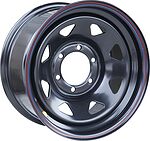
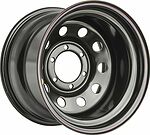
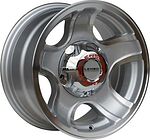
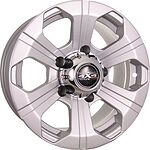
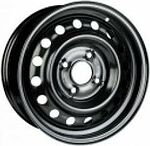
- PCD 6x139.7 диаметром от 14 до 15, шириной от 5.5 до 7 и профилем от ET10 до ET40как у Mitsubishi Pajero
Tires on Mazda B-Series
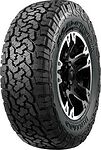
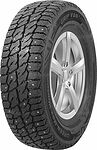
- Tyre size from R14 to R16, width from 195 to 245 and profile from 70 to 80S.
- Minimum tyre size: 195/75 R14, maximum: 255/55 R18






Tires on Mazda B-Series (Мазда)
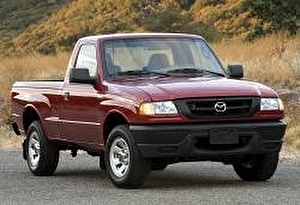
Mazda B-Series is a line of pickup trucks produced from 1961 to 2006. Initially, the model was developed exclusively for commercial use, but later became more versatile in its application.History of creation
Historically, the Japanese brand developed as a manufacturer of commercial equipment. The first model released by it was a three-wheeled truck that appeared as early as 1931. In 1958, the company introduced the Romper, a compact cargo car with a 2-cylinder engine located under the seat. By the early 1960s, demand for larger models began to grow sharply, forcing the Japanese manufacturer to develop a new line. It received the B1500 index, debuted in 1961, and represented a classic light commercial vehicle with a payload capacity of 1 ton, with a front-mounted engine and rear-wheel drive. A inline-four gasoline engine with a volume of 1.5 liters and a power of 60 hp was used as a power unit. The suspension was quite original. Torsion bars were used in the front, providing a sufficiently smooth ride, and leaf springs were used in the rear. The car was successful enough that several modifications were released over the next few years - a van, a pickup truck, and a truck with a double cab. The van had glazing all around the perimeter, the pickup truck had an integrated cargo platform with a coupe-like body.Second generation
In 1965, the manufacturer introduced a car of the next generation. It had a stylistic similarity with passenger cars of that time, differing from them only in the cargo platform. The use of a modernized frame of the predecessor made it possible to make the pickup truck longer and wider, which led to the need to use a more powerful engine. This was an inline-four gasoline engine from the previous model, which, due to changes in the cylinder head and valves, and the use of a modified carburetor, developed 73 hp. In 1974, a modification with a rotary Wankel engine with a volume of 1.3 liters appeared, which differed in improved dynamic characteristics.Third generation
In April 1977, a pickup truck of the next generation debuted. The car somewhat changed the concept, as it was equipped with equipment characteristic of passenger cars, in particular, a wooden trim of the instrument panel. In addition, the pickup truck had an unusually wide range of engines, the base of which was an inline-four gasoline engine with a volume of 1.6 liters. In 1981, the series was supplemented with a modification with a 2.2-liter diesel engine.Fourth generation
In the winter of 1985, the production of the model of the fourth iteration began. The car slightly increased in size, while maintaining a stylistic similarity with the predecessor. There were many more changes in the technical part. The "base" engine was an inline-four gasoline engine with a volume of 2 liters, which worked in pair with a 5-speed manual gearbox. As an alternative, a 4-range "automatic" was offered, as well as a four-wheel drive system with a connectable front axle. In 1986, modifications with a 2.6-liter Mitsubishi gasoline engine appeared, and the "base" engine was modernized, receiving a working volume of 2.2 liters, which, in combination with electronic fuel injection, made it possible to increase the power to 105 hp. Another difference from the predecessor was significant differences in the configuration. If in the "standard" the pickup truck was exclusively utilitarian, then in more expensive versions it represented a passenger car with a trunk in the form of a cargo platform, offering vinyl upholstery and bucket seats, carpet floor covering, a remotely opening fuel tank lid, a compartment for storing a jack and tools.Fifth generation
In 1998, a major update of the model followed. The car became global, which under its own name, and like the Ford Ranger, was offered in more than 130 countries around the world. Externally, it differed from the predecessor by a redesigned front part, which improved aerodynamics. Already at the start of sales, it was available in a large number of modifications, thanks to three types of cabins with 2 or 4 doors. Depending on this, the pickup truck was equipped with a fuel tank of different capacity - 63 or 70 liters. The engine range has changed significantly. Its "gasoline" part consisted of two inline-four engines with a volume of 2.2 and 2.6 liters. At the same time, for the Australian market, a version with a 4-liter V6 was offered. There were more diesel engines. The "base" one was an inline-four WL engine with a volume of 2.5 liters. It was also offered in more powerful modifications, but already with a turbocharger. In addition to them, the car was available with a 2.9-liter diesel engine. In the standard configuration, the pickup truck was offered with a 5-speed "mechanics". Its alternative was a 4-range automatic gearbox. Another sign of the standard configuration was the rear-wheel drive. In more expensive versions, a four-wheel drive system with a connectable front axle was available. In our country, the fifth-generation model became the most popular, representing not only a reliable and passable, but also a very dynamic car that does not lag behind most "passenger cars" on the highway. This often causes difficulties in selecting tires and wheels for it. They can be easily eliminated by contacting the online store "Mosavtoshina".Advantages of selecting tires on our website for Mazda B-Series:
- our catalog contains a wide range of tires and wheels for compact pickup trucks, designed for various operating conditions - from highways to difficult off-road;- a fully automated selection system allows you to quickly find the most suitable options by the name of the brand and model of the car;
- all items presented in the catalog are guaranteed;
- our employees will easily eliminate any problems that arise at the stage of selecting tires and wheels for your pickup truck.