Tyres and wheels for Mazda Familia, wheel size on Мазда Фамилиа
Подбор шин и дисков по автомобилю Мазда Фамилиа
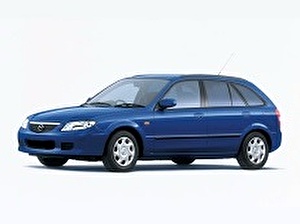
Другие модели Mazda
Mazda 121, Mazda 2, Mazda 3, Mazda 323, Mazda 5, Mazda 6, Mazda 626, Mazda 6e, Mazda 929, Mazda Allegro, Mazda Atenza, Mazda Axela, Mazda Axela Speed, Mazda AZ Offroad, Mazda AZ Wagon, Mazda AZ-1, Mazda AZ-3, Mazda B-Series, Mazda Biante, Mazda Bongo, Mazda Bongo Brawny, Mazda Bongo Friendee, Mazda Bongo Truck, Mazda Bongo Van, Mazda Bravo, Mazda BT-50, Mazda Capella, Mazda Carol, Mazda Clef, Mazda Cronos, Mazda CX-3, Mazda CX-30, Mazda CX-30 EV, Mazda CX-4, Mazda CX-5, Mazda CX-50, Mazda CX-60, Mazda CX-6e, Mazda CX-7, Mazda CX-70, Mazda CX-8, Mazda CX-80, Mazda CX-9, Mazda CX-90, Mazda Demio, Mazda Efini MPV, Mazda Efini MS-6, Mazda Efini MS-8, Mazda Efini MS-9, Mazda Efini RX-7, Mazda Eunos 100, Mazda Eunos 300, Mazda Eunos 500, Mazda Eunos 800, Mazda Eunos Cargo, Mazda Eunos Cosmo, Mazda Eunos Presso, Mazda EZ-6, Mazda EZ-60, Mazda Familia, Mazda Familia Van, Mazda Flair, Mazda Flair Crossover, Mazda Flair Custom Style, Mazda Flair Wagon, Mazda Flair Wagon Custom Style, Mazda Flair Wagon Tough Style, Mazda Lantis, Mazda Laputa, Mazda Luce, Mazda Mazda2, Mazda Mazda2 Hybrid, Mazda Mazda3, Mazda Mazda3 MPS, Mazda Mazda5, Mazda Mazda6, Mazda Mazda6 MPS, Mazda Mazda6 Ruiyi, Mazda Mazda8, Mazda MazdaSpeed 3, Mazda MazdaSpeed 6, Mazda Millenia, Mazda Millenia S, Mazda MPV, Mazda MX-3, Mazda MX-30, Mazda MX-30 EV, Mazda MX-5, Mazda MX-5 Miata, Mazda MX-5 Miata RF, Mazda MX-5 RF, Mazda MX-6, Mazda Premacy, Mazda Proceed, Mazda Proceed Levante, Mazda Proceed Marvie, Mazda Protege, Mazda Protege5, Mazda Revue, Mazda Roadster, Mazda Roadster RF, Mazda RX-7, Mazda RX-8, Mazda Savanna RX-7, Mazda Scrum, Mazda Scrum Truck, Mazda Scrum Wagon, Mazda Sentia, Mazda Spiano, Mazda Spirit Racing Roadster, Mazda Tribute, Mazda Verisa, Mazda Xedos 6, Mazda Xedos 9,Параметры дисков на Мазда Фамилиа
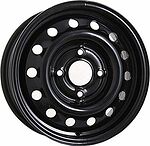
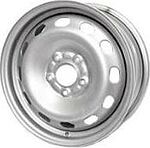
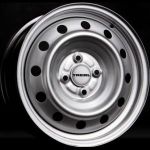
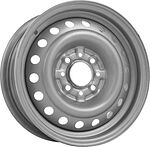
- PCD 4x100 диаметром от 13 до 14, шириной от 4.5 до 5.5 и профилем от ET40 до ET45как у Chevrolet Aveo

Tires on Mazda Familia
- Tyre size from R13 to R16, width from 155 to 195 and profile from 50 to 80S.
- Minimum tyre size: 155 R13, maximum: 195/65 R14







Tires on Mazda Familia (Мазда)
The Mazda Familia was present in the model range of the Japanese brand from 1963 to 2003. The model represented a compact family car, versatile in application, predominantly in urban conditions.First Generation
The car owed its appearance to the brand's desire to occupy a segment of more expensive models than before. It was designed in 1963 at the Italian design studio Carrozzeria Bertone under the guidance of the then-young Giorgetto Giugiaro. At that time, the car was a luxury item in Japan, so the debut car with this name turned out to be a compact 2-door commercial van. In the spring of 1964, a passenger wagon was added to the line, and six months later, 2- and 4-door sedans. All versions used a 0.7-liter gasoline engine, fully made of aluminum, which is why it received the unofficial name "white engine".Second Generation
The next-generation car was introduced in 1967. Technically, it was a modified version of the predecessor, with a slightly changed design, differing, in essence, only in the use of more powerful power units. Among them was even a rotary engine. The lineup of versions still included a pickup truck, sedan, and a wagon in two trim levels - with three and five doors.Third Generation
In 1977, the third-generation model debuted. It replaced two cars at once - the direct Familia and its enlarged version Grand. The lineup of versions was represented by a hatchback and a wagon with 3 and 5 doors. The engine range consisted of three gasoline engines with a volume of from 1 to 1.4 liters. The car's design was oriented towards young buyers, which predetermined good sales. Nevertheless, the model's life cycle turned out to be extremely short - only three years. This was due to the use of an outdated rear-wheel drive platform, which significantly limited the space inside the car.Fourth Generation
The fourth-generation car was shown in the summer of 1980. This was a completely new model, a landmark for the brand, since it was the first to use a layout with a front-mounted power unit and front-wheel drive. The lineup of versions consisted of a hatchback and a sedan. The engine range was composed of gasoline engines of the E series with a volume of from 1.1 to 1.5 liters, with a power of from 55 to 88 hp, which were developed specifically for this model.Fifth Generation
In early 1985, the fifth-generation car was introduced. At the start of sales, the lineup consisted of 3- and 5-door hatchbacks, as well as a sedan. During the same year, a wagon and a convertible were added to it. Technically, the car turned out to be unified with the previous model. Perhaps the only difference was the optional all-wheel drive system with a viscous differential on the rear axle, as well as a 1.7-liter diesel engine with 58 hp.Sixth Generation
In 1989, the Japanese brand showed the sixth-generation model. This time, the lineup consisted of a sedan, a 5-door fastback, and a 3-door hatchback, which did not have a single common body part with each other. Another feature was the presence in serial production of a wagon of the previous generation, which was updated with the release of the sixth generation. The engine range was composed of four gasoline and one diesel engine with a volume of from 1.3 to 1.8 liters. They were combined with a 5-speed "mechanics", 3- and 4-range "automatics", front or all-wheel drive.Seventh Generation
The seventh-generation car was released in the summer of 1994. It differed from its predecessor not only in design but also in significantly larger dimensions. In length, the sedan was only 5 mm shorter than the 626 model, which was one step higher. The wagon present in the lineup was a copy of the Nissan Sunny. Another such borrowing was the 1.7-liter diesel engine with turbocharging and intermediate cooling developed by Isuzu.Eighth Generation
In 1998, the eighth-generation car debuted. The lineup of versions was represented by a sedan and a wagon. For the domestic market, another wagon was available in a commercial version with plugs instead of glass behind the front doors, which was a copy of the Nissan model. Standard for this car were wheels with a diameter of from 13 to 15 inches, which, among other products, can be found in the online store "Mosavtoshina".Advantages of selecting tires for Mazda Familia on our website:
- a significant part of our catalog is tires for compact passenger cars;- a wide selection of stamped and cast disks with a diameter of 13-15 inches from leading domestic and foreign manufacturers;
- a long warranty for all wheel products purchased from us;
- our specialists will provide any assistance in selecting and purchasing tires and disks for this car, regardless of its year of manufacture