Tyres and wheels for Honda Civic Type R, wheel size on Хонда Сивис Тупе Р
Подбор шин и дисков по автомобилю Хонда Сивис Тупе Р

Другие модели Honda
Honda Accord, Honda Accord Aerodeck, Honda Accord Crosstour, Honda Accord Euro, Honda Accord Inspire, Honda Acty, Honda Acty Truck, Honda Airwave, Honda Amaze, Honda Ascot, Honda Ascot Innova, Honda Avancier, Honda Ballade, Honda Beat, Honda BR-V, Honda Breeze, Honda Brio, Honda Brio Amaze, Honda Capa, Honda City, Honda Civic, Honda Civic 5d, Honda Civic 5d, Honda Civic del Sol, Honda Civic Ferio, Honda Civic Shuttle, Honda Civic Type R, Honda Clarity, Honda Clarity Fuel Cell, Honda Concerto, Honda CR-V, Honda CR-X, Honda CR-X del Sol, Honda CR-Z, Honda Crider, Honda Crossroad, Honda Crosstour, Honda Del Sol, Honda Domani, Honda E, Honda e:N1, Honda e:N1, Honda e:NP1, Honda e:NP2, Honda e:NS1, Honda e:NS2, Honda e:Ny1, Honda Edix, Honda Element, Honda Elevate, Honda Elysion, Honda Elysion Prestige, Honda Envix, Honda Fcx Clarity, Honda Fit, Honda Fit Aria, Honda Fit Shuttle, Honda FR-V, Honda Freed Spike, Honda Freed+, Honda Freed+, Honda Gienia, Honda Grace, Honda Greiz, Honda Horizon, Honda HR-V, Honda Insight, Honda Insight Exclusive, Honda Inspire, Honda Integra, Honda Integra SJ, Honda Integra Type S, Honda Jade, Honda Jazz, Honda Jazz Crosstar, Honda Lagreat, Honda Legend, Honda Life, Honda Life Dunk, Honda Logo, Honda M-NV, Honda MDX, Honda Mobilio, Honda Mobilio Spike, Honda MR-V, Honda N BOX, Honda N BOX +, Honda N ONE, Honda N-BOX Custom, Honda N-BOX Slash, Honda N-BOX+, Honda N-BOX+ Custom, Honda N-ONE-e, Honda N-VAN, Honda N-WGN, Honda N-WGN Custom, Honda NSX, Honda Odyssey, Honda Odyssey J, Honda Odyssey Prestige, Honda Orthia, Honda Partner, Honda Passport, Honda Pilot, Honda Prelude, Honda Prelude INX, Honda Prologue, Honda Rafaga, Honda Ridgeline, Honda S-MX, Honda S2000, Honda S660, Honda S7, Honda Saber, Honda Shuttle, Honda Spirior, Honda Stepwgn, Honda Stepwgn Spada, Honda Stream, Honda Street, Honda Super-N, Honda Super-ONE, Honda That's, Honda Today, Honda Today Associe, Honda Torneo, Honda UR-V, Honda Vamos, Honda Vamos Hobio, Honda VE-1, Honda Vezel, Honda Vigor, Honda WR-V, Honda XR-V, Honda Z, Honda Zest, Honda Zest Spark, Honda ZR-V,Параметры дисков на Хонда Сивис Тупе Р
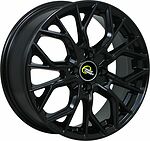
- PCD 5x114.3 диаметром от 18 до 18, шириной от 7.5 до 7.5 и профилем от ET55 до ET55как у Kia Soul
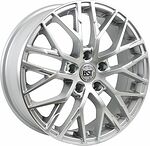
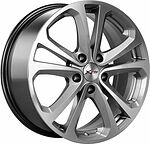
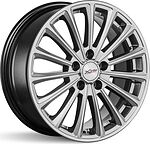
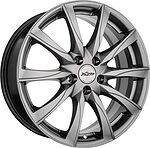
Tires on Honda Civic Type R
- Tyre size from R15 to R20, width from 195 to 265 and profile from 30 to 55.
- Minimum tyre size: 195/55 R15, maximum: 265/660-18
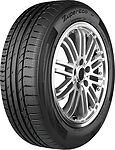




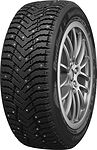


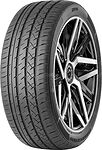
Tires on Honda Civic Type R (Хонда)
The Honda Civic Type R is a "charged" version of the compact model of the same name. The car has been present in the production range of the Japanese brand since the fall of 1997.Model EK9
The car, which debuted in 1997, was created on the basis of the standard 6th generation Civic, one of the most successful models in the brand's history. Technically, it was close to the "charged" version of the 2-door Integra coupe, presented two years earlier, with almost no sound insulation, along with other solutions aimed at maximizing weight reduction. Under the hood was a 1.6-liter inline-four gasoline engine, one of the highest in its class in terms of specific power, producing 185 horsepower and 160 Nm. This engine reached its maximum performance at 8500 rpm. The power unit worked in tandem with a 5-speed "mechanics" with close-ratio gear ratios, and on the front axle, there was a high-friction differential that ensured equal distribution of power to the wheels. Another important difference from the standard model was the fully welded body with very high stiffness on bending and torsion. Most of the visual differences were inside, not outside. The interior of the "charged" version differed from the standard model with a steering wheel from Momo, a titanium gearshift lever, and sports "buckets" from Recaro with red upholstery, floor mats, and door cards of the same color.Model EP3
In 2001, the next iteration of the model was released. This time, the car was created on the basis of the standard seventh-generation hatchback and was available not only in Japan but also in Europe. Moreover, versions for the domestic market differed significantly from the "European" one, which lacked a differential on the drive axle and racing "buckets" from Recaro. The Japanese version offered not only this but also a more powerful engine. This was a 2-liter inline-four gasoline engine producing 215 horsepower, also distinguished by a balanced crankshaft, different intake and exhaust manifolds, pistons, a chrome-molybdenum flywheel, and camshafts providing a higher valve lift. Another feature was due to the concept of using the "Japanese" version, gravitating towards the "ring". It used a 6-speed manual transmission with close-ratio gear ratios, which allowed to some extent to level out the lack of torque at low revs of the high-revving engine. The "European" version, on the contrary, differed in an increased gear ratio, providing greater comfort during everyday use.Model FD2/FN2
The third-generation car was presented in 2007. The manufacturer continued the practice of distancing the version for the domestic Japanese market. For the first time, the model was available in a sedan body, being significantly larger than its predecessor in all directions. Under the hood was the same 2-liter inline-four engine, but in a modified version, increasing the power to 225 horsepower, while preserving the same character with the exit to maximum performance at extremely high revs. The power unit still worked in tandem with a 6-speed "mechanics" with close-ratio gear ratios. Perhaps the only technical innovation was the appearance of front brake discs and 4-piston calipers from Brembo. The strengthened body, where instead of welding, glue was used, turned out to be half as stiff as the previous model. In the rear suspension, the torsion beam was replaced with a "multi-link". Another difference from the predecessor was the more extensive use of aluminum, which made it possible to reduce weight.The European version turned out to be much closer to the previous model, preserving, in particular, the 3-door body, differing also in a different layout. For example, the fuel tank was located under the driver's seat, and the rear suspension was a torsion beam. Another important difference was the use of a power unit and transmission from the previous model.
Model FK2
In the spring of 2015, the debut of the production version of the car of the next iteration took place. This time, it was based on the standard 9th generation Civic. In addition to the futuristic exterior design, the difference from the predecessor was the engine. Here, a 2-liter 4-cylinder turbocharged engine with Earth Dreams technology was used, producing up to 310 horsepower and 400 Nm at peak loads. The power unit was combined with a 6-speed "mechanics" and a differential on the front axle, providing acceleration to "hundred" in 5.7 seconds.Model FK8
Despite using the platform from the 10th "Civic", the 2017 car retained the conceptual features of the predecessor, differing from it only in slightly larger dimensions and lower body height. This allowed to reduce the aerodynamic drag coefficient and place the center of mass slightly lower. Along with the increased torsional stiffness of the body by more than a third and the preservation of the same weight of 1370 kg, this gave a noticeable improvement in handling. It is worth noting the transfer of the fuel tank from under the driver's seat to the rear axle, as well as the use of an aluminum hood, which made it possible to improve the mass distribution along the axles. Another important innovation was the abandonment of the previous twisting torsion beam in the rear in favor of a "multi-link". The settings of the springs and shock absorbers, the geometry of their location in the front part, were revised. As before, the struts have electronic control, and the steering has an electromechanical amplifier, which allows changing the mode of their operation on the go, choosing from pre-set settings. Under the hood is the engine from the previous model, but again in a modified version, differing in slightly higher performance - 320 horsepower and 400 Nm. In addition to it, the 6-speed "mechanics" was also updated, which got its own contour of liquid cooling, and a single-mass flywheel appeared in the clutch.Model FL5
In 2022, following the 11th generation Civic, its "charged" version debuted. As before, the car represented an evolution of the predecessor, using, in particular, the same engine, which underwent another cycle of modernization. This time, the turbocharger was replaced, and the exhaust system was supplemented with an active valve. As a result, the power unit produces 330 horsepower and 420 Nm of torque. The maximum torque plateau became more pronounced, being available in a fairly narrow range - from 2600 to 4000 rpm. The manual transmission got a lightweight flywheel, and the electronic system for adjusting the revs during gear shifts got other settings, even better minimizing jerks. Similar point changes underwent the chassis, preserving the fully layout, but slightly changing the settings towards greater stiffness, as well as an extended track. Also, the wheels were replaced. In the model, 19-inch disks and Michelin Pilot Sport 4S tires with a tread width of 265 mm are standard. This product is presented in the online store "Mosavtoshina".Advantages of selecting tires for the Honda Civic Type R on our website:
- the catalog contains both standard tires for this car and no less productive alternatives from the leaders of the global tire industry;- a wide selection of alloy wheels for this model of any year of manufacture and version;
- the possibility of high-quality selection using an automated search system;
- our employees will help you not to make a mistake with the choice of tires and wheels for this model, offering at least several optimal options, taking into account all its technical features.