Tyres and wheels for Renault Espace, wheel size on Ренаулт Эскейп
Подбор шин и дисков по автомобилю Ренаулт Эскейп

Другие модели Renault
Renault 4 E-Tech, Renault 5, Renault 5 E-Tech, Renault Alaskan, Renault Arkana, Renault Austral, Renault Avantime, Renault Boreal, Renault Captur, Renault City K-ZE, Renault Clio, Renault Dokker, Renault Dokker Stepway, Renault Duster, Renault Duster Oroch, Renault Espace, Renault Express, Renault Fluence, Renault Fuego, Renault Grand Kangoo, Renault Grand Scenic, Renault Kadjar, Renault Kangoo, Renault Kangoo Compact, Renault Kangoo Express, Renault Kangoo Rapid, Renault Kangoo Stepway, Renault Kangoo Van, Renault Kaptur, Renault Kardian, Renault Kiger, Renault Koleos, Renault Kwid, Renault Laguna, Renault Latitude, Renault Lodgy, Renault Logan, Renault Logan Stepway, Renault Lutecia, Renault Master, Renault Megan Scenic RX4, Renault Megane, Renault Megane E-Tech, Renault Megane Scenic RX4, Renault Mobilize Duo, Renault Modus, Renault Oroch, Renault Pulse, Renault Rafale, Renault Safrane, Renault Sandero, Renault Sandero Stepway, Renault Scala, Renault Scenic, Renault Scenic E-Tech, Renault Stepway, Renault Symbioz, Renault Symbol, Renault Taliant, Renault Talisman, Renault Thalia, Renault Tondar, Renault Trafic, Renault Triber, Renault Twingo, Renault Twingo E-Tech, Renault Twizy, Renault Vel Satis, Renault Wind, Renault Zoe,Параметры дисков на Ренаулт Эскейп
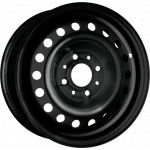
- PCD 4x100 диаметром от 14 до 14, шириной от 5.5 до 5.5 и профилем от ET36 до ET36как у Nissan Platina
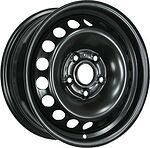
- PCD 5x10⁸ диаметром от 15 до 16, шириной от 6.5 до 7.5 и профилем от ET50 до ET50как у Ford Focus
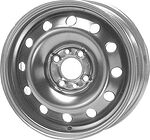
- PCD 5x114.3 диаметром от 18 до 18, шириной от 7.5 до 7.5 и профилем от ET39 до ET39как у Toyota RAV4


Tires on Renault Espace
- Tyre size from R13 to R20, width from 185 to 235 and profile from 45 to 70S
- Minimum tyre size: 185/65H R14, maximum: 235/65 R17
Favorite winter tires
Наиболее популярные модели шин
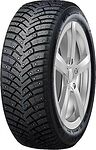




Tires on Renault Espace (Ренаулт)
The Renault Espace has been in production since 1994. Until 2023, it was a multi-purpose minivan, and after that, it became a 7-seater crossover, created on the basis of the Austral model, also a crossover, but belonging to the C segment.History of creation
The concept of a multi-purpose vehicle appeared in the 1970s in the British division of Chrysler. Its development was handled by Matra, creating a design for Simca, which at that time was a division of a North American automaker. In serial production, the model was supposed to replace the Matra Rancho, but it was supposed to be offered under the Talbot brand. In 1978, the British assets of Chrysler and Simca were sold to PSA, which discontinued the production of Simca cars due to low sales within 10 years. The Espace project seemed too expensive and risky to the management of the French concern, and it was returned to Matra, which then sold it to Renault as the Matra P23.At Renault, the project was significantly redesigned, since at that time the cars of the brand used longitudinally mounted engines, and the P23 had a transversely mounted power unit. Nevertheless, this was done, but by abandoning the possibility of installing a V6, which was implemented in the 2nd generation car. It was possible to place the engine longitudinally by shifting it as far forward as possible, placing it almost close to the radiator grille, and in modifications with a diesel engine, the front part had to be extended. The result of such tricks was the possibility of installing full-wheel drive and a flat floor throughout the cabin behind the front seats.
The car's body was a monocoque made of galvanized steel, on top of which were installed panels made of fiberglass. Galvanizing increased the stiffness of the structure on torsion and bending, increasing the weight by 30 kg. At the same time, most of it, 62%, was on the front axle. In the summer of 1984, the brand presented serial samples of the first generation Espace and managed to sell only 9 copies during the first month. Nevertheless, already in the fall of the same year, Matra had to stop production of the Murena to free up the assembly line for the very popular minivan, which by that time had acquired modifications with diesel engines.
Body J63
In 1991, the car underwent a deep modernization, changing the index to J63, but structurally remaining almost unchanged. The exterior was brought in line with the corporate style of the time, the minivan almost got rid of the angular utilitarian design, and inside, a more attractive and convenient dashboard appeared. The body structure remained unchanged, and a 2.9-liter V6 petrol engine with a power of 153 hp was added to the engine range. There were versions with all-wheel drive, which were available only in combination with a 2.2-liter petrol "four", as well as with a 4-speed "automatic".Body JE0
The car of the third generation was presented in December 1996. The novelty radically differed from its predecessor in appearance and futuristic interior design with an extended panel with a digital speedometer. And, like the previous generation, a monocoque made of galvanized steel with plastic body panels was used. The suspension was largely borrowed from the Laguna passenger car of the current iteration at that time. In 1998, the Grand Espace modification with an extended wheelbase was added to the lineup, and in 1999, a new, more compact 1.9-liter diesel engine with turbocharging. Production was discontinued in September 2002, and the car of the third generation became the last to come off the Matra assembly line.Body J81
The minivan of the 4th iteration appeared in the fall of 2002 and for the first time in its existence represented a car of Renault's own development and production. The exterior was brought in line with the design of the recently presented Vel Satis and Avantime. In addition, the design widely used materials that reduced the weight of the car. In particular, the doors and hood were made of aluminum, which made it possible to save 20 kg. In 2006, a model of the so-called "second phase" appeared with minimal changes in appearance and the addition of new diesel engines of the dCi line with a volume of 2 and 3 liters to the engine range. In 2010, a minivan of the "third phase" was presented, also with minor cosmetic changes, LED headlights, and expanded equipment. In turn, the "fourth phase" of 2012 became the last for this generation and included further changes in appearance and engine range, where new diesel engines M9R appeared, corresponding to new environmental standards.Body JFC
The release of the next generation car took place in the fall of 2014. The manufacturer abandoned the classic minivan design, presenting a car stylistically close to crossovers. It is created on the CMF platform, a joint development of Renault and Nissan, using components from various passenger cars of these brands. Compared to its predecessor, the list of electronic "assistants" has significantly expanded, from emergency braking systems to automatic parking. As part of the update in 2017, the "basic" 1.6-liter petrol engine was replaced by a more powerful 1.8-liter Tce line, and a little later, the 1.6-liter diesel engines were replaced in a similar way with 2-liter Nissan MR. In October 2020, the engine range was changed again, losing all petrol engines. At the time of the production stop of this generation, it was produced only with a 2.0-liter Blue dCi 190 EDC diesel engine with a power of 189 hp.6th generation
In the spring of 2023, a car of the sixth generation was presented. It represents a so-called "family" version of the Austral crossover, differing from it by an increased wheelbase and three rows of seats. These cars have about 75% of common components and systems, including tires and wheels, which are presented in a wide range in the online store "Mosavtoshina".Advantages of selecting tires for Renault Espace on our website:
- a significant part of the positions in our catalog are represented by tires specifically designed for minivans;- the automated selection system allows you to quickly find options that are ideal for any version of this car;
- a guarantee for all products from our catalog;
- any difficulties with the selection can be resolved by contacting the managers of our online store.