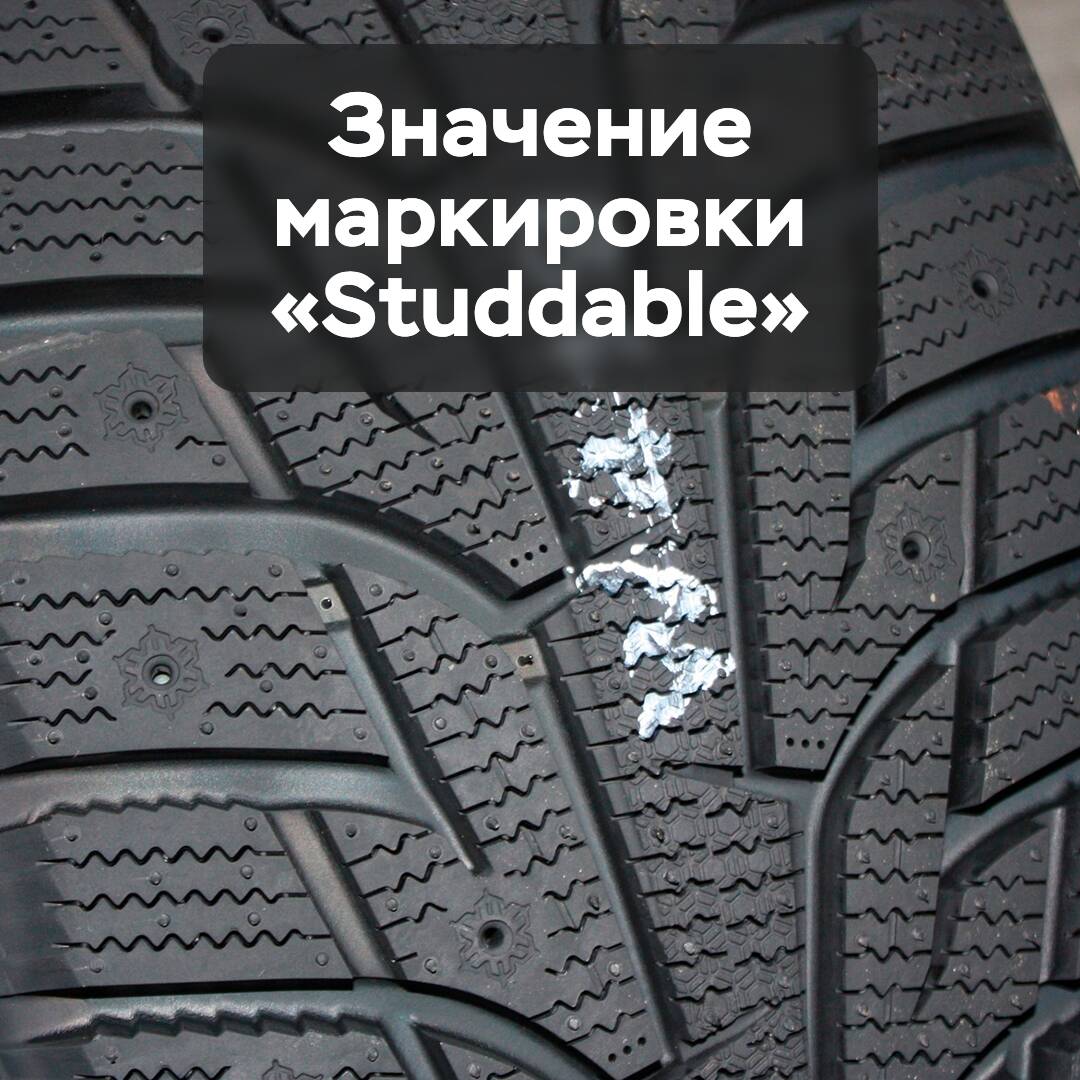
The meaning of the "Studdable" marking
Tire segmentation has never been easy, especially when it comes to the summer segment, it's easy to get confused. In the winter segment, at first glance, everything seems much simpler, and the main thing is to determine what kind of tires you need, with studs or without. This is only partly true. The winter segment indeed has fewer divisions than the summer one, but there are still more than two segments.
First of all, it's worth noting that among non-studded tires, there are two types: for harsh Nordic winters and for mild European conditions. We discussed these segments in detail in a separate article. Studded tires can also have surprises, and the labeling clearly indicates this.
There are three types of labeling:
STUDLESS — non-studded tires. These tires are simply not designed for stud installation and do not have special stud mounting areas.
STUDDED — studded tires. These tires are already studded and are not available in a non-studded version.
STUDDABLE — tires designed for stud installation. They can be released from the factory in both studded and non-studded versions.
What does this mean for the average buyer?
First of all, that tires can be without studs, and there's nothing supernatural about it. We've already written about the reasons why some car owners specifically de-stud their tires, overpaying for studded tires in the process. Considering this market feature and different legislative norms of various countries, manufacturers provide their customers with this opportunity. Tire dealers, in turn, can buy tires cheaper and sell them in this form or stud them themselves.
It's also worth dispelling the myth that tires with STUDDABLE labeling are studded incorrectly, which affects their characteristics. This is not the case. It's necessary to distinguish between production and assembly. All studs are produced by five companies in the world and strictly meet all quality criteria. The stud installation of tires by tire dealers in no way affects their characteristics. This is comparable to the process of screwing a nut onto a bolt. A rough example, but extremely clear. Therefore, there's no need to worry about the quality of purchased tires with such labeling.