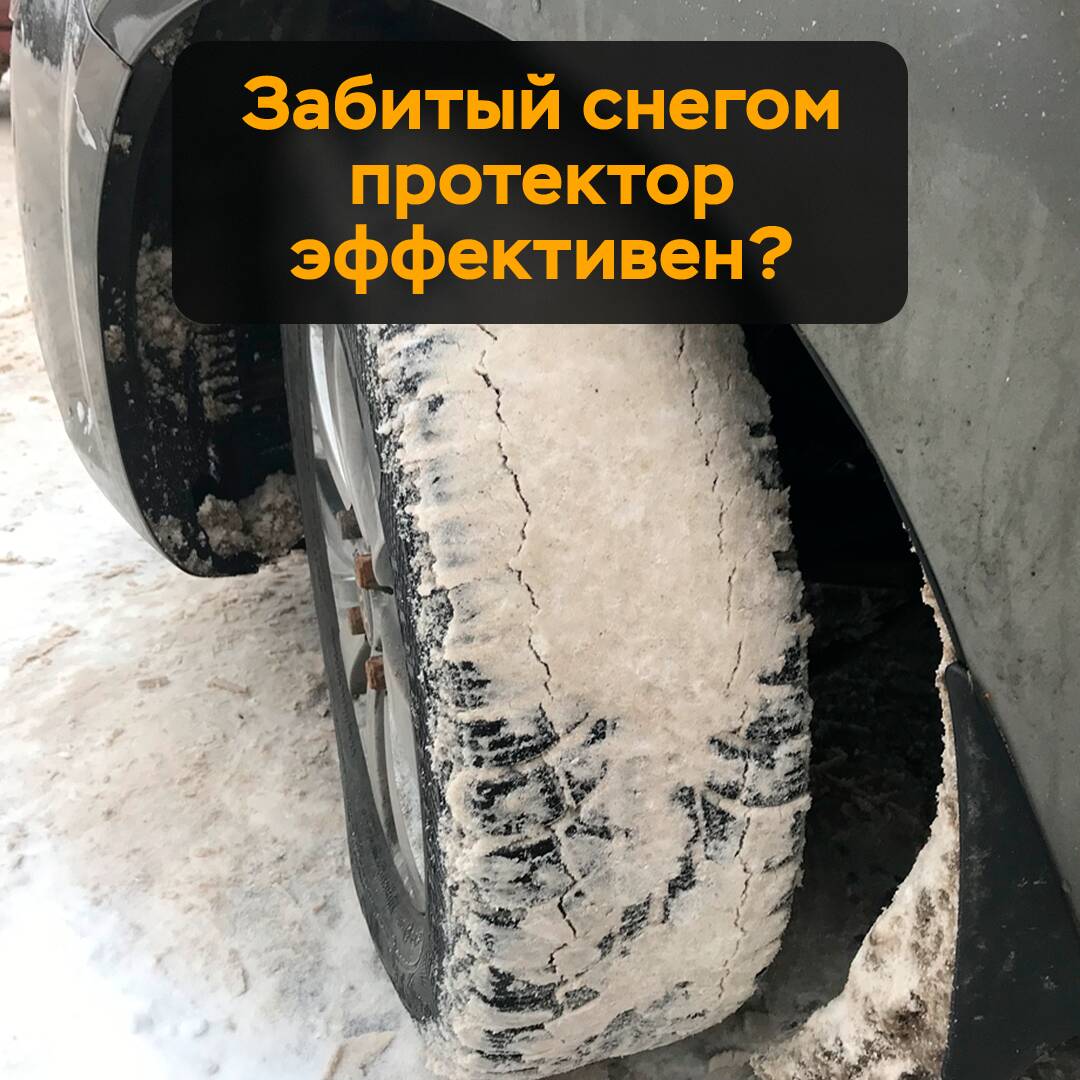
Is a snowed-in tread effective?
Once again, forecasters are recording new records for snowfall and recommend avoiding driving on days of heavy road congestion. But for some car owners, this is not an option and they have to drive anyway. Sometimes, driving on snowy roads seems like the snow has simply clogged the tire tread and the tire has essentially become a racing slick. But, of course, this is not the case. Today, we'll break down the basic principle of how a tire tread works in deep snow.
It's worth noting that despite the fact that the tread is instantly clogged with snow, when the wheel rotates, most of it is squeezed out by new snow in the contact patch. But, in addition to this, another factor of traction comes into play, which only applies to "sticky snow". The snow that remains in the tread, which hasn't been squeezed out or thrown out when the wheels rotate, also helps with traction by sticking to the snow on the road. This rule only works at relatively low negative temperatures. In other words, if you can make a snowball, you'll be able to drive out of a deep snowbank without much trouble, because the traction is maximum. But if the air temperature is lower and the snow doesn't stick together, you should drive very carefully, without allowing even the slightest wheel spin. In this case, you risk immediately "grounding" your car.
An experienced driver always assesses the weather conditions before getting behind the wheel. Wind strength, air temperature, amount of snow, amount of water and ice on the road. No matter what tires you have, they're not all-powerful, and it's crucial to adapt your driving style to the specific weather conditions. And, of course, it's essential to monitor the recommended pressure and residual tread depth, as only a tire with a deep tread (at least 5 mm) is truly effective on snowy roads.