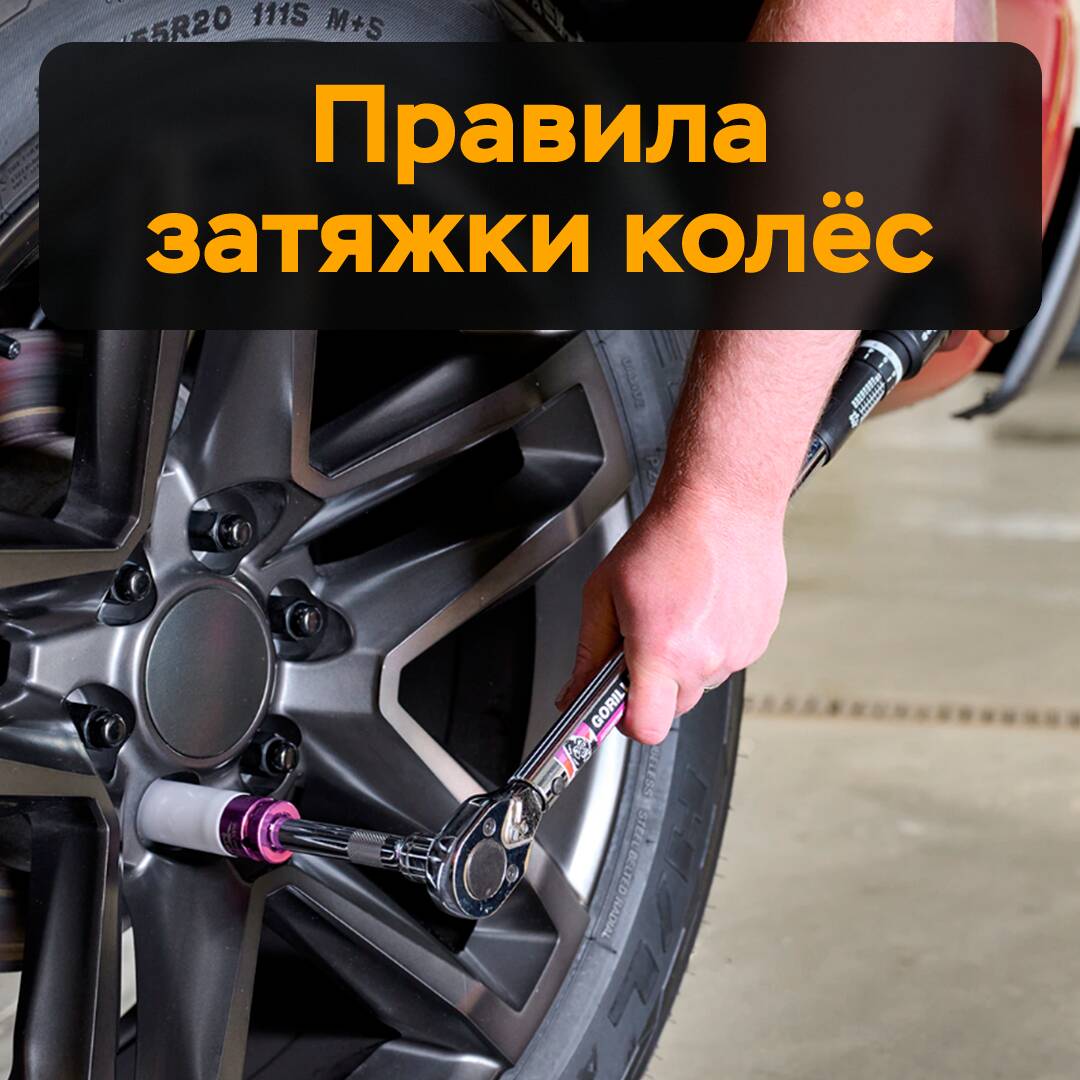
Wheel Tightening Rules
Tire mounting and wheel installation on your vehicle are best left to professionals and avoiding self-stopping. However, in the event of an emergency wheel change, you may need to install the wheel yourself. In this case, it is essential to follow certain rules. Proper tightening of nuts and bolts is a crucial part of ensuring a smooth ride, even wear, and the required performance of your tire and wheel assembly. Today, we will briefly discuss the rules for installing wheels and their attachment method.
Each type of wheel requires a specific tightening torque. Of course, to determine this torque, a dynamometric wrench should be used. But let's be realistic, in the case of self-installation, it will not be at hand. The main thing is to tighten the fasteners strongly, but without overtightening, as the fastening can be damaged. Many use additional levers and tighten the fastening with all their might. Of course, this should not be done. It is also unsafe.
Make sure the thread of the stud or bolt is clean and dry. Excessive moisture or sand can lead to the fact that in the future, the fastening may "stick" and it will be impossible to dismantle it without special means.
It is essential to follow the tightening sequence, as shown in the figure below.

Sequential tightening of the fastening will ensure even contact between the wheel disk's mating area and the hub, which, in turn, will help avoid vibrations and beats during operation. In the future, this will also exclude uneven tire wear, which can also be caused by incorrect tightening.