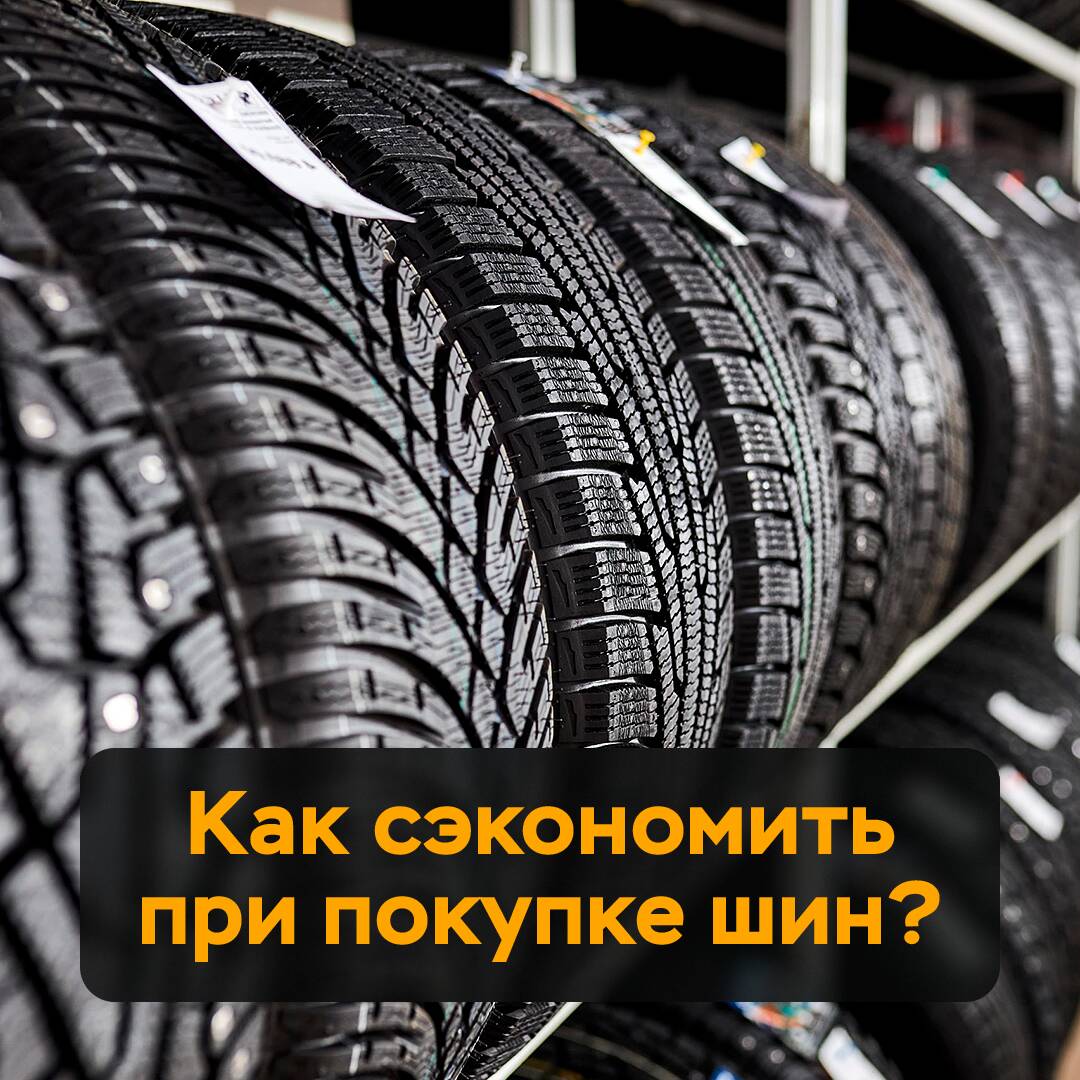
How to save money when buying tires?
When choosing tires, it's not worth evaluating them only by price. The real cost is not in the price tag on the shelf, but in the cost of owning the tires.
The cost of ownership includes several parameters at once, such as:
- purchase cost,
- installation cost,
- storage cost,
- fuel consumption,
- tire life.
Thus, only at the end of the tire's service life can its cost be accurately determined. But how can you influence the cost both when purchasing and during the operation of the tires? Such solutions exist, and it's best to start with the promotions that we regularly hold. Here, for example, are the promotions that you can get right now.
Let's say you're buying a set of tires in size 245/45/18, the cost of tire installation would be 5,400 rubles. But if you buy these tires from us, the installation will be free. We've already written that both the characteristics and the service life of the tire depend on how the tires are stored. It's difficult to ensure proper storage on your own, so it's best to leave the tires for storage in tire centers where both temperature conditions and shelves allow you to comply with all storage conditions. Again, if you are a MosaVtoShina customer, you get 40% off on seasonal storage.
As for the cost of owning tires, here you should pay attention to what the manufacturer indicates. If the manufacturer claims that the tire is energy-saving, then fuel savings can reach up to 10-15%. This is a very significant difference with ordinary tires. Of course, such savings are most felt on long distances. In urban driving cycles, it will be, but significantly lower.
In addition, you should pay attention to the manufacturer's comments regarding the extended warranty for operational damage and the claimed tire life. The resource, of course, depends on how the tires are operated, so manufacturers try not to make such promises. Therefore, if you haven't found any mentions of tire life, you should also prefer eco-tires to tires with high, sports characteristics. Here, the rule always applies: the higher the traction and comfort characteristics, the lower the resource.