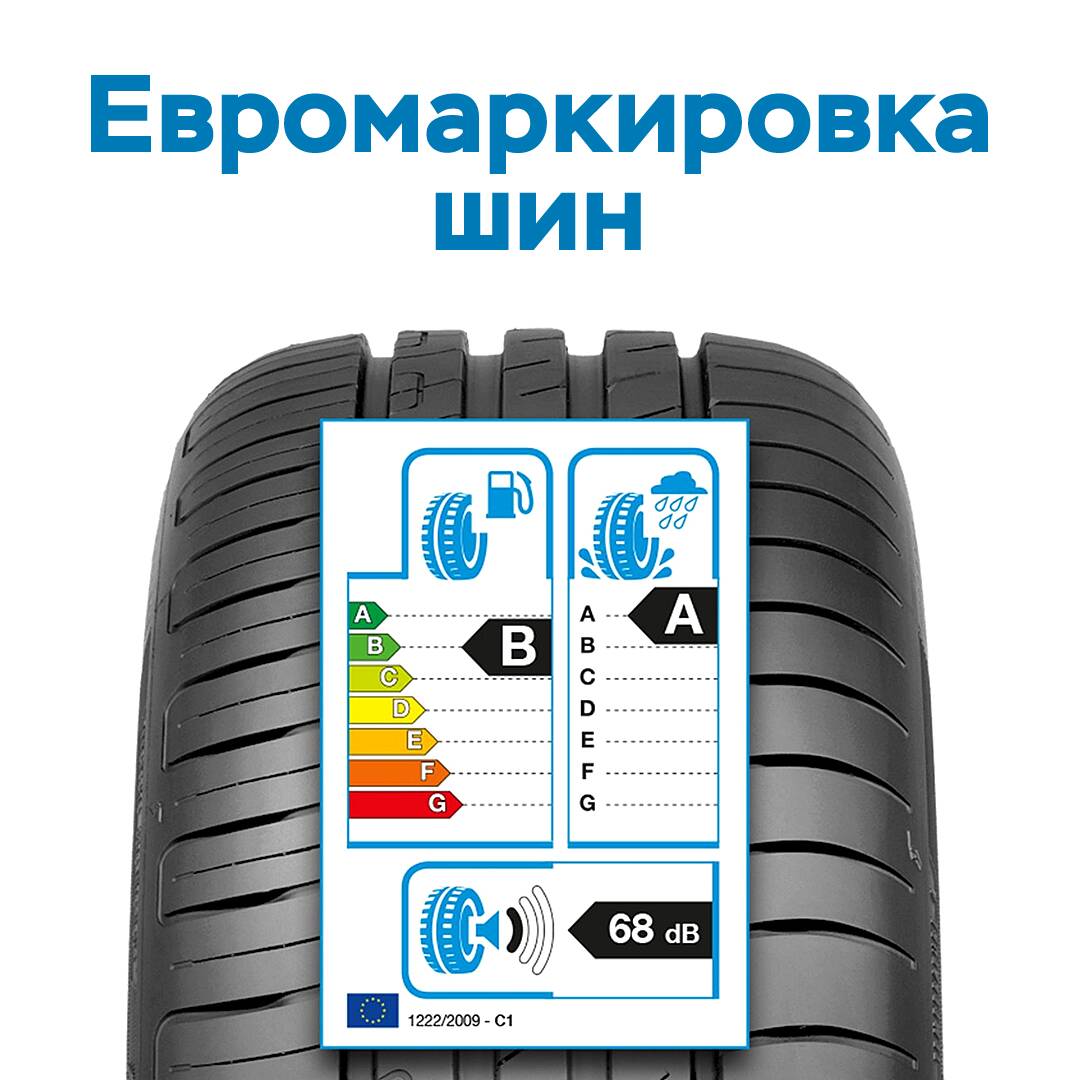
EU tyre label
How to choose tires? Various norms and regulations are designed not only to keep the industry within certain limits but also to provide clear guidelines for people who are not well-versed in the subject. One of the results of this activity is the Euro label. It is similar to the analogs on refrigerators and air conditioners, only for tires.
Today, we will explain why choosing tires based on the indicators on the Euro label is not entirely correct.
As can be seen in the photo, the label indicates three parameters: Fuel Efficiency, braking distance on a wet surface, and noise level. Let's consider the evaluation criteria for all three parameters.
Noise
Of course, when choosing tires, we want to find the quietest and most comfortable ones. Hence, the "noise level" parameter has quite deservedly found its place. But to our disappointment, the legislators had in mind a completely different noise, namely external noise. This parameter is aimed at reducing noise in large cities.
As shown in the figure below, microphones are placed 7 meters away from the moving car, after which the car passes with the engine turned off and in neutral gear, to completely exclude any noise except for the tires.
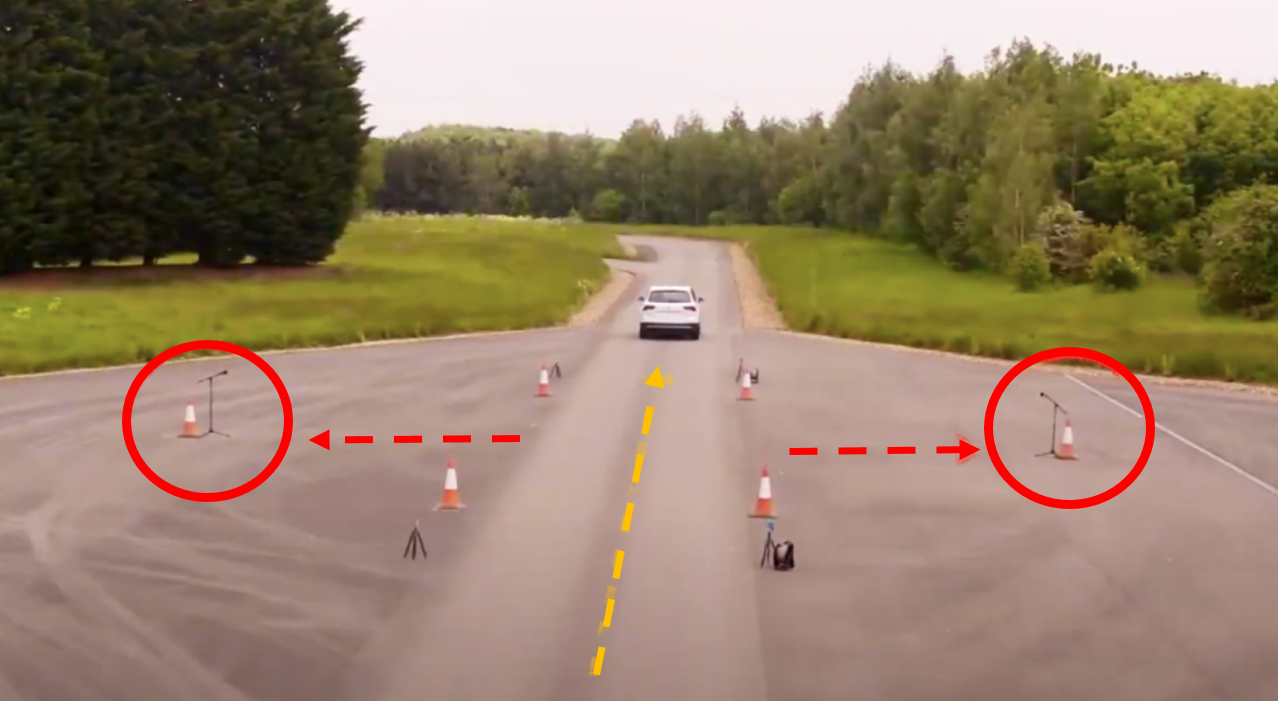
As strange as it may seem, the external and internal noise for car passengers will be different.
Noise is a complex combination of factors and sounds of various frequencies and intensities. Each car has its own set of internal noises, which, together with the noise of the tires, enter into resonance and create a completely different noise perceived by a person inside the car.
The noise is also significantly affected by such factors as the type and technical condition of the car, the type of road surface, and speed.
Braking on a wet surface
This is a really interesting and important parameter. During its testing, a really popular speed within the city limits is taken into account - 80 km/h. Braking occurs on a wet surface with a water film of 0.5-1.5 mm.
A
B + 3 m
C + 7 m
E + 12 m
F + ≥18 m
The difference between the best "A" rating and the worst "F" rating is 18 meters. This is really a lot, so we pay attention to this indicator.
It is also important to consider that the ratings depend on the tire size, so do not draw conclusions based on sizes that do not suit you. On your size, the braking result may be different.
It is also worth noting that any tire that brakes well on a wet surface has somehow sacrificed its characteristics on a dry surface. And where is this parameter on the label? It's not there) Hence, the assessment is a bit one-sided and not entirely objective.
Fuel Efficiency
This parameter has long been the basis for tire development. Given the boom in the development of electric vehicles, this parameter has been virtually elevated to the highest level of requirements for car owners. After all, fuel efficiency means the range on the same energy reserve, and for gasoline or battery-powered vehicles, the value is the same.
The idea of increasing the range directly depends on the rolling resistance.
The calculation is made according to the following scheme:
In an ideal world, where you drive at an average speed of 60 km/h, the difference between "A" and "G" ratings is 6 liters per 1000 km.
Conclusion
Is it worth choosing tires based on the Euro label? This can be useful information, but only when considering other parameters. They can be found in magazine tests or in reviews from other car owners who have already purchased the tire.
It's worth choosing a tire based on a combination of parameters:
- Braking on a dry surface
- Braking on a wet surface
- Tire lifespan
- Fuel efficiency
- Noise level
- Ride smoothness (tire carcass stiffness)
- Reliability