
What is included in the composition of rubber?
The secret weapon of any tire manufacturer is a complex rubber mixture. It can meet completely different tasks: first-class grip on a racing track, high durability, or reduced fuel consumption. Of course, the composition of the secret formula of the rubber mixture is not disclosed by anyone, but the properties of some common elements have long been known to a wide range of people.
Perhaps we should start with the element that helped Charles Goodyear discover the vulcanization process, namely, to translate rubber from a plastic state to an elastic one. This element is sulfur. An interesting fact is that the vulcanization process was discovered by Charles by chance. We will definitely devote a separate article to this, and for now, let's analyze the other elements of the tire's rubber mixture.
The basis for any tire is rubber, but this is far from the only component. There are two types of rubber - natural and synthetic. Natural rubber has been extracted from the sap of the Hevea tree for over a hundred years, while synthetic rubber is artificially created in a laboratory.
It's not worth assuming that one is worse than the other. The fact is that different types of rubber have different degrees of hysteresis - the ability to return to their original shape after deformation. Let's imagine two balls made of natural and synthetic rubber. When dropped from the same height, the bounce of the ball made of natural rubber will be less intense. Does this mean that natural rubber is worse? Not at all, not for all properties of the tire. It is the combination of the properties of these two types of rubber that gives the necessary properties for each individual tire model.
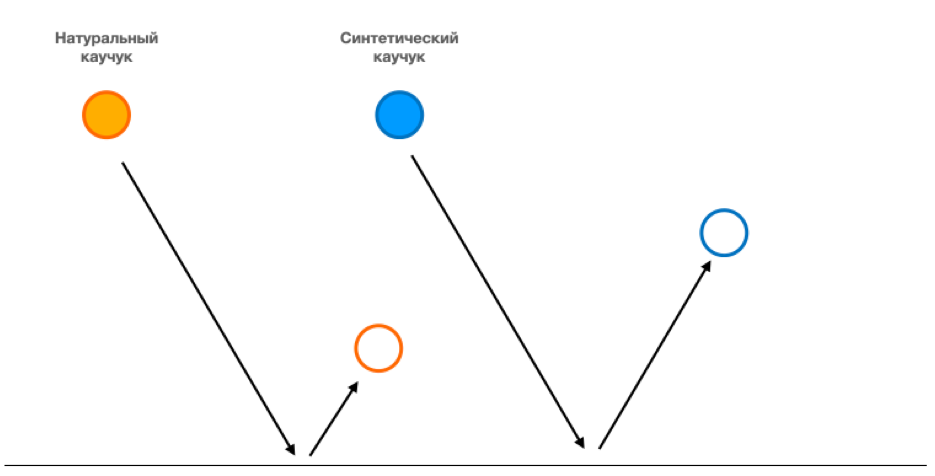
In addition, natural rubber has a high resource and higher resistance to abrasion, which means that the lifespan of your tires depends on its properties. It's also worth noting that as the energy-saving segment of tires develops, preference is given to synthetic rubber, since less deformation helps reduce rolling resistance.
In the energy-saving race, the composition of the rubber mixture cannot do without another very important component - silicon. This element reduces the heating of the tire and helps reduce rolling resistance. But as you've already noticed, there is no element in the composition of the rubber mixture that simply improves the tire in all parameters. The same is true for silicon. Silicon reduces the tire's ability to dissipate accumulated electrostatic charge. Therefore, in tires with high silicon content, a carbon insert made of rubber is added. You can notice it closer to the center of the tread. As a rule, it differs from the tread rubber in color and wear resistance, so it becomes more pronounced as it wears out. If you don't notice this insert, the silicon content in the rubber mixture is not so high or it is completely absent. This is normal for older-generation tires, in which the technical carbon content, or simply soot, was at a higher level.
Nevertheless, technical carbon cannot be completely excluded from the recipe. In addition to giving the tire its familiar black color, it significantly affects the durability and lifespan of the tires.
In addition to the elements listed in the article, there are dozens of others that distinguish tires from each other. These include oils that provide elasticity and plasticizers that prevent tires from prematurely aging and cracking.