Continental VancoWinter 2
-
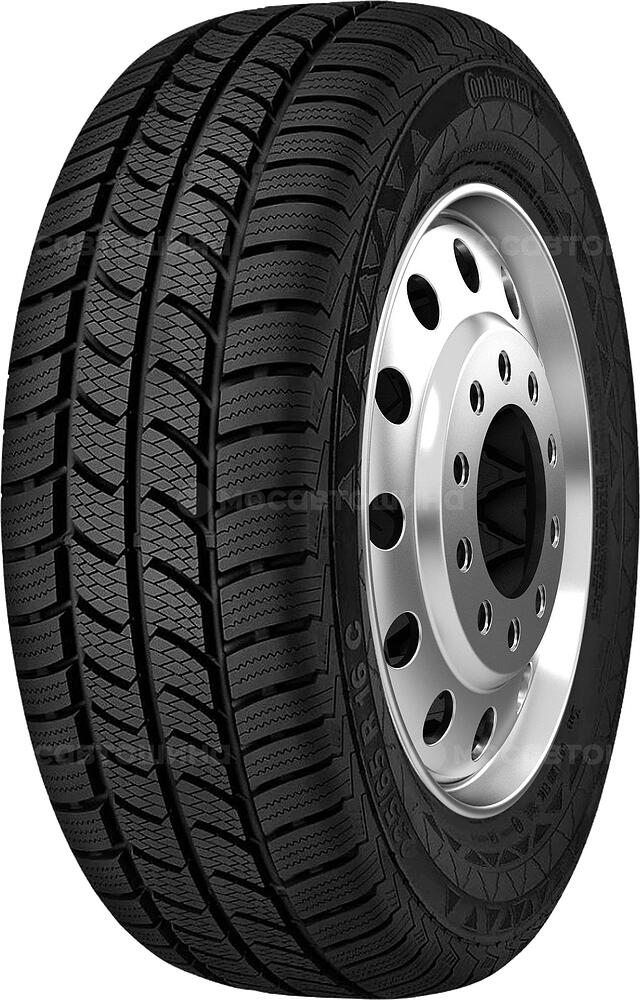
Continental VancoWinter 2
Tire specifications
DescriptionDescription Continental VancoWinter 2
The Continental VancoWinter 2 commercial winter tire stands out from many of its direct competitors with its higher technical specifications. This superiority was achieved thanks to a number of technological innovations "borrowed" from passenger car models of the well-known German manufacturer.
Several types of lamellas
One such "borrowing" is the use of two types of lamellas, each with its own functionality.
In particular, in the shoulder areas, there are wavy lamellas cut into blocks at almost a right angle to the direction of movement. Due to this arrangement, these miniature tread elements provide maximum efficiency when braking, especially on icy roads. At the same time, the wavy shape of the lamella walls significantly limits the transverse mobility of the shoulder blocks, which, in turn, leads to an increase in the stability of the traction properties and handling during maneuvering and cornering.
In contrast to the shoulder areas, T-shaped lamellas are located in the central part of the tread. When in contact with the road, they not only form a multitude of traction edges but also significantly increase the contact patch due to the deformation of the tread blocks, optimizing the distribution of external pressure on it. In addition, when driving on wet roads, such lamellas increase resistance to aquaplaning, draining excess water into one of the nearby drainage grooves.
Reliable behavior in adverse weather conditions
A distinctive feature of the tread of this model is the increased size of the longitudinal and transverse drainage grooves. This allows them to effectively handle not only water but also more massive snow masses from the contact patch. This design feature provides the tire with reliable behavior in snowy slush.
Main features of the Continental VancoWinter 2 tire
- two types of lamellas improve most of the main operational properties of the tire, from traction on ice and rolled snow to resistance to aquaplaning and uneven wear;
- increased drainage groove sizes allow the tread to effectively handle the removal of snowy slush from the contact patch.
In stock and to order
| Modification | Availability | Price | |
|---|---|---|---|
| Continental VancoWinter 2 225/70 R15C 112/110R | 14 000 ₽ |
Reviews 57
Add a feedback- Dry road
- Wet road
- Snow
- Ice
- Course stability
- Comfort
- Silent
- Braking
- Rate
- Aquaplaning
- Speed
- Wearability
- Quality
- Price/performance
- Rate
Tires are installed on a 4.6 t commercial old Mercedes. Speed is not over 100 km. Take this into account. This tire has been worn out for one winter season, very pleased. Soft, well-grip the road. Softly pass through potholes. Prior to the Japanese were installed. Hard compared to Continental. The car is working on a delivery goods. Had to drive and on the highway and in the courts and in the villages. No problems anywhere. Cop
- Vehicle:
- Mercedes Sprinter
- Control on a dry road
- Steering in the wet
- Control in the snow
- Control on ice
- Drive comfort
- Course stability
- Quiet in motion
- Braking efficiency
- Resistant to aquaplaning
- Velocity characteristics
- Wearability
- Quality of production
- Price justifiability
- Rate
I purchased tires at an online store and was very pleased with the work of the specialists. The tires arrived on time and were of high quality.
- Vehicle:
- ГАЗ Gazelle Next
- Buy again?:
- Definitely yes
- Control on a dry road
- Steering in the wet
- Control in the snow
- Control on ice
- Drive comfort
- Course stability
- Quiet in motion
- Braking efficiency
- Resistant to aquaplaning
- Velocity characteristics
- Wearability
- Quality of production
- Price justifiability
- Rate
Very good traction in deep snow, but only a little bit on ice. Handling on dry roads is not so good due to the deep tread pattern, which is very flexible, but I think you should expect that from a budget winter tire.
- Vehicle:
- Mercedes Sprinter
- Size:
- 225/70 R16 T
- Buy again?:
- Definitely yes
- Control on a dry road
- Braking on dry roads
- Steering in the wet
- Braking on wet roads
- Control in the snow
- Drive comfort
- Internal noise
- External noise
- Wearability