Tyres and wheels for Peugeot 605, wheel size on Пежо 605
Другие модели Peugeot
Peugeot 1007, Peugeot 104, Peugeot 106, Peugeot 107, Peugeot 108, Peugeot 2008, Peugeot 204, Peugeot 205, Peugeot 206, Peugeot 207, Peugeot 208, Peugeot 3008, Peugeot 301, Peugeot 304, Peugeot 305, Peugeot 306, Peugeot 307, Peugeot 308, Peugeot 308S, Peugeot 309, Peugeot 4007, Peugeot 4008, Peugeot 405, Peugeot 406, Peugeot 407, Peugeot 408, Peugeot 408X, Peugeot 5008, Peugeot 504, Peugeot 505, Peugeot 508, Peugeot 508 RXH, Peugeot 508L, Peugeot 604, Peugeot 605, Peugeot 607, Peugeot 806, Peugeot 807, Peugeot Bipper Tepee, Peugeot Bipper Tepee, Peugeot Boxer, Peugeot Expert Tepee, Peugeot Expert Tepee, Peugeot Hoggar, Peugeot iOn, Peugeot Landtrek, Peugeot Manager, Peugeot Partner, Peugeot Partner Crossway, Peugeot Partner Origin, Peugeot Partner Origin VU, Peugeot Partner Rapid, Peugeot Partner Tepee, Peugeot Partner VU, Peugeot RCZ, Peugeot RCZ Sport, Peugeot Rifter, Peugeot Traveller,Параметры дисков на Пежо 605
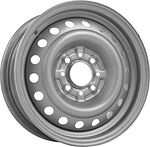
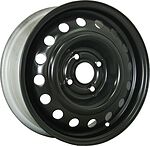
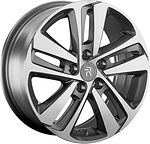
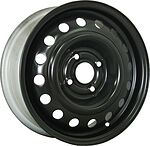
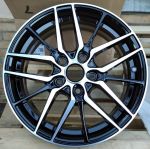
- PCD 5x10⁸ диаметром от 15 до 15, шириной от 5.5 до 6.5 и профилем от ET15 до ET45как у ГАЗ 3102
Tires on Peugeot 605
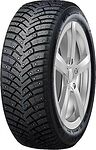
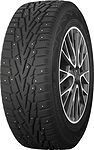
- Tyre size from R15 to R16, width from 185 to 205 and profile from 60 to 65V.
- Minimum tyre size: 185/65H R15, maximum: 205/65V R15







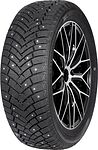

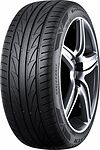
Tires on Peugeot 605 (Пежо)
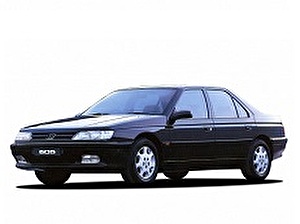
The Peugeot 605 sedan debuted in 1989, representing a business-class model and occupying the flagship position in the production range of the French brand. At the time of its appearance, the European segment of class E models was at the peak of popularity, thanks to the presence on the market of the BMW 5 Series (E34), Mercedes-Benz W124, and Audi 100 (C4). The French manufacturer attempted to offer an alternative to the German engineering school - a combination of modern technologies with a high level of comfort.The car was developed in conjunction with the Italian Pininfarina, which was responsible for the final finishing of the exterior design. As a result, a large sedan with a length of almost 4.7 meters was created, with a characteristic wedge-shaped body line of the late 1980s and good aerodynamics - the drag coefficient was around 0.30, which was a worthy indicator for a representative car of that time. Within the corporate hierarchy, the 605 was intended to play the role of a prestigious car for executives, government agencies, and business clients, while competing with German sedans due to its rich equipment and very smooth ride for its class.
Platform Construction and Engineering Base
In technical terms, the sedan was a "close relative" of the Citroen XM, sharing the same platform. The key difference was the absence of a hydropneumatic suspension, which was a "signature" feature of the entire Citroen brand. The 605 received a spring chassis with a front suspension "MacPherson" and a complex multi-link construction at the rear on longitudinally arranged levers. The kinematics were distinguished by long strokes and smooth damping of impact, which gave passengers a feeling of "floating" on the road, becoming one of the key features of this sedan. Added to this was an optimized "power cage" body structure with an increased number of reinforcing elements, which significantly increased torsional and bending stiffness. This noticeably improved the accuracy of steering and stability of traction at high speeds and maneuvering. The steering is rack-and-pinion with a hydraulic amplifier, tuned for ease of rotation, which also emphasized the philosophy of the model, where comfort was the prevailing factor.
The range of power units was diverse and gradually expanded during the life cycle of the model. The base versions were equipped with four-cylinder gasoline engines of the XU family with a volume of 2.0 liters, including turbocharged versions with a power of up to 147 horsepower. However, the main technical pride of the model was the V6 PRV - an engine developed by the Peugeot-Renault-Volvo consortium. This unit was installed on more expensive modifications and was offered in 3.0-liter versions. Its power reached 170-200 horsepower, providing the sedan with a worthy dynamics for its time.
A significant part of the engine range consisted of turbocharged diesel engines with a volume of 2.1 and 2.5 liters, which were distinguished by high torque and economy. It was these versions that were particularly popular among corporate clients and taxi fleets in Europe. Transmissions were offered as 5-speed manual and 4-speed automatic ZF transmissions.
Equipment and Comfort
One of the key arguments of the model was its rich equipment, often surpassing the offers of competitors of that time in the same price category. Among the available options were electronic climate control, leather interior trim, electric adjustments of the front seats, heated seats, on-board computer, premium audio system, electric windows of all doors, and an electric sunroof. In later versions, airbags, ABS, and traction control systems appeared, which corresponded to the growing safety standards of the mid-1990s. The noise insulation deserves special attention: thick glass, developed insulation of the engine compartment, and soft suspension created a quiet atmosphere in the cabin, designed for long trips.
Updated Version
In 1994, the car underwent a fairly extensive modernization. The equipment included new-generation electronic assistants, which led to a virtually complete overhaul of the on-board wiring. The engine range changed significantly. The update also affected the design of the exterior and interior of the car. After restyling, it became noticeably more reliable, which allowed extending its life cycle until 1999, when a new flagship - the Peugeot 607 - replaced it. Nevertheless, the standard wheels with a mounting diameter of 15 and 16 inches, as well as the most common tire sizes - 195/65 R15, 205/60 R15, and 215/55 R16 - remained. Such parameters allow selecting a wide range of modern tires and alloy wheels, making it convenient and profitable to update the wheels when purchasing through the "Mosavtoshina" online store.
Advantages of selecting tires for the Peugeot 605 on our website:
- The catalog features dozens of models of summer, winter, and all-season tires, allowing you to choose the optimal option for the massive business sedan, considering comfort, resource, and stability on the highway.
- The automated search system with convenient filtering by several parameters allows quickly finding compatible options without the risk of error;
- The variety of cast and stamped steel wheels with suitable parameters provides the opportunity not only to replace the standard wheels but also to visually update the car;
- Our specialists will help with the selection, offering optimal combinations of operational properties.