Tyres and wheels for Daihatsu Xenia, wheel size on Даихатсу Хениа
Подбор шин и дисков по автомобилю Даихатсу Хениа

Другие модели Daihatsu
Daihatsu Altis, Daihatsu Applause, Daihatsu Atrai, Daihatsu Atrai 7, Daihatsu Atrai Wagon, Daihatsu Ayla, Daihatsu Be-Go, Daihatsu Boon, Daihatsu Boon Luminas, Daihatsu Cast, Daihatsu Cast Activa, Daihatsu Cast Sport, Daihatsu Cast Style, Daihatsu Charade, Daihatsu Coo, Daihatsu Copen, Daihatsu Cuore, Daihatsu Dario Terios, Daihatsu Delta Wagon, Daihatsu Delta Wide, Daihatsu Esse, Daihatsu Feroza, Daihatsu Gran Max, Daihatsu Gran Move, Daihatsu Hi-Max, Daihatsu Hijet, Daihatsu Hijet Caddie, Daihatsu Hijet Truck, Daihatsu Leeza, Daihatsu Luxio, Daihatsu Materia, Daihatsu Max, Daihatsu Mebius, Daihatsu Mira, Daihatsu Mira Avy, Daihatsu Mira Cocoa, Daihatsu Mira Custom, Daihatsu Mira e:S, Daihatsu Mira Gino, Daihatsu Mira Gino 1000, Daihatsu Mira Tocot, Daihatsu Move, Daihatsu Move Canbus, Daihatsu Move Conte, Daihatsu Move Conte Custom, Daihatsu Move Custom, Daihatsu Move Latte, Daihatsu Naked, Daihatsu Opti, Daihatsu Pyzar, Daihatsu Rocky, Daihatsu Rugger, Daihatsu Sigra, Daihatsu Sirion, Daihatsu Sonica, Daihatsu Storia, Daihatsu Taft, Daihatsu Tanto, Daihatsu Tanto Custom, Daihatsu Tanto Exe, Daihatsu Tanto Exe Custom, Daihatsu Tanto FunCross, Daihatsu Terios, Daihatsu Terios Kid, Daihatsu Terios Lucia, Daihatsu Thor, Daihatsu Thor Custom, Daihatsu Trevis, Daihatsu Wake, Daihatsu Xenia, Daihatsu YRV,Параметры дисков на Даихатсу Хениа
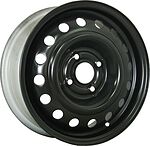
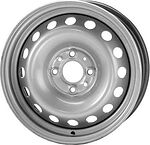
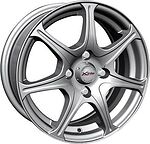
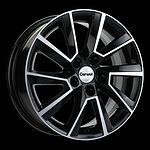
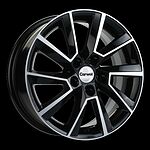
- PCD 4x114.3 диаметром от 13 до 14, шириной от 4.5 до 5.5 и профилем от ET42 до ET45как у Suzuki Cultus
Tires on Daihatsu Xenia
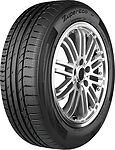
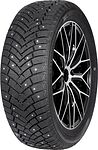
- Tyre size from R13 to R16, width from 165 to 195 and profile from 60 to 80.
- Minimum tyre size: 165/70 R13, maximum: 195/60 R16




Tires on Daihatsu Xenia (Даихатсу)
The compact minivan Daihatsu Xenia is a copy of the Toyota Avanza. The car debuted in the Japanese brand's lineup in 2007, being intended, like the "original", for the Indonesian market.First Generation
The car presented in 2007 was positioned as a more affordable alternative to Avanza in Indonesia, differing from this model with less equipment, including safety features. The minivan had a larger number of additional options available, ranging from front bumper protection to side moldings. Technically, both cars did not differ from each other. The engine range started with a 1-liter inline-three gasoline engine with 56 horsepower and 90 Nm of torque. To minimize the load on the power unit, such modifications were deprived of air conditioning and equipped with a 5-speed manual transmission and 13-inch wheels. A few months after the start of sales, the minivan appeared in China, where it was produced at a joint venture with FAW. This version was available with both 5- and 7-seat saloons, but already with a more powerful and torquey engine with a volume of 1.3 or 1.5 liters.Second Generation
In the fall of 2011, the premiere of the minivan of the second generation took place. Compared to its predecessor, it differed in the use of a classic frame construction, rather than its combination with a bearing body in the front part. This made it possible to significantly reduce the weight and improve handling. It is also worth noting that the new "cart" from the Terios crossover differed in an expanded track and the possibility of installing tires with a wider tread. In the front, there were "MacPherson" struts, and in the back, a progressive for this class at the turn of the 2010s, complex 4-link suspension, which increased comfort and directional stability. Another important difference was the smaller thickness of the backrests of the seats of the first two rows. This made it possible to increase the space for the knees of the second row passengers and the "gallery". In technical terms, the car again repeated the Toyota Avanza, having a large number of trim levels, but with less equipment. The engine range again consisted of "atmospheric" gasoline engines with a volume of 1 and 1.3 liters, but which had undergone a modernization cycle, within which both power units were equipped with the VVT-i fuel injection system. The "1-liter" engine was combined only with a 5-speed mechanics, and for the more powerful 1.3-liter version, a 4-range automatic transmission was also available.Third Generation
In 2021, the Japanese brand presented a car of the third generation. This time, a progressive modular platform DNGA was used, which implies a combination of a bearing body, rather than a frame, with front-wheel drive. The chassis consisted of a combination of "MacPherson" struts in the front and a semi-dependent beam and drum brake mechanisms in the back. Depending on the version, the clearance was 195 or 205 mm. The new "cart" significantly increased the dimensions of the minivan. It became 205 mm longer, of which 95 mm fell on the wheelbase. A distinctive feature of the minivan was the trim materials, which were less expensive than those of the original version from Toyota. The basic modifications differed in good equipment for this class, offering, among other options, a 7-inch touch-sensitive display of the multimedia system. Traditionally, the list of additional equipment was wider than that of Toyota - cameras with a circular view, a complex of electronic "assistants", cameras with a circular view, access to the salon without a key and a button to start the engine. It contained a "styling package" unavailable to Toyota, which included a sports plastic body kit around the perimeter of the body, materials resembling carbon fiber, and a large number of decorative elements painted in red.Another difference from Avanza was the engine range. In addition to the common "1-liter" gasoline engine in tandem with a 5-speed "mechanics" for the minivan, a "pair" of a 1.3-liter engine with 98 horsepower and a D-CVT variator was offered, where, in addition to the belt drive mechanism, a hydraulic transformer and a "mechanical" gear are used, which is automatically activated when driving at a speed of over 60 km/h. The range included versions with a 105-horsepower gasoline engine with a volume of 1.5 liters, which could be combined with both "mechanics" and a variator transmission. The standard wheels for this car have a mounting diameter of 15 and 16 inches, and the base versions are equipped with steel discs, which, along with tires, can be purchased at the "Mosavtoshina" online store.
Advantages of selecting tires for Daihatsu Xenia on our website:
- the ability to independently perform the selection, using for this purpose a minimum of technical characteristics of disks and tires;- a catalog that offers a large number of tires for minivans with increased ground clearance;
- stamped and aluminum wheels with a diameter of 15 and 16 inches are presented in a wide range, including both factory models and their analogs with identical parameters from leading domestic and foreign brands;
- our specialists will help you make a choice, giving preference to options with an optimal set of advantages