Tyres and wheels for Daihatsu Boon, wheel size on Даихатсу Боон
Подбор шин и дисков по автомобилю Даихатсу Боон
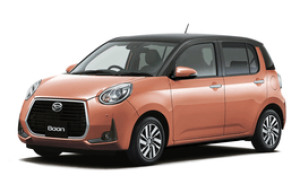
Другие модели Daihatsu
Daihatsu Altis, Daihatsu Applause, Daihatsu Atrai, Daihatsu Atrai 7, Daihatsu Atrai Wagon, Daihatsu Ayla, Daihatsu Be-Go, Daihatsu Boon, Daihatsu Boon Luminas, Daihatsu Cast, Daihatsu Cast Activa, Daihatsu Cast Sport, Daihatsu Cast Style, Daihatsu Charade, Daihatsu Coo, Daihatsu Copen, Daihatsu Cuore, Daihatsu Dario Terios, Daihatsu Delta Wagon, Daihatsu Delta Wide, Daihatsu Esse, Daihatsu Feroza, Daihatsu Gran Max, Daihatsu Gran Move, Daihatsu Hi-Max, Daihatsu Hijet, Daihatsu Hijet Caddie, Daihatsu Hijet Truck, Daihatsu Leeza, Daihatsu Luxio, Daihatsu Materia, Daihatsu Max, Daihatsu Mebius, Daihatsu Mira, Daihatsu Mira Avy, Daihatsu Mira Cocoa, Daihatsu Mira Custom, Daihatsu Mira e:S, Daihatsu Mira Gino, Daihatsu Mira Gino 1000, Daihatsu Mira Tocot, Daihatsu Move, Daihatsu Move Canbus, Daihatsu Move Conte, Daihatsu Move Conte Custom, Daihatsu Move Custom, Daihatsu Move Latte, Daihatsu Naked, Daihatsu Opti, Daihatsu Pyzar, Daihatsu Rocky, Daihatsu Rugger, Daihatsu Sigra, Daihatsu Sirion, Daihatsu Sonica, Daihatsu Storia, Daihatsu Taft, Daihatsu Tanto, Daihatsu Tanto Custom, Daihatsu Tanto Exe, Daihatsu Tanto Exe Custom, Daihatsu Tanto FunCross, Daihatsu Terios, Daihatsu Terios Kid, Daihatsu Terios Lucia, Daihatsu Thor, Daihatsu Thor Custom, Daihatsu Trevis, Daihatsu Wake, Daihatsu Xenia, Daihatsu YRV,Параметры дисков на Даихатсу Боон
- PCD 4x100 диаметром от 13 до 14, шириной от 4.5 до 5 и профилем от ET35 до ET40как у Geely Otaka
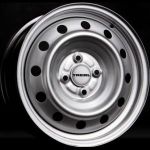

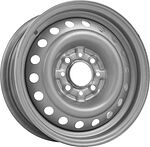
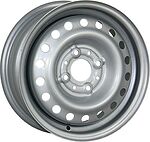
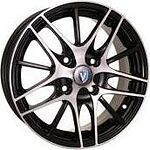
Tires on Daihatsu Boon
- Tyre size from R13 to R14, width from 155 to 175 and profile from 65 to 80.
- Minimum tyre size: 155/80 R13, maximum: 175/65 R14






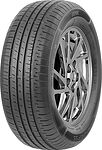
Tires on Daihatsu Boon (Даихатсу)
The subcompact Daihatsu Boon model was in the production range of the Japanese brand from 2004 to 2023. During this time, it played an important role in the brand's history, becoming a platform for creating a number of interesting cars. In its concept, the model represented an individual vehicle with a wide range of applications and minimal operating costs, provided it was used within the city limits.First Generation: Focus on Simplicity and Low Fuel Consumption
The debut generation was distinguished by maximum rationality. With small dimensions, the hatchback offered a surprisingly spacious salon, which was due to the high body height and the shortened engine compartment, along with the wheels positioned at the corners. The basic versions were equipped with a 1-liter gasoline "triple" with a power of 71 hp and a torque of 94 Nm. An alternative to it was a "adult" 4-cylinder unit with a volume of 1.3 liters, developing 90 hp. Depending on the equipment version, the power unit was combined with a 4-speed "automatic" or a variator. Some versions were available with a four-wheel drive system with a viscous coupling on the rear axle. Later, based on the first-generation model, a "charged" version of the Boon X4 was created. This modification received a 936-cubic centimeter turbo engine with a power of 133 hp, four-wheel drive, and a mechanical transmission. The compact hatchback was created for homologation in autosport and was actually a different car.
The salon of the first generation looked utilitarian, but already then the model was favorably distinguished by good visibility and high seating. For the Japanese market, this was of particular importance, since the Boon was often considered as an alternative to larger family models.
Second Generation: More Comfort and Universality in Application
The release of the second generation took place in 2010. While preserving the concept of its predecessor, it was favorably distinguished by a more "car-like" design and a modern interior. However, the main emphasis was on a higher level of comfort combined with reduced fuel consumption. To a significant extent, this was due to the use of a modernized platform from the previous model, which reduced weight and was designed for the installation of a suspension with revised settings for smoothness of movement.
The base remained a 1-liter 3-cylinder engine, but after a cycle of modernization, which reduced its fuel appetite and vibrations during operation. The top versions were still equipped with a 1.3-liter engine, which became slightly more powerful — 95 hp. And both power units could be combined only with a variator.
Inside, the "Boon" of the second generation represented a classic hatchback, which could be used as a family vehicle. There were more storage compartments, the trim materials were improved, and the seating became more comfortable for long trips. For the Japanese market, compactness remained an important advantage. The turning radius was one of the best in the class, thanks to which the Boon was well suited for narrow streets and multi-level parking lots.
The CL Limited version deserves special attention, with improved trim and extended equipment. In these versions, climate control, keyless access, and multimedia systems with touch screens were already available, which looked quite modern for the budget segment of the early 2010s.
Third Generation: Transition to Modern Electronics
The hatchback of the third generation appeared in 2016. The changes affected mainly technical components. First of all, the body, which, due to the optimized "power cage," became much stronger in bending and torsion. Its exterior design was more emotional than before — complex lighting, a large radiator grille, and pronounced side lines.
The main technical feature was the introduction of the Smart Assist complex of electronic assistants. Even a compact city hatchback received a system of automatic braking, collision prevention, lane control, and recognition of obstacles at low speed. The main engine remained a 3-cylinder 1.0-liter engine. It works in combination with a CVT variator. For individual markets and trim levels, four-wheel drive is provided. Despite modest characteristics, the power unit turned out to be very economical. In city mode, fuel consumption in some versions drops below 4 liters per 100 kilometers according to the Japanese cycle.
The interior has significantly approached modern "Toyota" and "Daihatsu" models located higher in the model range. The front panel received a horizontal architecture, improved ergonomics, and a multimedia display with a diagonal of up to 7 inches. In expensive versions, climate control, all-around cameras, and a developed set of electronic assistants are available.
The factory parameters for this model are wheels with a diameter of 13 to 15 inches, along with tires in the size of 165/65 and 175/55. For a compact city hatchback, lightweight discs and energy-efficient tires are especially important, allowing for reduced fuel consumption and preserved softness of the ride on poor road surfaces. In the assortment of the "Mosavtoshina" online store, both practical all-season models and quiet city tires are available, which are well suited for daily operation.
Advantages of Selecting Tires for Daihatsu Boon on Our Website:
- the assortment of tires is represented by models with accents on various driving properties, which allows for their selection based not only on the specific version of the hatchback but also on personal preferences;
- the possibility of purchasing stamped and cast disks in "factory" parameters, which is a guarantee of preserving the "brand" combination of comfort and manageability;
- independent search on the site simplifies the selection of suitable tire sizes and wheel disks for different generations;
- managers will quickly perform the selection of wheel products, provide detailed information on each of the proposed options, which will allow making a rational choice between them.