Tyres and wheels for Buick Le Sabre, wheel size on Бьюик Ле Сабр
Подбор шин и дисков по автомобилю Бьюик Ле Сабр
Другие модели Buick
Buick Allure, Buick Cascada, Buick Century, Buick Electra, Buick Electra E4, Buick Electra E4 GS, Buick Electra E5, Buick Electra E7, Buick Electra L7, Buick Encasa, Buick Enclave, Buick Encore, Buick Encore GX, Buick Encore Plus, Buick Envision, Buick Envision Plus, Buick Envision S, Buick Envision S GS, Buick Envista, Buick Envista GS, Buick Excelle, Buick Excelle GT, Buick Excelle GX, Buick Excelle XT, Buick GL6, Buick GL8, Buick GL8 ES, Buick GL8 LS, Buick GL8 PHEV, Buick Grand National, Buick La Crosse, Buick Le Sabre, Buick Lucerne, Buick Park Avenue, Buick Rainier, Buick Regal, Buick Regal GS, Buick Regal TourX, Buick Rendezvouz, Buick Riviera, Buick Roadmaster, Buick Royaum, Buick Sail, Buick Skylark, Buick Terraza, Buick Velite 5, Buick Velite 6, Buick Velite 7, Buick Verano, Buick Verano GS, Buick Verano Pro, Buick Verano Pro GS, Buick Wildcat,Параметры дисков на Бьюик Ле Сабр
- PCD 5x127 диаметром от 15 до 15, шириной от 6 до 6 и профилем от ET0 до ET0как у Chevrolet C1500
Tires on Buick Le Sabre
- Tyre size from R15 to R15, width from 205 to 225 and profile from 65 to 75S.
- Minimum tyre size: 205/65 R15, maximum: HR78-15






Tires on Buick Le Sabre (Бьюик)
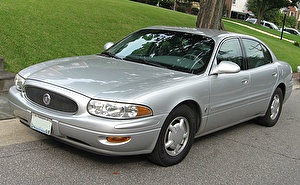
The Buick Le Sabre was in the production range of the North American brand from 1959 to 2005. Throughout this time, the car represented a full-size model, available in several body styles, including a convertible and coupe. Its name was borrowed from the French language, where the word Sabre referred to a sabre, one of the variants of cold weapons used in the cavalry of European countries during the Napoleonic Wars.First Generation
Along with the new model, a new styling of the cars of the North American brand debuted, largely coinciding with the design of cars of other brands that are part of General Motors. The platform and technical components were unified with Cadillac, differing in a massive chrome radiator grille with integrated dual headlights, as well as a hood with a curved front edge. At the back, there were enlarged "fins". In a technical sense, the car stood out due to the presence of a 250-horsepower gasoline V8 with a volume of 6 liters under the hood, working in tandem with a 3-speed manual transmission or a 2-range "automatic". All released instances used unique aluminum drum brakes with a diameter of 12 inches at that time.Second Generation
The model that debuted in 1961, the second iteration, differed in a more restrained design, standing out with less chrome and more conservative forms. The car became a bit smaller, while preserving a significant wheelbase, which, as before, was 3100 mm, due to the use of a new chassis. Inside, the model stood out with a revised interior, including vinyl trim, which was standard for the station wagon. Under the hood, there was still a 6-liter V8 with 250 or 300 horsepower, which was combined with a 2-speed "automatic", which became part of the car's standard equipment.Third Generation
The car of the third iteration was presented in 1965. Compared to its predecessor, it differed in more rounded body lines with a "fashionable" profile for that time, reminiscent of Coca-Cola bottles. An important innovation was the division into two trim levels, one of which was the Custom, as it significantly changed the concept of the model due to more extensive equipment and expensive finishing materials. In a technical sense, the car stood out due to a changed engine range, consisting of a larger number of gasoline V8s with volumes from 4.9 to 7.5 liters. Some of them, due to the high compression ratio, required the use of higher-quality fuel. The power units in the expensive trim versions were combined with a new 3-speed automatic transmission.Fourth Generation
Like the models of other brands from the General Motors lineup, the car of the fourth generation, presented in 1971, preserved only a partial technical connection with its predecessor. The transition to a new platform significantly increased the dimensions and weight, and also brought a number of changes in the design with a characteristic lowered window line and increased width of the windshield and side windows. Under the hood, there were modified versions of the V8 from the previous model, adapted to work on fuel with a low octane number. The standard equipment included disc brake mechanisms at the front, along with power "struts" in the roof cavities, protecting passengers from injury in the event of a rollover. An important innovation was the appearance in the car of a system of through ventilation of the salon, for which a heater fan was used, which drew air inside, which was then pushed out through special openings in the rear of the car. This solution proved to be effective in hot weather, as it significantly reduced the temperature in the salon when moving at low speed. In the winter, this system became a subject of criticism, as it drew in very cold air inside in the first minutes of driving, before the engine warmed up to "working" temperatures.Fifth Generation
The model that debuted in 1977, the fifth iteration, was only nominally full-size, as it significantly decreased in size and weight compared to its predecessor. This was a result of the fuel crisis that occurred in 1973-1974. In addition, this led to a refusal to use gasoline V8s in a significant part of the modifications, which were replaced by 6-cylinder engines of a similar design with volumes of 3.8 and 4.1 liters. Despite the smaller dimensions, the car offered a bit more space for passengers in the second row and in the trunk than its larger predecessor.Sixth Generation
The car presented in 1986 was created on the H platform from General Motors, differing from its predecessor in a front-wheel drive, which it shared with the Oldsmobile Delta and Pontiac Bonneville. Against their background, the model stood out with a more brutal design, in which straight angles and lines prevailed. Under the hood of most released instances, there was a V6 of its own design, with a volume of 3.8 liters and balancing shafts, distinguished by a minimal level of vibration, while developing 170 horsepower. Among other technical features, it is worth noting the presence of a system for leveling the body, for which a onboard air compressor was used, pumping pneumatic elements on the rear wheels, depending on the load of the car.Seventh Generation
The car of the seventh iteration was presented in 1991, being executed in the same style as the higher-ranking Park Avenue sedan. In the lineup of modifications, there was no coupe, and in the concept of use, priority was given to comfort and practicality. In particular, the trunk lid was extended to the bumper, reducing the height of the luggage compartment. Another important difference from its predecessor was the appearance of plastic body panels, such as front fenders. Subsequently, these parts became steel after the restyling in 1997. Under the hood, there was still a 170-horsepower V6 with a volume of 3.8 liters, which accelerated the sedan to "hundred" in 9 seconds, consuming from 13.1 liters in the city and from 8.4 liters on the highway. The standard equipment included a Gran Touring suspension with controlled pneumatic shock absorbers at the back. The car was offered in two trim versions, and only in the top-end Limited were 15-inch alloy wheels available, which, among other wheel products, can be purchased in the "Mosavtoshina" online store.Advantages of selecting tires for Buick Le Sabre on our website:
- simplicity and comfort when selecting suitable options on the site with an integrated search system;- a significant part of the catalog is tires for full-size North American sedans and coupes;
- the possibility of purchasing original disks for this car of any production year, as well as similar products from leading global brands;
- our employees will help you choose the optimal disks and tires, offering at least several models.