Tyres and wheels for Rover 75, wheel size on Ровер 75
Подбор шин и дисков по автомобилю Ровер 75
Другие модели Rover
Rover 100, Rover 200, Rover 25, Rover 400, Rover 45, Rover 600, Rover 75, Rover 800, Rover City Rover, Rover Maestro, Rover Metro, Rover SD1, Rover Streetwise,
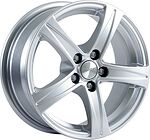
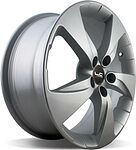
Tires on Rover 75
- Tyre size from R15 to R15, width from 195 to 195 and profile from 65 to 65
- Minimum tyre size: 195/65 R15, maximum: 225/40 R18
Favorite winter tires
Наиболее популярные модели шин
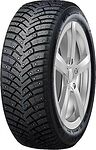




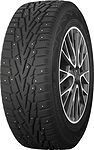



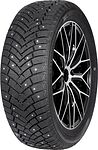

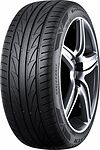
Tires on Rover 75 (Ровер)
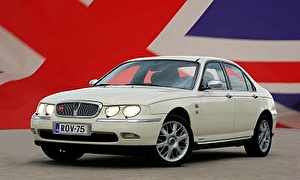
Rover 75 is a mid-size passenger car that was produced from 1998 to 2005. The project was part of the British company's strategy to update its model range after being acquired by the German BMW.History of creation
The work on creating the car began as part of the design of three models belonging to different segments. Of these, only the smaller sedan, which was then called Epic, and then R40, received further development. The development was carried out with minimal participation from BMW, largely due to the design, which received enthusiastic feedback from the management of the German automaker. They believed that the classic exterior design was the best solution for Rover. The release of the model with the index 75 took place in October 1998, and its sales began in the summer of the following year.Initial version
At the start of mass production, the car was released only with one body type - a sedan. It had a fairly diverse engine range, consisting of petrol and diesel engines with volumes from 1.8 to 2.5 liters. The "base" was a 1.8-liter petrol engine of the K series of its own design, as well as the "four" KV6, which in the "short-stroke" version was 2 liters, and in the updated version with an increased piston stroke - 2.5 liters. Later, the 2-liter engine was replaced with a 1.8-liter turbocharged engine. The "diesels" were provided by the BMW Group, but significantly redesigned with the help of the Austrian Steyr for their transverse installation. The M47, used in the BMW 3rd and 5th series, was taken as the basis, differing from them in the presence of CommonRail, a different turbocharger, and a more complex thermal control system.The initial version of the car was equipped with a 5-speed manual transmission from Getrag. Optionally, a 5-speed "automatic" from JATCO was offered, which became the first experience of using this transmission in conjunction with a transversely mounted engine. Another feature was the suspension. In the front, a MacPherson with aluminum lower arms and an increased distance between the attachment points was used. In the back, a "multi-link" from the BMW Z1 of 1988 with minor changes was installed.
Version in the station wagon body
In the summer of 2001, the release of the car in the station wagon body took place, which received the name Tourer. The rear door in the expensive configuration had an opening separate glass section. Due to the increased rear overhang, the volume of the luggage compartment, depending on the arrangement of the second row of seats, was from 400 to 680 liters. In the list of options for the car, a body leveling system was offered, and the roof already had a reinforced structure in the standard configuration, capable of withstanding a load of up to 100 kg.Version with V8 engine
In 2004, the brand announced a "charged" version of the car, which had a number of differences from the standard version. First of all, this is a significantly redesigned platform, on which it was planned to install a 4.6-liter V-shaped "eight" from Ford with a power of 256 horsepower, an increased tunnel for wheel drive details, and a re-developed rear suspension. Instead of the mechanical transmission Tremec, used earlier on the most powerful modifications of this model, a "automatic" 4R75W from Ford was installed. Other changes included a modified ventilation and heating system, strengthened brakes, four exhaust pipes, a "sports" front bumper, and an enlarged logo on the radiator grille, which became much larger. The car turned out to be more than dynamic, exchanging the first "hundred" in 6.2 seconds. In a special version, it set a speed record for non-series station wagons at the Bonneville Salt Flats, accelerating to 363 km/h, being equipped with the same engine as the standard version, but tuned to 6 liters with a power of 776 horsepower. Despite being out of production since 2005, this model can still be found on domestic roads. Tires and wheels are represented in large quantities in the online store "Mosavtoshina".Advantages of selecting tires for Rover 75 on our website:
- the catalog is composed of both novelties of the tire industry and models that have become popular;- a wide range of alloy wheels suitable for any modification of this car;
- an automated selection system allows you to avoid complexities and loss of time when searching for suitable options;
- in case of difficulties with the selection, our employees will always help, providing all possible assistance.