Its high technical characteristics, the winter studded tire Moscow M-277 owes to the tire products of European and Scandinavian manufacturers, which this model very carefully copies. This should not be considered a disadvantage, since this design feature provides domestic car owners with the opportunity to purchase a modern winter tire with quite high technical characteristics at a significantly lower cost.
Original V-shaped tread pattern
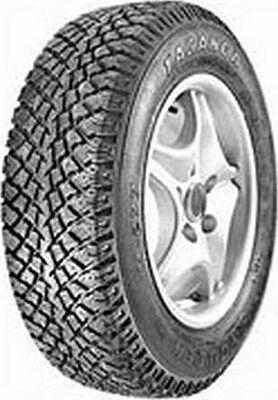
The symmetric tread pattern used in the Moscow M-277 model is distinguished by a truly original design. The lack of triviality in it is ensured by the absence of clearly expressed tread ribs, which is due to the scheme of placement of numerous separate tread blocks. From them, a multitude of transverse rows are formed, converging in the central part of the tread.
This design has several important advantages at once. First of all, it is the presence of a large number of very long engagement edges, located predominantly in the transverse direction. Thanks to this design feature, the tire demonstrates high efficiency when accelerating and braking, especially when driving on slippery roads from snow or ice.
Another significant advantage is the presence of a very developed system of drainage channels laid between the numerous tread blocks. At the same time, the distance between them and the depth of the tread are large enough to ensure the possibility of very rapid removal from the contact patch not only of water but also of more heavy snow masses.
Main features of the Moscow M-277 tire
- excellent coupling properties on any winter surface are ensured by the optimized V-shaped design of the symmetrical directional tread pattern;
- an increased number of engagement edges formed during movement not only by numerous tread blocks but also by wavy lamellas cut into them, allow confident movement on snow and ice;
- an effective drainage system, the performance of which is ensured by the open design of the tread pattern;
- massive blocks of the shoulder zones of the tread improve stability when passing turns, and also contribute to a more even distribution of external weight over the contact patch.
 Enlarge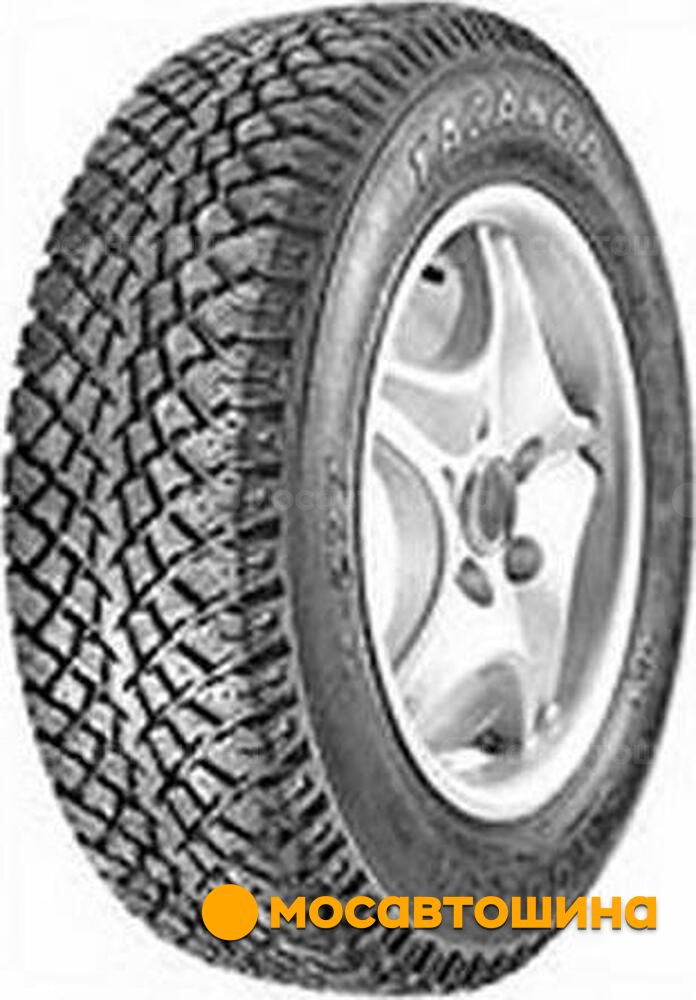
 РОССИЯ