Tyre reviews Pirelli Scorpion Verde All Season. Page 1 173
-
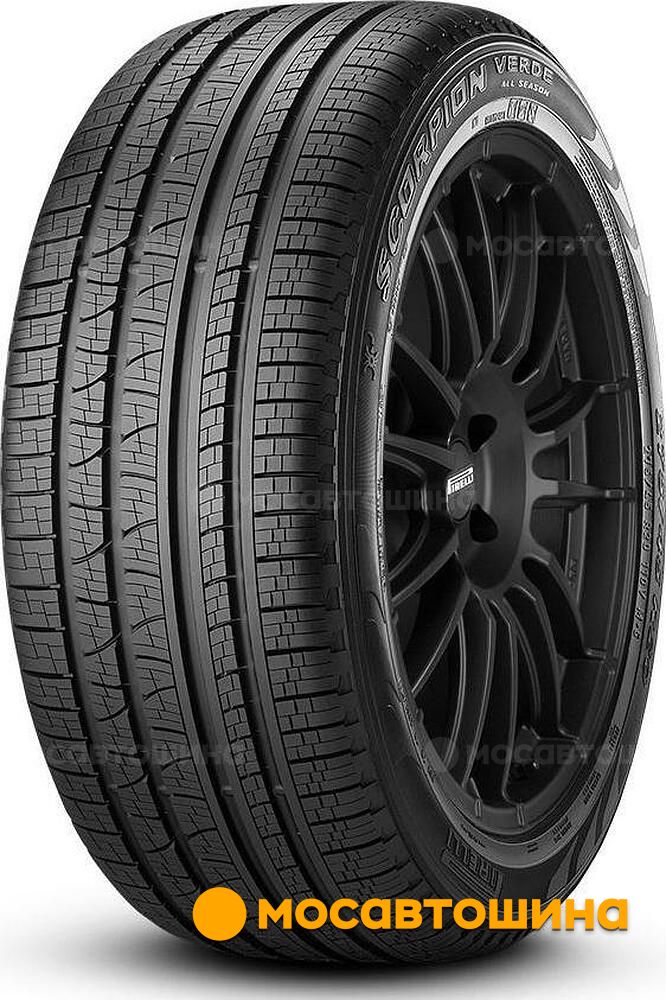
Pirelli Scorpion Verde All Season
Статистика отзывов на шины Pirelli Scorpion Verde All Season
Ниже отображены сводные характеристики шины, основанные на отзывах и оценках автовладельцев со всего мира.
При учёте общей оценки летней шины её показатели на снегу и льду не учитываются.
- Средняя оценка шин Pirelli Scorpion Verde All Season пользователями сайта:
- Количество отзывов на шины Pirelli Scorpion Verde All Season: 171 шт.
- Место в рейтинге: 995
- Место в рейтинге (всесезонные): 88
- Control on a dry road
- Steering in the wet
- Control in the snow
- Control on ice
- Drive comfort
- Quiet in motion
- Braking efficiency
- Resistant to aquaplaning
- Velocity characteristics
- Wearability
- Quality of production
- Price/performance
Оценки шин Pirelli Scorpion Verde All Season по месяцам
- Rate
I wanted to switch to a simple Scorpion (not all-season), but my size wasn’t available, and it was time to change tires already. I decided to experiment with this tire, even though its tread pattern is quite different from a standard summer Scorpion. I drove with the simple Scorpion for three seasons, exceeding 50,000 miles. I now have around 15,000 miles on the all-season Scorpion too. What I want to say in comparison: - The all
- Vehicle:
- Toyota Land Cruiser
- Control on a dry road
- Steering in the wet
- Control in the snow
- Control on ice
- Course stability
- Drive comfort
- Quiet in motion
- Braking efficiency
- Resistant to aquaplaning
- Velocity characteristics
- Wearability
- Quality of production
- Price justifiability
- Rate
My primary area of residence is KhMAO, so I only use it as a summer tire.
The old tires were from the factory, Made by Great Britain, 2014 model, with a mileage of approximately 80,000 km. The remaining tread depth was 4 mm, from an initial 8 mm. The sidewall was completely covered in fine cracks, and in some places, pieces of the tread began to crumble, as some wrote in their reviews. But somehow, they came off neatly, with small, even dents, as if it was a special layer indicating that it was time to take them in for service. I didn't have such a desire. I also didn't have any complaints about the tire itself during the entire period of use. Neither about noise nor wear, everything was in perfect balance. Of course, there are quieter tires, and there are those that handle puddles better, but this one suited me perfectly. Especially since it had two advantages: excellent handling and the ability to drive on snow. In our region, this can be relevant even in May or suddenly in June. Everyone stands along the roads in the morning, and you're driving slowly with a smile, cutting through the first tracks on the white canvas. Despite the fact that I don't drive slowly, and our roads sometimes gave it a hard time, there were no bulges or cuts, and the balancing was always normal. But one beautiful summer day (I had to accelerate from a traffic light), I pressed the gas, and they started to slip. I drove onto a different asphalt, and the same thing happened. Summer heat, and all four tires are squealing, "buy, buy." Well, what can you do? I had to. It seemed simple enough. Buy the same one, install it, and enjoy, but no...
I'll say right away that I didn't buy it here, but at KD, which I'm not happy about. I won't elaborate on this sad experience and will move on to the tires.
So, they arrived. The numbers, name, icons, tread - everything is the same, but it differs from mine and from the one shown in the photos on the site. The color of the rubber is reddish. The depth of the longitudinal tread on the lamellas is less than 1 mm, as if scratched with a compass. The main visual difference is the absence of a strip along the entire wheel, in the area of shoulder reinforcement, and the sidewall is round like a bagel, although in the photos and in the original, it's almost straight. The production is domestic. The sidewall feels soft to the touch. In my mind, reviews about frequent sidewall bursts, which I couldn't believe earlier, immediately became relevant. Well, what can you do, sanctions, no alternative, sellers' fairy tales, etc., I took it. I installed it, but it's not the same. The tire is good, quiet, soft, and grippy, and probably even excellent, but not for my LR. Due to the soft sidewall, the handling stopped bringing pleasure, the car's reactions became sluggish and amorphous. When overtaking or changing lanes on the road, even with minor grooves, the car starts to drift, like a boat in the sea. It feels like the connection between the steering wheel and the road is made not through the car, but through a pillow. You don't turn with one movement, but first, you set the direction, then you catch it, and then you carefully return to your lane. Despite my age-related respect for softness, I didn't like it. I found the original from the same Made by and installed it, and oh, what a miracle. There it is, my native one. Clear, grippy, precise, black, with a ring, and with a sturdy sidewall. It goes on any road like on rails. Honestly, I never believed that some letters on the tire or a foreign word like homologation could lead to such changes. Now I know, having learned from my mistakes.
One more thing. Recently, in a store, I saw the same tire with a strip, but made of reddish rubber and domestic production. I don't know how it performs, but the sidewall feels soft to the touch. I really want to hope that it's good, but I won't be testing it.
And a little about noise. Modern cars are already different from those carts we used to ride on, and when you sit down to choose a tire, almost every review says it's noisy, somewhat noisy, not quiet. It's gotten to the point where people complain about sports tires for 20,000 rubles. I don't want to offend anyone, but, for example, in my LR with sound insulation, there's always been order. And my car even has wheel arches lined with some kind of felt on the outside. And even with such advantages, I sometimes come across road sections where I rejoice like a child, enjoying the silence, not believing that such a thing is possible. And I get very upset when it ends. Very. Very. So, it's time for us to switch this negative attention from wheels to those who make these noisy roads.
Good luck on the roads!- Vehicle:
- Land Rover Range Rover Evoque
- Buy again?:
- Definitely yes
- Control on a dry road
- Steering in the wet
- Control in the snow
- Control on ice
- Course stability
- Drive comfort
- Quiet in motion
- Braking efficiency
- Resistant to aquaplaning
- Velocity characteristics
- Wearability
- Quality of production
- Price justifiability
- Rate
The second set of tires, with the specific model mentioned, first usage with 105,000 km and the second with 80,000 km. No issues were present on the first tire until it was replaced, while on the second, there was a flat spot on one side of the tread area after 10,000 km, and another one appeared on the second side after 75,000 km. Minor issues occurred while driving on ice in a temperature range of +5 to -5
- Vehicle:
- Land Rover Range Rover
- Control on a dry road
- Steering in the wet
- Control in the snow
- Control on ice
- Course stability
- Drive comfort
- Quiet in motion
- Braking efficiency
- Resistant to aquaplaning
- Velocity characteristics
- Wearability
- Quality of production
- Price justifiability
- Rate
Bought 4 new tires, all 4 are warped with radial cracking, causing vibration at speed. Warranty claim denied. Never buying Pirelli again.
- Vehicle:
- Volvo XC90
- Control on a dry road
- Steering in the wet
- Control in the snow
- Control on ice
- Course stability
- Drive comfort
- Quiet in motion
- Braking efficiency
- Resistant to aquaplaning
- Velocity characteristics
- Wearability
- Quality of production
- Price justifiability
- Rate
Main area of operation is the Khanty-Mansiysk Autonomous Okrug, so I use it as a summer tire only. Auto RR Evoque 2,0 TD. Aggressive driving style, high speed. Excellent high-speed tire, quiet, gripping. After five summers, it has worn down slightly. A bit stiff, but that is more than compensated by the grip, especially during high-speed maneuvers. Initially, I was afraid that the all-season tire would float in the summer,
- Vehicle:
- Land Rover Range Rover Evoque
- Control on a dry road
- Steering in the wet
- Control in the snow
- Control on ice
- Course stability
- Drive comfort
- Quiet in motion
- Braking efficiency
- Resistant to aquaplaning
- Velocity characteristics
- Wearability
- Quality of production
- Price justifiability
- Rate
Wishing you all the best! I acquired a set of four tires in the spring of 2018. One tire burst on a pothole in the tread path in August 2019. Another tire burst in May 2020, also on a pothole in the tread path. Wear: two more millimeters until the control marks on the tread. Take care of yourself.
- Vehicle:
- Toyota Land Cruiser 200
- Control on a dry road
- Steering in the wet
- Control in the snow
- Control on ice
- Course stability
- Drive comfort
- Quiet in motion
- Braking efficiency
- Resistant to aquaplaning
- Velocity characteristics
- Wearability
- Quality of production
- Price justifiability
- Rate
In principle, it's normal, but the balancing was very disappointing. To get a good result, we spent a lot of time with each wheel, but were unable to achieve a small amount of load. Badly balanced.
- Vehicle:
- Honda CR-V
- Control on a dry road
- Steering in the wet
- Control in the snow
- Control on ice
- Course stability
- Drive comfort
- Quiet in motion
- Braking efficiency
- Resistant to aquaplaning
- Velocity characteristics
- Wearability
- Quality of production
- Price justifiability
- Rate
They used to be decent tires. Mid-range, of course - a bit noisy, a bit harsh. Handling, brakes, noise - all average, but overall quite decent. The sidewalls hold impacts well. The wear resistance is also relatively good. They used to be. Because now these tires are massively defective. The entire internet, drive, all stores are filled with similar complaints. And I suffered the same fate. At a mileage of around 10,000 kilometers, all tires started to develop ring-shaped cracks in the tread, including on the sidewalls. The tread began to delaminate, it simply falls off in pieces. By 30,000 kilometers, the tires were done.
- Vehicle:
- Kia Sorento
- Buy again?:
- Absolutely not
- Control on a dry road
- Steering in the wet
- Control in the snow
- Control on ice
- Course stability
- Drive comfort
- Quiet in motion
- Braking efficiency
- Resistant to aquaplaning
- Velocity characteristics
- Wearability
- Quality of production
- Price justifiability
- Rate
I have driven approximately 30000-33000 km on these tyres. I drove only in the summer months. I bought them in the spring of 2015. This means that I drove on these tyres for the seasons of 2015, 2016, 2017 and 2018. In the summer of 2018, one tyre started to deflate gradually. I agree with previous reviews. There are small holes in the tread closer to the sidewall, between the blocks,
- Vehicle:
- Toyota Land Cruiser Prado
- Buy again?:
- Most likely
- Control on a dry road
- Steering in the wet
- Control in the snow
- Control on ice
- Course stability
- Drive comfort
- Quiet in motion
- Braking efficiency
- Resistant to aquaplaning
- Velocity characteristics
- Wearability
- Quality of production
- Price justifiability
- Rate
The given tires were installed from the factory. At first, I didn't pay much attention to them, thinking they were similar to Michelin (which were installed on my previous Focus). Currently, my car has a mileage of 115,000 km, of which approximately 60-70,000 km were driven on summer tires. The impressions are excellent! I drive a lot and on different road surfaces: highway 30%, intercity 20%, city 20%, dirt roads 20%, and forest roads 10% (excluding off-road, as I don't want to risk damaging my car, I have a UAZ for that).
I've taken long trips to the south, where the temperature reached +40°C, and I was surprised, but the tires handled the road perfectly. I have no problems driving in the rain on highways, I set the cruise control to 110 km/h if the road is slippery and 130 km/h if it's just a smooth, wet asphalt. The tires handle wet roads excellently, even if I drive into a puddle at 110 km/h, I don't worry about aquaplaning. After driving on Michelin tires, I was pleasantly surprised with the Pirelli's performance at temperatures between 0°C and +6°C, as the Michelin tires would become hard as plastic, but the Pirelli tires don't have this issue. I drive in the Republic of Karelia, Vologda, and Leningrad regions, and now I don't worry about temperatures around zero, as long as there's no ice.
The tires handle dirt roads perfectly, with an average speed of 100-120 km/h, without any wobbling or skidding, regardless of whether it's raining or not. It's worth noting that they throw up a lot of stones, but at such speeds, any tire would do the same. I often have to drive on poor asphalt, and the tires handle maneuvers and braking excellently (I only brake before large potholes), as I have to drive long distances and don't have much time, so I follow the principle: the higher the speed, the fewer potholes. I've never had a flat tire, and the reinforced sidewalls have proven themselves well.
The only issue is that the tires handle poorly in ruts, so I try to drive alongside them. In terms of noise, there are some questions, but they're not significant. The wear resistance is excellent, as I've driven over 45,000 km on one set for the first time.
In general, I'm now ordering the same tires again.
- Vehicle:
- Ford Kuga
- Control on a dry road
- Steering in the wet
- Control in the snow
- Control on ice
- Drive comfort
- Course stability
- Quiet in motion
- Braking efficiency
- Resistant to aquaplaning
- Velocity characteristics
- Wearability
- Quality of production
- Price justifiability