The Cachland CH-Van100 summer tire is designed for light commercial vehicles. It is characterized by high reliability, a wear-resistant tread, and good traction properties on wet surfaces.
Optimized tread design
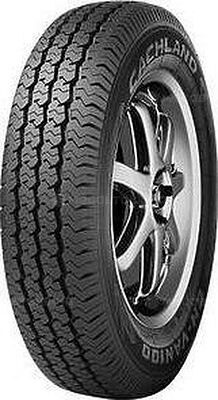
The tire features a tread with a non-directional symmetric design. It is distinguished by the massiveness of the elements that form the four longitudinal ribs. This solution improves the basic operational properties. This is mainly due to the increased size of the contact patch, which, in combination with the stiffness of the blocks, provides a uniform distribution of external load across the contact patch. As a result, the traction properties are not only strengthened but also become more stable.
Z-shaped lamellas
The tire tread contains a large number of narrow slits of an original Z-shaped form. Thanks to this, such lamellas perform several functions at once. First of all, it is an improvement in traction on wet surfaces. When in contact with the road, the slits, opening up, form sharp edges that not only allow the tire to grip the surface through a layer of water but also direct it to one of the nearby drainage grooves. At the same time, the Z-shaped shape of the walls limits the mobility of the blocks, which ensures faster and more accurate transmission of acceleration forces to the steering wheel. This significantly simplifies the process of controlling the vehicle in complex road conditions.
Long service life
The tire is distinguished by a long operational resource. It is achieved by several design features. One of them is a breaker with a steel cord. A rigid and mechanically strong "substrate" directly under the tread effectively protects the tire from punctures and cuts, optimizes the load distribution across the contact patch, ensuring even wear. This property is further enhanced by the increased width of the shoulder areas and the massive size of the blocks located there.
Key features of Cachland CH-Van100
- designed for light commercial vehicles;
- Z-shaped lamellas improve traction and handling on wet surfaces;
- optimized tread pattern is effective in any road conditions;
- reduced rolling resistance due to the large width of the longitudinal ribs of the tread;
- steel breaker and rigid shoulder areas provide even wear.
 Enlarge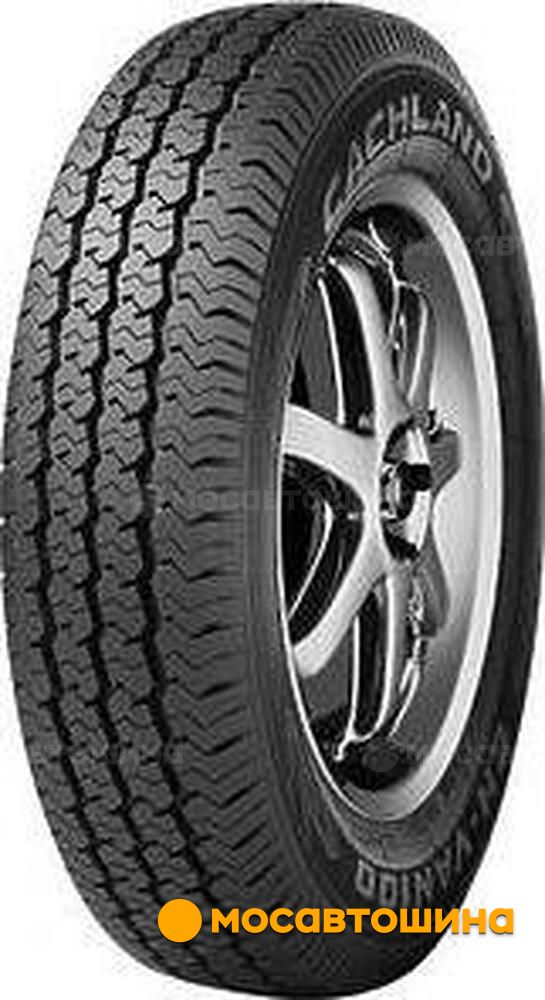
 КИТАЙ
КИТАЙ