Tyres and wheels for Holden Astra, wheel size on Холден Астра
Подбор шин и дисков по автомобилю Холден Астра
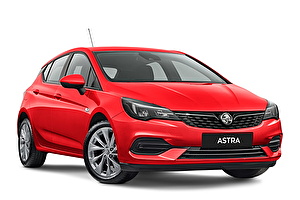
Другие модели Holden
Holden Acadia, Holden Adventra, Holden Apollo, Holden Astra, Holden Astra GTC, Holden Astra VXR, Holden Barina, Holden Barina Spark, Holden Calibra, Holden Caprice, Holden Captiva, Holden Captiva 5, Holden Captiva 7, Holden Cascada, Holden Colorado, Holden Colorado 7, Holden Commodore, Holden Corvette, Holden Crewman, Holden Cruze, Holden Equinox, Holden Frontera, Holden Insignia VXR, Holden Jackaroo, Holden Malibu, Holden Monaro, Holden Nova, Holden One Tonner, Holden Rodeo, Holden Spark, Holden Statesman, Holden Suburban, Holden Tigra, Holden Trailblazer, Holden Trax, Holden Ute, Holden Vectra, Holden Viva, Holden Volt, Holden Zafira,Параметры дисков на Холден Астра
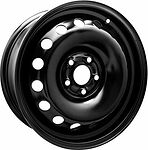
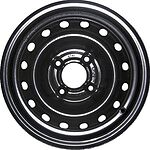
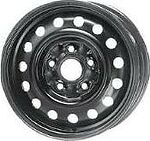
- PCD 5x10⁵ диаметром от 16 до 18, шириной от 7 до 7.5 и профилем от ET41 до ET44как у Chevrolet Cruze
Tires on Holden Astra
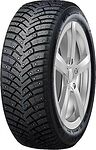
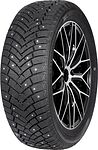
- Tyre size from R16 to R18, width from 205 to 225 and profile from 40 to 55.
- Minimum tyre size: 205/55 R16, maximum: 225/45 R17






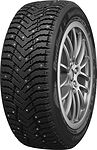



Tires on Holden Astra (Холден)
The Holden Astra appeared in the production line of the Australian brand in 1984, becoming one of its key models in the segment of compact cars for a long time. For several decades, it represented an adaptation of various foreign platforms, which made it a peculiar "global" car. Interestingly, the early history of Astra differs significantly from the usual European line: the first generations were created based on Japanese developments. Later, the car moved to the platforms of the European division of General Motors and became a relative of the Opel models. Thanks to this, it combined different engineering schools — Japanese practicality, German handling, and Australian adaptation to local operating conditions.First Generation LB: Japanese Engineering under the Australian Brand
The debut generation was the result of cooperation between Nissan and General Motors in Australia. The car was essentially a localized version of the Nissan Pulsar with the N12 index. It differed with a typical construction for Japanese compact cars: front-wheel drive, transverse engine placement, and independent front suspension of the McPherson type. The engine range included petrol engines with volumes from 1.3 to 1.6 liters. Against the background of competitors like the Toyota Corolla, Astra stood out with more European suspension settings and a more stringent design, but technically remained close to the Japanese original.
Second Generation LD: Development of the Pulsar Platform
In the next generation, which appeared in 1987, the car was still technically related to the Nissan Pulsar, but already of the next generation with the N13 index. Its design became more modern: the aerodynamics of the body improved, the list of equipment expanded, and more powerful engine versions appeared. Unlike many competitors, Astra offered good handling and a sufficiently spacious salon. However, by the end of the 1980s, the company's strategy had changed — Holden, having changed its owner, began to transition to the European platform architecture of GM, which by that time had become the full owner of the Australian brand.
Third Generation TR: Transition to the European School
In 1995, sales of the third generation began, which differed from its predecessors with a different technical basis. This was a copy of the Opel Astra F, namely in the version of the British brand Vauxhall. The engine range consisted of German engines with volumes of 1.6 and 1.8 liters, and the body structure received strengthened deformation zones. The main competitor of the model on the Australian market was the Japanese Honda Civic. In comparison with it, Astra offered a softer suspension and comfort on long distances, but conceded to the Japanese competitor in the economy and technological advancement of the power units.
Fourth Generation TS: Development of the Astra G Platform
The new generation, which entered the market in 1998, was based on the European model Opel Astra G. In the body design, high-strength steels were widely used, which made it possible to improve the level of passive safety. The range of bodies expanded: in addition to the hatchback, sedans and wagons were offered. At that time, the key competitor was the Mazda 3. Unlike this model, Astra focused on comfort and stability on the highway, rather than on a sporty character.
Fifth Generation AH: Emphasis on Dynamics
The model that debuted in 2004 with the AH index became an adaptation of the Opel Astra H and received a noticeably more modern chassis design. The range included turbocharged engines, improved automatic transmissions, and an expanded list of electronic safety systems. This model had to compete with the global bestseller — the Ford Focus. In comparison with it, the Australian Astra demonstrated comparable handling, but differed with softer suspension settings and a calm character.
Sixth Generation PJ: Technological Leap
The model of this generation, released in 2015, represented a localized version of the Opel Astra J. The main feature was a more complex suspension with improved geometry, as well as the widespread introduction of turbocharged low-volume engines. The equipment included modern multimedia systems, adaptive headlights, and a complex of electronic assistants. Compared to its "classmates," Astra offered a more expressive design and rich basic equipment, although it slightly conceded to the German standard in terms of interior trim quality.
Seventh Generation BK: Weight Reduction
This generation became the last for the model. The car was created on the Opel Astra K platform. The main engineering achievement was a significant reduction in weight — almost 200 kg compared to its predecessor. This improved the dynamics and economy of the car. The list of equipment included modern driver assistance systems: automatic emergency braking, adaptive cruise control, blind spot monitoring, and digital multimedia complexes. Against the background of such competitors as the Hyundai i30 and Toyota Corolla, Astra stood out with "European" chassis settings and a more driver-oriented character.
For this car of different generations, wheel disks with a landing diameter from R15 to R18 are used. It is convenient to select suitable wheel sets, taking into account the car's parameters, in the "Mosavtoshina" online store.
Advantages of Selecting Tires for Holden Astra on Our Website:
- The catalog of tires is constantly changing due to the appearance of new products from the world tire industry, many of which are optimal for this compact hatchback;
- A wide selection of 15-18-inch wheels provides owners of "Astra" with the opportunity to easily select the optimal model with "factory" parameters;
- A long warranty on wheel products will give confidence in the reliability of the chosen positions;
- Employees will help with the search for wheels and tires for this car, taking into account the generation of serial production, usage conditions, and personal preferences.