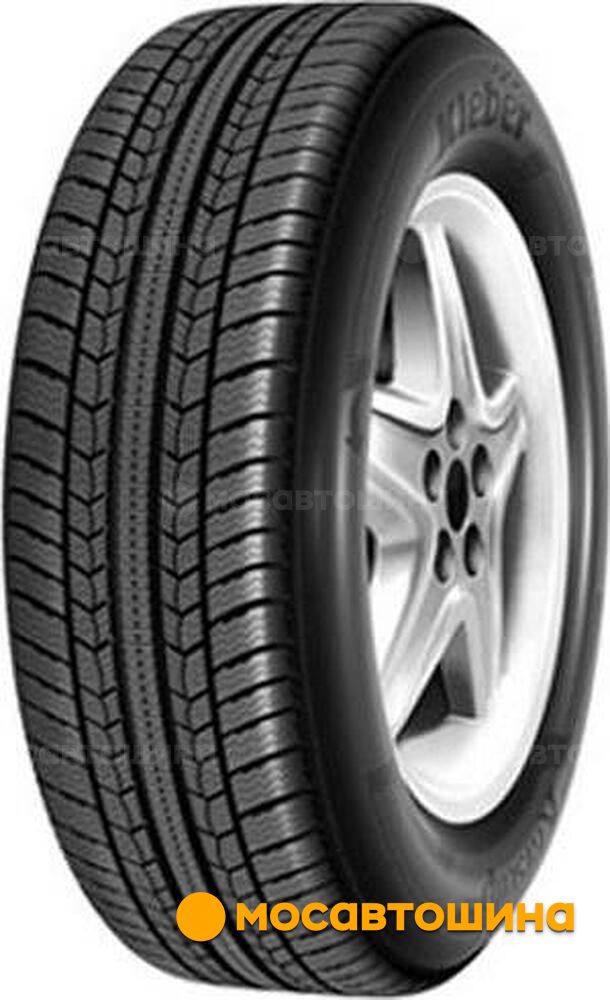
The Kleber Krisalp M+S passenger tire was created based on the same summer model. It differs from the "original" in that it can be used not only in summer but also in winter. This is ensured by large-scale changes that have affected almost all elements of the tire's design to one degree or another. A significant part of them fell on the design of the tread pattern, which is noticeably different from the "basic" version of this model.
High degree of lamination
As mentioned earlier, the tread of this tire has a number of distinctive features. First of all, it's the increased number of gripping edges. This was achieved by reducing the size of the tread blocks and by the presence of numerous lamellas in them. At the same time, several types of these tread elements are used. Some of the lamellas have a wavy shape, which significantly expands their functionality, thereby improving not one, but several operational properties. The wavy walls of the lamellas limit the transverse mobility of the blocks, so they improve not only the grip on ice and rolled snow but also the handling on a dry road. In turn, straight lamellas, in addition to forming additional gripping edges, improve the resistance of the tread to aquaplaning, "swaying" water towards one of the nearby drainage grooves.
Excellent stability in any conditions
This tire is characterized by excellent stability and stability at high speeds. This ability is provided by the design of the central longitudinal rib and the shoulder zones of the tread, which contain many blocks. All these elements are distinguished by increased resistance to deformation, which gives the tire, in addition to stability, quickness and accuracy in responding to steering wheel turns, high performance when braking, as well as increased grip when cornering.
Main features of the Kleber Krisalp M+S tire
- the possibility of operation in winter is provided by the presence of a large number of lamellas that form numerous gripping edges;
- reliable and stable behavior in turns, on straights, and when braking due to the rigid design of the central tread rib and numerous blocks of the shoulder zones.
 Enlarge