The Barum Vanis summer tire was created specifically for small commercial vehicles - light trucks and vans. During its development, special attention was paid to low rolling resistance, durability, and wear resistance. In addition, its design incorporated a number of solutions borrowed from models for regular passenger cars, which provided excellent traction and ease of handling.
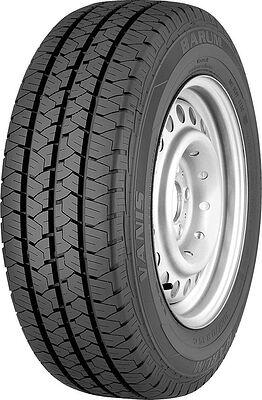
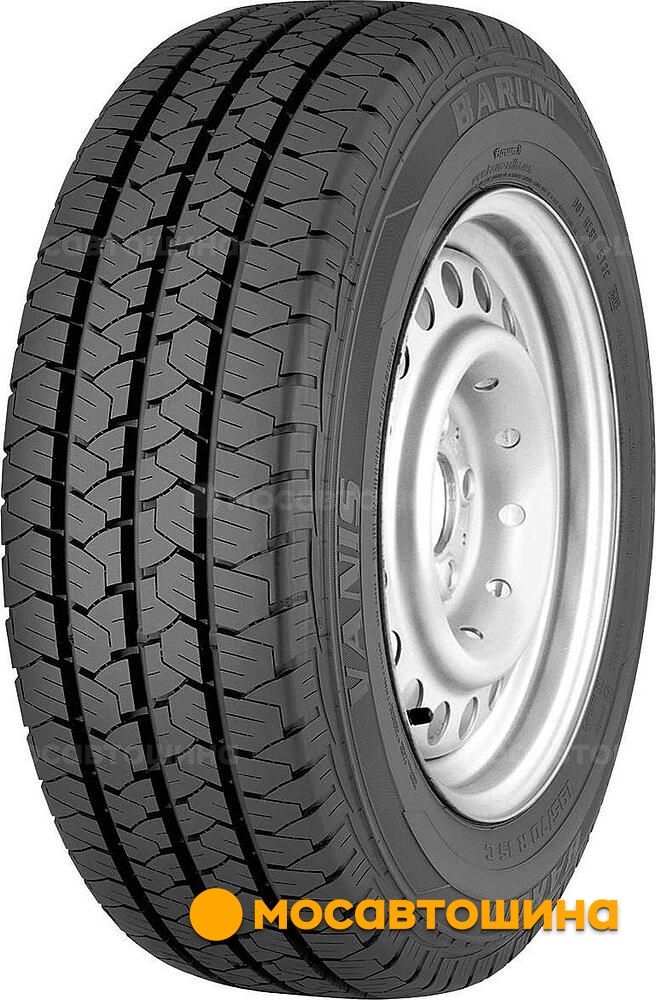
The tread pattern of the tire is designed according to classical canons. It features an S-shaped design, which incorporates a number of interesting technical solutions. First of all, it is worth noting the structure of all four tread ribs, each of which consists of intersecting separate blocks. These blocks, due to their complex polygonal shape, contain a large number of sharp edges that perfectly grip the irregularities on the surface of the road in all directions. This allows for excellent traction on any summer surface. Additionally, all tread blocks are spaced at a small distance from each other, which has a positive effect on fuel efficiency, noise level, and wear.
Another distinctive feature is the three drainage grooves located along the entire tread pattern. These tread elements have a large volume, which can accommodate a significant amount of water. As a result, the Barum Vanis tire demonstrates excellent resistance to aquaplaning.
The shoulder areas of the tread have a reinforced design that provides sufficient stiffness to withstand deformations that occur during movement. Thanks to this, the tire tread is able to more evenly distribute the large external weight of the cargo across the contact patch.
Key features of the Barum Vanis tire
- The ability to operate for most of the year, thanks to the excellent performance of the S-shaped symmetrical non-directional tread pattern on any summer road surface;
- Excellent fuel efficiency due to very low rolling resistance, which is ensured by the small number of tread ribs and minimal distance between blocks;
- Outstanding resistance to aquaplaning, thanks to the high performance of the three longitudinal drainage grooves;
- The large number of tread blocks forms a multitude of sharp edges that effectively grip the irregularities of the road surface in all directions, providing excellent traction, especially on wet surfaces.
 Enlarge
 Enlarge