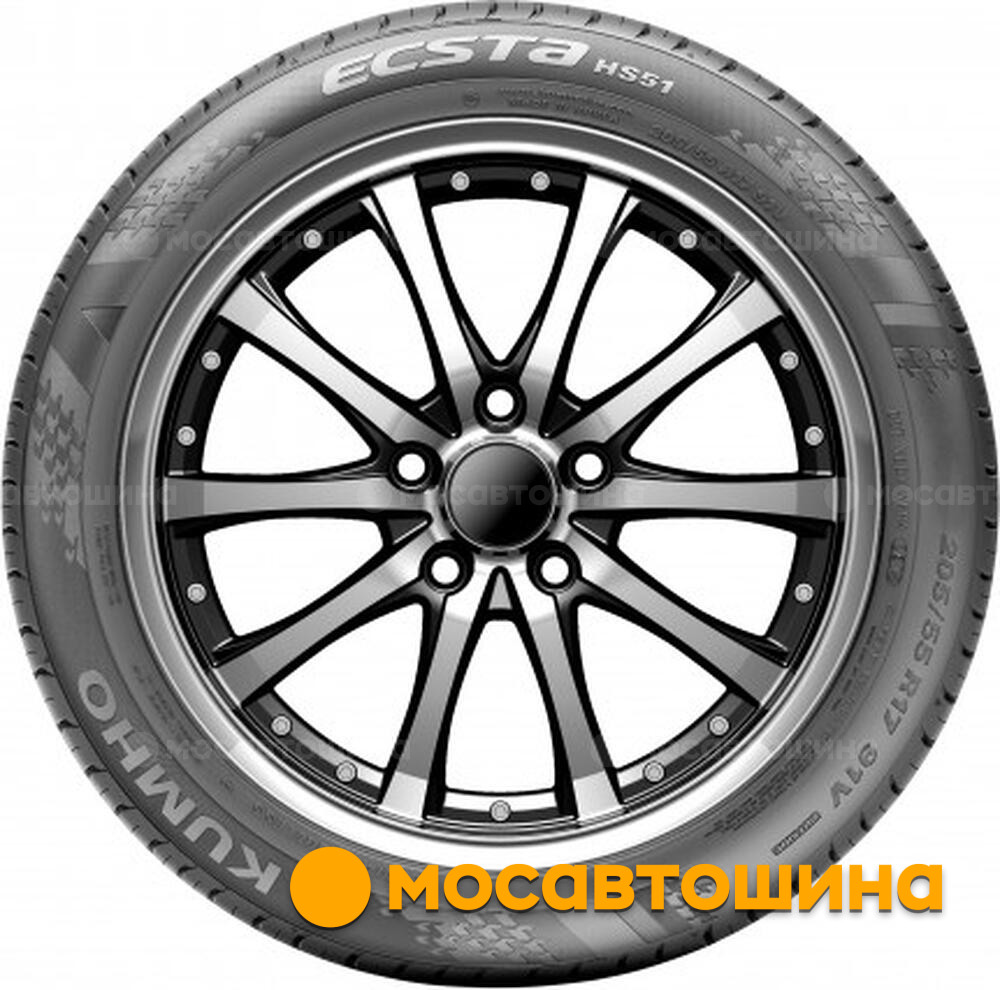
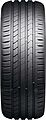
The Kumho Solus HS51 summer tire holds a special place in the model range of the South Korean manufacturer. Its distinctive feature is the combination of sporty handling and exceptional comfort on the move. I.e., the main target audience of this model is those owners of powerful high-speed cars who do not want to give up driving comfort for the sake of speed properties and improved handling. Also, one cannot help but note the excellent applicability of this tire, which is offered in several dozen sizes for wheels with a mounting diameter from 15 to 17 inches. Depending on the size, it has speed indices V or W.
Asymmetric tread pattern
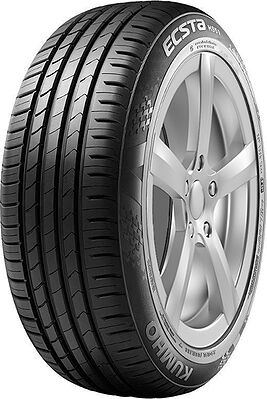
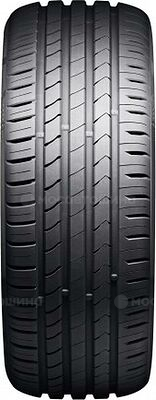
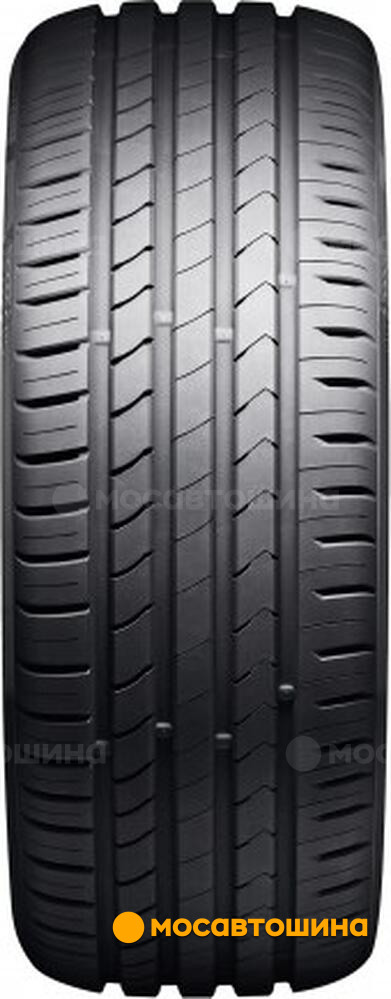
To provide the Solus HS51 with high coupling properties, both on dry and wet asphalt, South Korean specialists equipped it with a tread with an asymmetric arrangement of elements. They are distributed over several functional zones, each of which provides the tire with maximum efficiency in certain conditions.
Three rigid longitudinal ribs
The central part of the tread features three longitudinal ribs separated by wide drainage grooves. The distinctive features of these elements are their massive size and rigid design. Thanks to this, they have high resistance to dynamic deformations, which in turn led to an increase in directional stability at high speed, as well as a reduction in the reaction time of the Kumho Solus HS51 tire to steering wheel turns.
Also, one cannot help but note the presence of numerous transverse edges on each of the tread ribs of the central part. They provide the tire with increased traction and coupling properties in the longitudinal direction, especially on wet roads.
High resistance to aquaplaning
As mentioned earlier, the longitudinal ribs of the tread are separated by wide drainage grooves. These elements serve as a kind of water accumulators, which are then discharged beyond the contact patch through numerous transverse channels. Such a drainage system is especially effective when cornering.
Closed design of shoulder zones
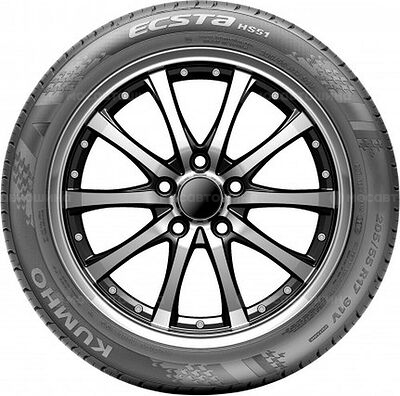
Another distinctive feature of the Solus HS51 tread pattern is the design of the shoulder zones. They have a closed design with significant stiffness. The main advantage of this solution is the increased resistance to lateral skidding demonstrated by the tire when cornering. At the same time, the shoulder zones are equipped with numerous special grooves, thanks to which it is possible to reduce the braking distance on a wet surface.
The next advantage of the closed design of the shoulder zones is the reduction of noise. During movement, this part of the tread becomes a sound-insulating screen. I.e., all the noise generated in the central part of the tread does not spread beyond its limits, which significantly increases the comfort of the ride.
Improved rubber compound
The Kumho Solus HS51 was one of the first models of the South Korean tire giant, where the rubber compound included functionalized solution styrene-butadiene rubber S-SBR and high-dispersion microsilica HDMS. Thanks to this, it was possible to increase the resistance of the tread to abrasive wear, reduce rolling resistance, and significantly improve coupling properties, especially on wet roads.
Main features of the Kumho Solus HS51 tire
- an asymmetric tread pattern provides high efficiency on dry and wet roads;
- three rigid longitudinal ribs improve directional stability and handling at high speeds;
- high resistance to aquaplaning, thanks to four wide longitudinal grooves connected by numerous transverse grooves, which ensure the removal of water from the contact patch when cornering;
- shoulder zones with a closed design allow for high-speed cornering without the risk of lateral skidding, reduce noise levels, and provide optimal distribution of external pressure over the contact patch;
- a rubber compound with the addition of a number of the latest materials has increased the resistance of the tread to wear, coupling on wet roads, and also reduced rolling resistance.
 Enlarge
  Enlarge
  Enlarge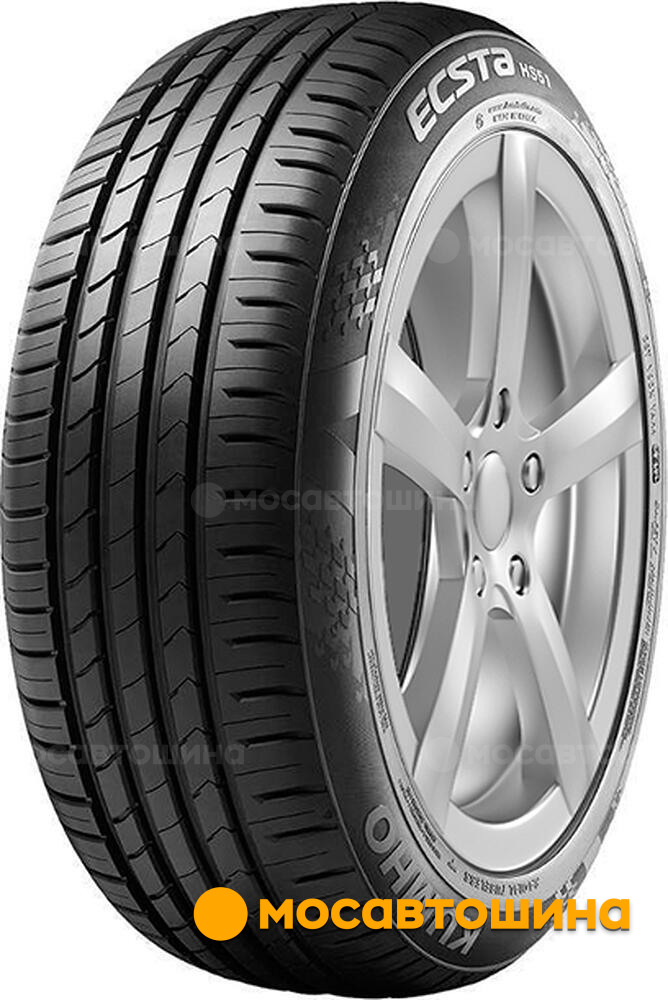
 ЮЖНАЯ КОРЕЯ
Approximate calculation.
Credit amount from 2 000 to 300 000 rubles.
Initial payment from 0% to 90%.
Loan term from 3 to 36 months.
The interest rate is calculated individually.
Read more