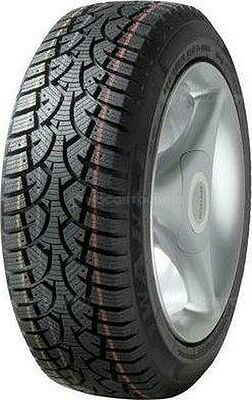
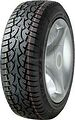
The Fortuna Winter Challenger passenger tire was created "in the image and likeness" of the best models from Scandinavian manufacturers. But unlike them, it has a much more humane cost with comparable technical characteristics, which was achieved through the use of advanced technologies.
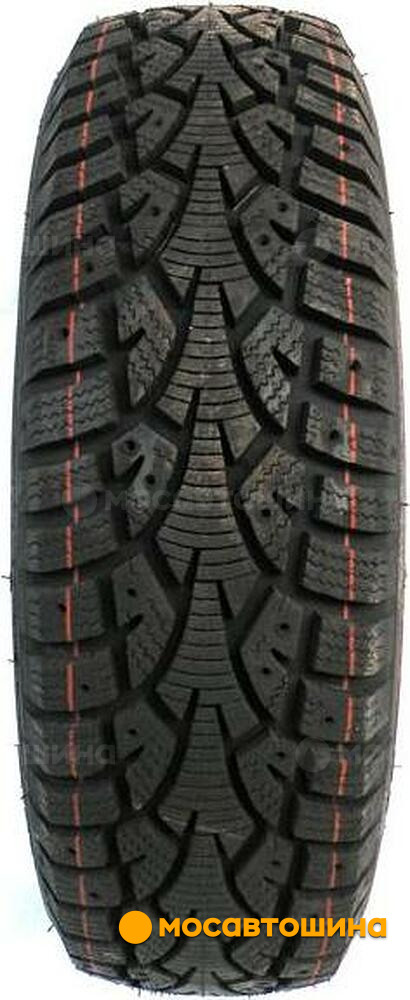
A row of arrow-shaped blocks in the center of the tread
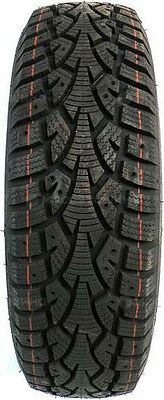
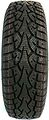
One of the characteristic features that unequivocally hint that this model was created with an eye on the experience of Scandinavian tire manufacturers is the V-shaped design of the symmetrical directional tread pattern. It is formed by a row of arrow-shaped blocks located right in the center. They are connected by rigid bridges, which turns them into a single solid element of the tread. Its functionality is to provide directional stability, high maneuverability, and to form additional traction edges.
Open design of the shoulder areas
A distinctive feature of the shoulder areas of the tread is an open design containing a large number of rectangular blocks. Due to their transverse arrangement, the tire demonstrates not only high efficiency during acceleration and deceleration but also excellent reliability when performing sharp maneuvers.
Multiple lamellas
In its initial version, this model is offered without studs, while its tread has multiple mounting points for their installation. The absence of these steel elements cannot be considered a disadvantage, since the tread of this tire contains a huge number of wavy lamellas. During movement, they form a multitude of sharp edges, and the wavy shape allows their walls to be tightly fixed to each other, which increases the stiffness of the blocks and, along with this, improves handling on dry roads.
Key features of the Fortuna Winter Challenger tire
- the original V-shaped design of the symmetrical directional tread pattern gives the tire excellent efficiency when driving on any winter surfaces;
- excellent directional stability, low rolling resistance due to the multitude of arrow-shaped blocks in the center of the tread, connected by rigid bridges;
- increased content of traction edges, which are formed not only by a multitude of individual blocks but also by a large number of wavy lamellas cut into them throughout the depth of the tread.
 Enlarge
  Enlarge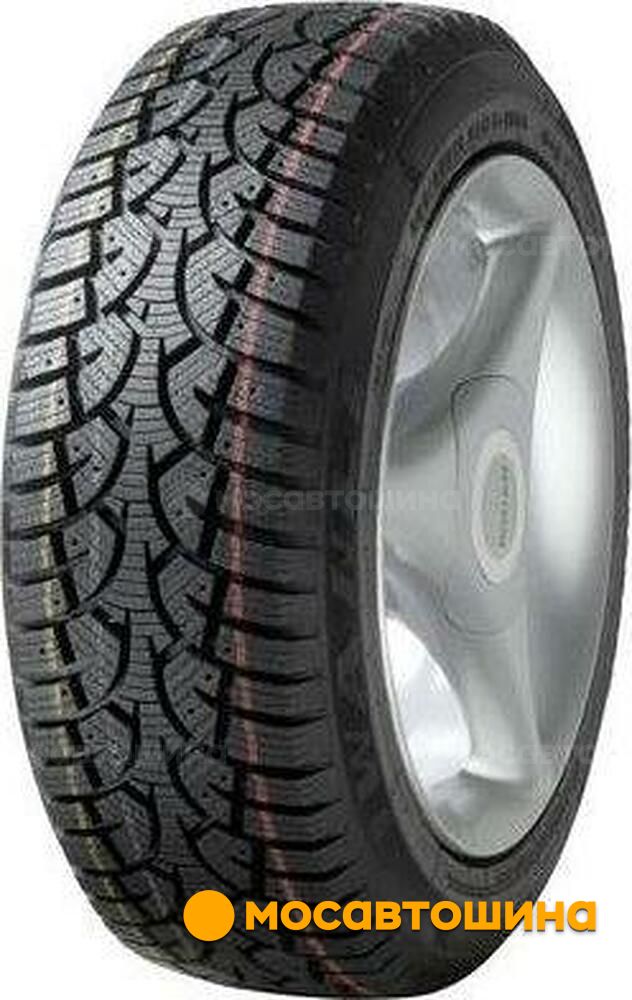
 КИТАЙ
КИТАЙ