Although the next-generation model is represented on the domestic market, the winter commercial tire Continental VancoVikingContact continues to remain popular. This is due to its high technical characteristics, which are more than relevant against the background of most modern competitors. They are ensured by the excellent efficiency of the technologies used in its design. Some of them are also applied in the next-generation model.
Excellent traction on snow
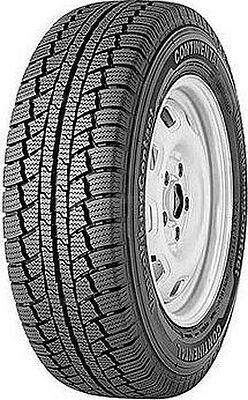
One of such solutions is the design of the central part of the tread. It is distinguished by the presence of a large number of blocks, the number of which has been increased due to their reduction in size. This made it possible to significantly increase the number of traction edges, and thus the traction on snow. At the same time, the tire demonstrates good directional stability, which is achieved thanks to the quadrangular shape and the arrangement of some elements along the tread in its center. In the process of movement, they form two solid tread edges.
Increased traction in turns
The shoulder areas of the tread contain wider and more massive blocks. They are arranged transversely, which, in combination with the previous design feature, improves several operational properties at once. Among the most significant, it is worth noting the increased stability in turns, high efficiency during braking, and good resistance to uneven wear.
Excellent braking performance
The tread pattern of this tire is distinguished by the presence of several thousand lamellas, forming a corresponding number of additional traction edges. Since all of them are arranged transversely, they demonstrate the greatest efficiency during acceleration and deceleration. At the same time, the wavy shape of the lamella walls limits the transverse mobility of the blocks, which has a positive effect on handling.
Main features of the Continental VancoVikingContact tire
- a large number of small blocks in the center of the tread improves traction and directional stability on snow;
- wide shoulder blocks provide stability during maneuvering and good longitudinal traction properties;
- several thousand lamellas reduce the braking distance on ice.
 Enlarge
 РОССИЯ