All-season passenger tire Bridgestone Dueler A/T 694 is designed for SUVs, pickups, and crossovers that frequently drive off-road. The prefix A/T in its name, meaning All Terrain, indicates the versatility of this tire, making it perfect for both on-road and off-road driving. The wide range of tire sizes, with over two dozen options, allows this model to be installed on most modern passenger vehicles with increased cross-country ability and a wheel diameter of 15 to 17 inches.
Tread design
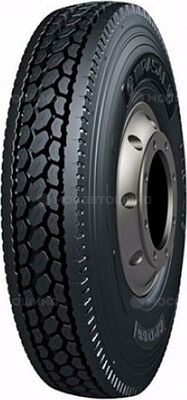
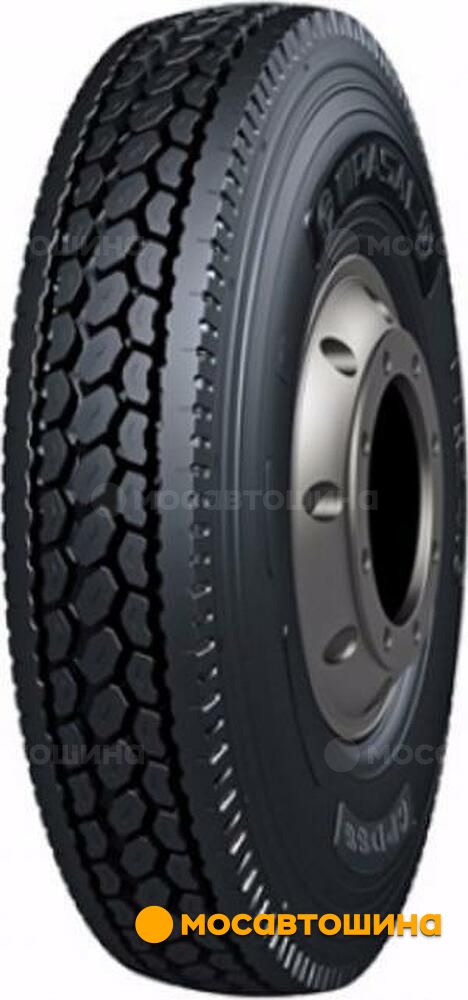
Since Japanese tire manufacturers have tried to provide the tire with excellent operational characteristics, both on the highway and off-road, this model has a universal tread with an S-shaped symmetrical non-directional pattern, featuring an aggressive design. The tread pattern of the Bridgestone D694 fully complies with the latest trends in the tire industry and is equipped with five longitudinal ribs, each of which is a row of separate blocks. Thanks to the massive size and configuration of the blocks, which have many sharp edges and corners, traction is ensured in various directions, both off-road and on the highway. At the same time, the non-directional tread pattern guarantees the preservation of the same traction characteristics when moving in both directions, which significantly expanded the tire's capabilities off-road. In addition, a number of innovative technologies were used in the development of the tread.
3D Block
The use of modern digital design tools made it possible to simulate three-dimensional blocks already at the design stage. Such blocks are more resistant to deformation that occurs when driving on a hard surface at high speed, which made it possible to significantly improve handling characteristics.
Flare Sipes technology
This technical term hides a special type of lamella that the tread of this model is equipped with. Their design feature is that as the tread wears out, the length of the lamellas gradually increases. This allows the traction indicators on wet roads to be maintained at almost the initial level throughout the life of the tire.
Contact patch modeling
Modern computer modeling technologies provide the opportunity to obtain a three-dimensional image of the expected tread prints on various types of surfaces already at the design stage. For example, a clearer tread print on mud is a guarantee that the tire will have exceptional abilities off-road in the future. In this case, the tread pattern of the Bridgestone Dueler A/T 694 tire was selected based on the results of modeling prints specifically off-road.
CSC-Block technology
This technological innovation is a special configuration of tread blocks that promotes a more even distribution of load across the contact patch. Thanks to this, it was possible to improve the tire's traction on dry surfaces and increase its durability due to the low likelihood of uneven wear.
CTDM II technology
This technology is a method of computer optimization of the tire's design, which in its second generation uses improved mathematical calculation algorithms. This made it possible to reduce the level of noise generated by the tire when driving and create an aggressive tread design that provided the model with versatility.
Main features of the Bridgestone Dueler A/T 694 model
- O-Bead II sidewalls, made in the shape of the letter "O", provide a high level of comfort when maneuvering and driving at high speeds;
- Tread blocks obtained using CSC-Block technology are characterized by a uniform stiffness of the structure, which provides excellent stability of the tire's behavior, both when driving in a straight line and in turns;
- Three-dimensional edges of the tread blocks allow increasing the depth of the tread's penetration into the ground, which made it possible to achieve excellent manageability on snow, sand, and mud;
- The aggressive S-shaped design of the non-directional tread pattern, obtained using digital design tools, allows the tire to demonstrate exceptional operational characteristics, both on the highway and off-road;
- Special Flare Sipes lamellas become longer as the tread wears out, which allows maintaining traction indicators on wet surfaces at the initial level throughout the tire's service life.
 Enlarge
 Enlarge