
-
 Enlarge
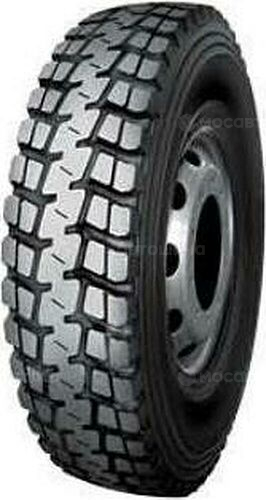
 Kapsen HS918+
Description Kapsen HS918+
The Kapsen HS918+ cargo tire has a somewhat specific application area. The fact is that it was designed for trucks used in the construction industry, as well as in other industrial sectors, where operation is associated with movement not only on paved roads, but also outside of them. This model, thanks to its universal tread pattern, has good traction properties on various types of surfaces with different characteristics.
Universal tread pattern
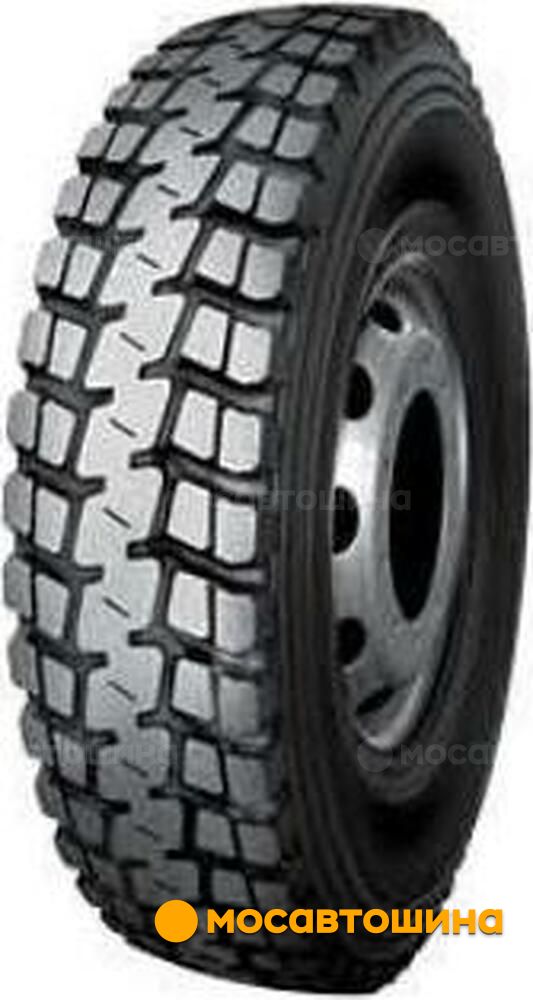
A significant part of the versatility of this model is ensured by its tread pattern, which is equally well suited for both regular roads and minor off-road driving. Its design is characterized by a clear division into separate functional zones, each of which ensures the performance of a certain set of tasks.
The central part is a very wide longitudinal rib, which consists of many massive blocks connected by rigid bridges. This design has high resistance to dynamic deformation, which in turn improves directional stability and reduces rolling resistance, improving fuel efficiency.
As for the shoulder zones, each of them contains many double tread blocks. During movement, each of them forms very long traction edges, due to which the Kapsen HS918+ tire demonstrates confident behavior outside of paved roads. At the same time, the significant distance between the blocks of the shoulder zones allows the tread to quickly get rid of even large soil particles, which in turn additionally improves the passability indicators.
Main features of the Kapsen HS918+ tire
- universal application area due to the tire design, equally well suited for operation on both paved and unpaved roads;
- a wide central longitudinal rib, consisting of many connected tread blocks, improves directional stability and reduces rolling resistance;
- excellent traction on soils with low bearing capacity is ensured by the numerous double blocks that form very long transverse traction edges during movement;
- excellent self-cleaning properties of the tread were achieved due to the installation of shoulder zone blocks at a significant distance from each other.