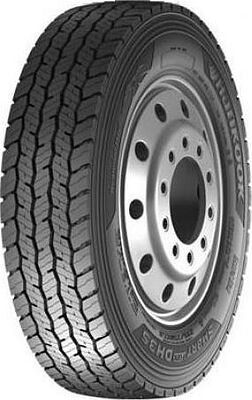
The Hankook DH35 cargo tire is installed on the drive axle of commercial vehicles used for medium and long haul transportation. It is characterized by good traction properties in any road conditions, fuel efficiency and a long service life.
Increased tread width
One of the distinctive features of the tire is the increased width of the tread. This provides excellent traction properties on dry pavement. In wet conditions, they are also present, thanks to four longitudinal drainage grooves with a zigzag shape.
3D-lamellas
The tire tread is equipped with 3D-lamellas. These slits, when in contact with the road, are fixed in the open position, providing a contact patch with numerous traction edges. They improve the efficiency of the tread on slippery surfaces. At the same time, the "three-dimensional" design of their walls limits the mobility of the tread ribs, which reduces rolling resistance and prevents uneven wear.
Optimized internal construction
The advantages of the tire are largely due to its optimized internal construction. The breaker edges have extremely low mobility, which reduces heat generation in the tread. The carcass is made of a single piece of metal, which gives the tire increased load-carrying capacity, stability of traction properties, and resistance to uneven wear. The rim rings have an increased thickness, which on the one hand provides effective protection of the rim, and on the other hand prevents damage to the carcass during tread renewal.
Key features of Hankook DH35
- installed on the drive axle of trucks;
- increased tread width improves traction on dry pavement;
- four zigzag drainage grooves prevent aquaplaning;
- 3D-lamellas improve longitudinal traction on wet surfaces;
- optimized internal construction increases load-carrying capacity, reduces wear, and provides protection against damage to the rim, sidewalls, and carcass during tread renewal.
 Enlarge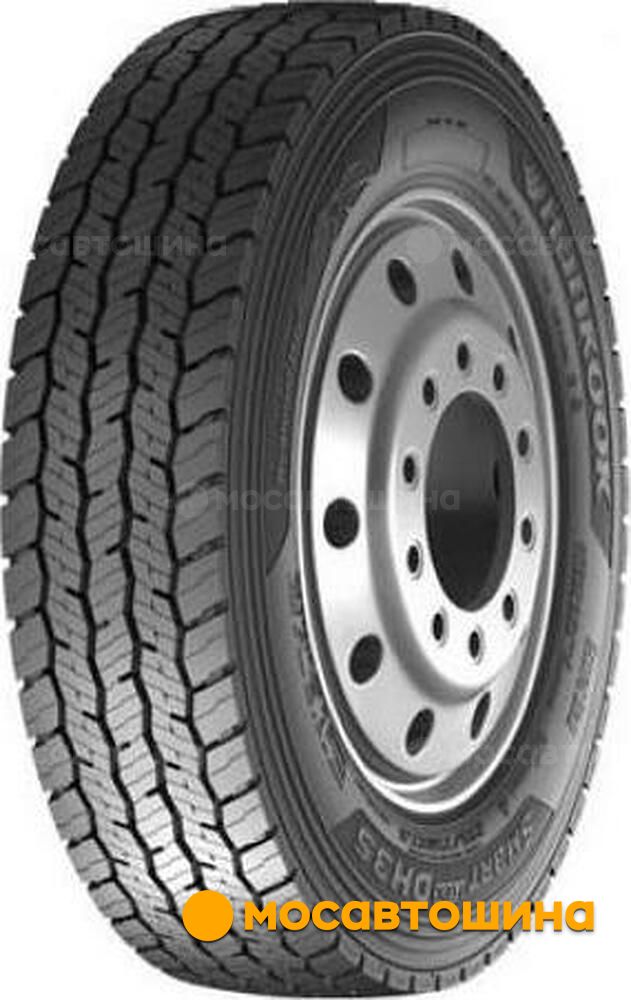
 КИТАЙ
КИТАЙ
Approximate calculation.
Credit amount from 2 000 to 300 000 rubles.
Initial payment from 0% to 90%.
Loan term from 3 to 36 months.
The interest rate is calculated individually.
Read more