The Continental HS3 truck tire is installed on the steering axle of high-capacity commercial vehicles. It is adapted for use in long-haul and intercity transportation. It is characterized by better, than most analogs of other brands, traction, stability on wet pavement, and pronounced fuel efficiency.
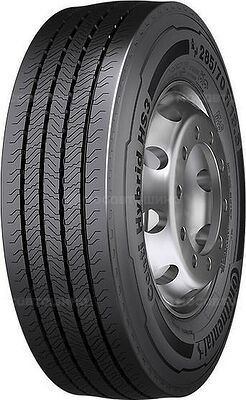
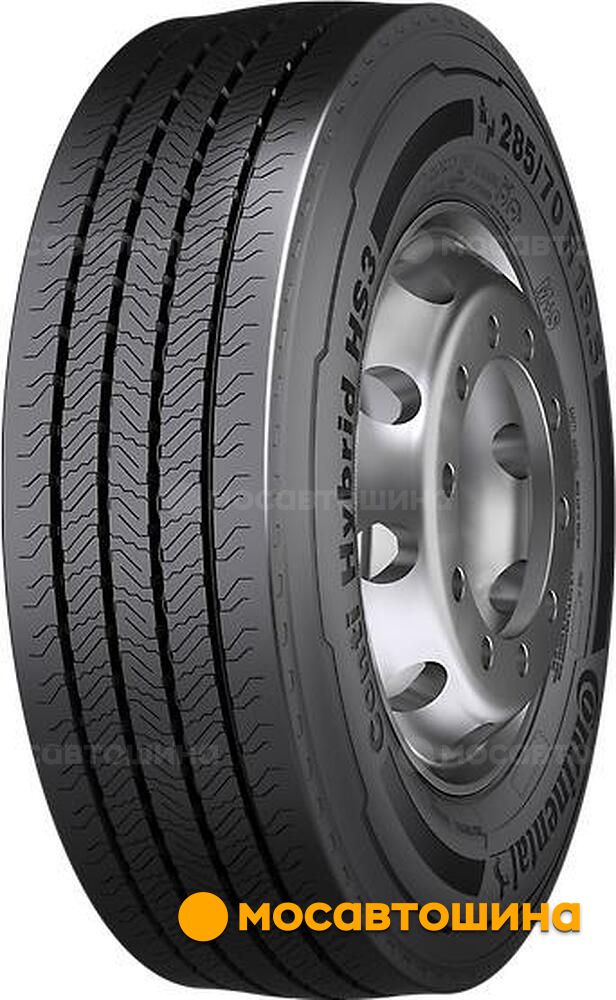
The tread pattern of the tire is made in a typical design for products of this category with a symmetrical non-directional arrangement of elements. But due to a number of seemingly minor solutions, it was possible to give it extremely high efficiency. One of them is the tapering downward shape of the longitudinal drainage grooves. It reduces the heating of the tread pattern during prolonged movement at high speed and under heavy load. This reduces rolling resistance and, along with it, fuel consumption and the level of aggressive impact from the road surface.
The tire tread has a two-layer structure. Its inner "base" layer is made of a rigid rubber compound, which reduces rolling resistance, increases the accuracy and speed of the tire's reactions to the driver's actions, ensures uniformity and low wear rates of the tread pattern. It, in turn, is made from a compound that has increased elasticity, which improves traction, especially on wet pavement. The outer layer has increased thermal conductivity, which further improves traction and fuel efficiency.
The tread pattern is distinguished by a high content of lamellas. Narrow slits of different shapes and orientations enhance traction on wet pavement, especially when slowing down and maneuvering at high speeds.
The ability of this tire to significantly reduce operating costs is largely due to the use of VAI technology in its design. These are indicators of one-sided wear, located in a quantity of 8 pieces in both shoulder zones of the tread. They are represented by five small slits that disappear one by one as the tire wears out. Since on the steering axle this process proceeds unevenly, a simple change of the side of the tire installation at a certain moment allows to significantly increase their service life.
Main features of Continental HS3
- tapering downward longitudinal drainage grooves of a trapezoidal shape reduce heating and wear of the tread;
- the two-layer structure of the tread provides a balance of operational properties;
- high density arrangement of lamellas, the use of several types of such slits significantly increases stability on wet pavement.
 Enlarge
 Enlarge