Tyres and wheels for Seat Marbella, wheel size on Сеат Марбелла
Подбор шин и дисков по автомобилю Сеат Марбелла
Другие модели Seat
Seat 133, Seat Alhambra, Seat Altea, Seat Altea Freetrack, Seat Altea XL, Seat Arona, Seat Arosa, Seat Ateca, Seat Cordoba, Seat Exeo, Seat Ibiza, Seat Inca, Seat Leon, Seat Malaga, Seat Marbella, Seat Mii, Seat Tarraco, Seat Toledo,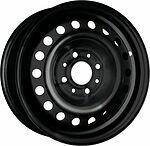
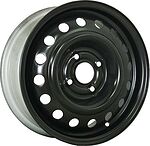
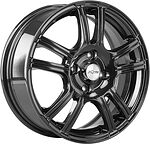
Tires on Seat Marbella
- Tyre size from R13 to R15, width from 135 to 185 and profile from 55 to 80S.
- Minimum tyre size: 135/80 R13, maximum: 185/55 R15
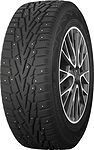




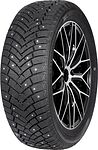

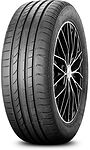
Tires on Seat Marbella (Сеат)
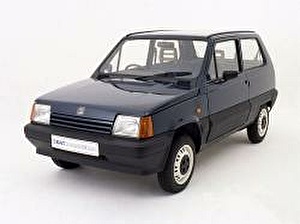
The subcompact hatchback appeared in the model range of the Spanish brand in 1986. It was a copy of the Fiat Panda, which was produced at the Seat plant, differing only in the logo. After the agreement expired, the Spanish manufacturer continued to assemble the car, but already under its own name, with minor changes in the exterior and equipment, while maintaining simplicity in design and low cost. In the mid-1980s, such a model offered a rare combination of practicality, reliability, and low operating costs on the background of its "classmates".Design and Technical Base
The basis is a well-known architecture of a front-wheel drive city hatchback with a transversely mounted engine and a compact wheelbase. The power structure of the body is maximally simplified, which allowed the car's mass to be kept at around 700 kilograms. Under the hood, small-displacement gasoline engines were installed - mainly 4-cylinder units of the System Porsche series with a volume of 843 "cubes". Despite the modest power, the engine demonstrated confident traction at low revs, which is especially important for city driving. The power unit was combined with a 4-speed manual gearbox, and at the end of the model's life cycle - with a 5-speed one. In both cases, the gear ratios were selected to compensate for the small power reserve of the engine and provide an acceptable dynamics at speeds up to 100 km/h. The front suspension is made according to the MacPherson scheme, the rear - dependent. Such a layout is simple to maintain and withstands operation on non-ideal road surfaces.
Practicality with Modest Dimensions
In its size, the car represented a typical "subcompact" of the 1980s. The body length slightly exceeded 3.3 meters, and the width - 1.5 meters, which was a huge advantage in the dense urban development of European countries. Despite the compactness, the salon was organized quite rationally. The front panel is made extremely laconic, but all controls are logically and intuitively located. The high roof line allowed for a decent space reserve above the head. The rear row is designed for two passengers, and the backrest of the seat folds, increasing the volume of the trunk. Such a transformation makes the car convenient for everyday tasks: transporting purchases, small cargo, or trips out of town.
Equipment and Versions
Although the model was initially positioned as a budget one, the manufacturer gradually expanded the list of equipment. In different years, Marbella was offered in several trim levels. In the base version, the car had a minimal set of equipment - a cabin heater, a simple audio system, adjustable front seats, and a rear window wiper. More equipped versions could boast improved interior trim, decorative trim, a tachometer, and additional comfort elements. For its class in the late 1980s, this was considered quite decent equipment.
Differences from Competitors
In the European market, the car competed with such models as the Suzuki Alto, Daihatsu Cuore, and early versions of the Renault Twingo. The main advantage of the Spanish model was its extreme mechanical simplicity. Unlike Japanese competitors, the engine and suspension were repairable in almost any conditions. The car stood out for its high geometric cross-country ability. Short overhangs and a sufficiently high ground clearance allowed for confident movement on dirt roads, which made this model popular in rural areas of Spain and southern Europe. Another feature was economy: fuel consumption in the combined cycle rarely exceeded 6 liters per 100 kilometers, which in the late 1980s was considered an excellent indicator.
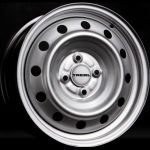
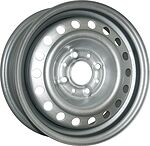
To a large extent, fuel economy was due to the use of relatively small wheels. For the car, the factory disks had a landing diameter of 13 inches with tires of size 145/70 R13, which also provided a good balance between comfort and economy. Such sizes are widely represented in the online store "Mosavtoshina", so it's possible to quickly and without extra time costs find suitable tires and disks.
Advantages of Selecting Tires for Seat Marbella on Our Website:
- a wide range of tires allows owners of this car to choose the optimal options, taking into account a wide range of operating conditions;
- a large selection between different models of steel and aluminum disks gives the opportunity to find a practical solution that will emphasize the car's appearance and maintain the high reliability of the suspension elements;
- the possibility of independently conducting a high-quality selection of wheel products using an automated search system;
- our specialists can always clarify the parameters of disks and tires that are guaranteed to fit this car, to minimize the risk of error when buying.