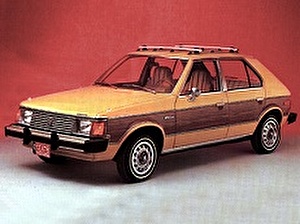
Tyres and wheels for Plymouth Horizon, wheel size on Плимут Хоризон
Подбор шин и дисков по автомобилю Плимут Хоризон
Другие модели Plymouth
Plymouth Acclaim, Plymouth Breeze, Plymouth Caravelle, Plymouth Colt, Plymouth Colt Vista, Plymouth Fury, Plymouth Grand Voyager, Plymouth Horizon, Plymouth Laser, Plymouth Neon, Plymouth Prowler , Plymouth Reliant, Plymouth Road Runner, Plymouth Sundance, Plymouth Turismo, Plymouth Voyager,Параметры дисков на Плимут Хоризон
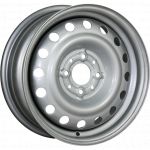
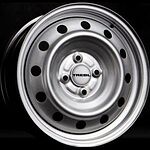
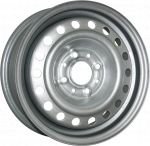
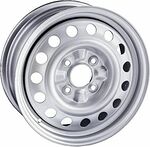
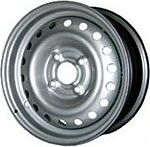
- PCD 4x100 диаметром от 13 до 13, шириной от 5 до 5 и профилем от ET39 до ET45как у Chevrolet Aveo
Tires on Plymouth Horizon
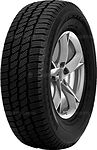
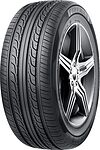
- Tyre size from R13 to R13, width from 165 to 165 and profile from 80 to 80S.
- Minimum tyre size: 155 R13, maximum: 165/80S R13




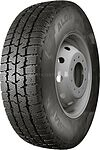

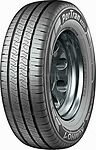

Tires on Plymouth Horizon (Плимут)
In 1978, the Chrysler Corporation introduced the compact hatchback Plymouth Horizon - a model that became an important milestone in the history of American automobile manufacturing. The car was developed during the energy crisis, when the demand for economical cars increased sharply. Horizon was a front-wheel drive 5-door hatchback of the "European" type and was a close relative of the Dodge Omni. However, the Plymouth version had its own positioning, differing in body design, trim levels, and marketing approach. Against the background of traditional American sedans with rear-wheel drive of that time, Horizon looked unusual: compact size, economical engines, and a practical body made it a competitor to European and Japanese models.Origin of the platform and design
The car was built on the L-body platform - the first mass-produced front-wheel drive architecture of Chrysler. The basis of the design was a transversely located engine and front-wheel drive, which made it possible to significantly increase the space in the cabin while maintaining relatively compact external dimensions. The front suspension is made according to the "MacPherson" scheme, and a semi-independent torsion beam is used at the rear. This solution provided a sufficiently soft ride and simplicity of maintenance. For the late 1970s, this was a fairly modern technical solution, especially against the background of classic American cars with a frame structure and rear-wheel drive. The steering had a rack-and-pinion mechanism, and the braking system included front disc and rear drum brakes.
In the first few years of serial production, the car was equipped with 4-cylinder gasoline engines with a volume of 1.7 liters. This engine was developed jointly with European engineers and was distinguished by moderate fuel consumption. Later, the engine range was expanded. Engines with a volume of 2.2 liters, developed by Chrysler, appeared, which became one of the most common power units of the company in the 1980s. The power ranged from 70 to 100 horsepower, depending on the version. They were combined with 4- and 5-speed manual transmissions, or with a 3-range "automatic" TorqueFlite.
Equipment and practicality
Despite its compact class, the car was distinguished by quite rich equipment for its time. Already in the base versions, the car offered a high-power cabin heater, adjustable seats, and a radio receiver. In more expensive trim levels, you could find air conditioning, power steering, an improved audio system, and decorative interior elements. Practicality was one of the main advantages of the model. The 5-door body made it easy to load luggage, and the folding rear seats increased the useful volume of the cargo space.
Differences from "classmates" and Dodge Omni
Compared to Japanese competitors like the Honda Civic or Toyota Corolla, it lagged behind in handling precision, but offered a more spacious cabin and adaptation to American operating conditions. In turn, it differed from the Dodge Omni in a more restrained style of decoration. The radiator grille, bumpers, and body trim were made in a more subdued style, corresponding to the image of the Plymouth brand. Inside the cabin, this model was often offered with richer trim. Some trim levels included improved seat materials, additional comfort elements, and an extended set of options. The range of trim levels also differed: Horizon was more often focused on family buyers, while Omni had a wider range of sports modifications. An important difference was also the marketing strategy. Horizon was sold through the Plymouth dealership network, which was focused on more affordable cars, so it was often offered at a slightly more attractive price.
Evolution of the model in the 1980s
Throughout its life cycle, the car was regularly modernized. The manufacturer updated the interior, improved the trim materials, and gradually increased the level of equipment. In the mid-1980s, versions with more powerful engines and improved suspension appeared. Despite the absence of radical changes in design, the car remained relevant due to a combination of economy and practicality. Unlike the sports modifications of the Omni, such as the Omni GLH, Horizon retained a more calm character and was focused on daily operation.
This was largely contributed to by the standard wheels - 13 and 14 inch disks and 155/80 R13, 165/80 R13, and 175/70 R13 tires. Such kits can be quickly selected in the online store "Mosavtoshina", where suitable options for classic American hatchbacks are presented.
Advantages of selecting tires for Plymouth Horizon on our website
- the catalog contains a large number of tires for compact hatchbacks of the 1980s;
- a wide range of disks, steel and aluminum, gives the opportunity to preserve the original stylistics of the model, or to give it aesthetic novelties;
- the possibility of independent selection using the search system significantly simplifies the process of choosing;
- specialists, in case of difficulties in selecting optimal options, will offer several models, the characteristics of which correspond to the technical features and operating conditions of the transport.