Tyres and wheels for Mahindra Goa, wheel size on Махиндра Гоа
Подбор шин и дисков по автомобилю Махиндра Гоа
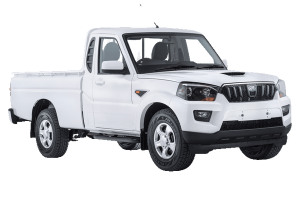
Другие модели Mahindra
Mahindra Alturas G4, Mahindra BE6, Mahindra Bolero, Mahindra Bolero Camper, Mahindra Bolero Maxi Truck, Mahindra Bolero MaXX, Mahindra Bolero Neo, Mahindra Bolero Neo plus, Mahindra Bolero Pik-Up, Mahindra e-Verito, Mahindra e2o, Mahindra e2o Plus, Mahindra eSupro, Mahindra Genio, Mahindra Goa, Mahindra Imperio, Mahindra Jeeto, Mahindra Jeeto Plus, Mahindra KUV100, Mahindra Marazzo, Mahindra Maxximo HD, Mahindra NuvoSport, Mahindra Pik Up, Mahindra Quanto, Mahindra Roxor, Mahindra Scorpio, Mahindra Scorpio Getaway, Mahindra Scorpio Pikup, Mahindra Scorpio-N, Mahindra Supro, Mahindra Supro Maxitruck, Mahindra Supro Minitruck, Mahindra Thar, Mahindra Thar Roxx, Mahindra TUV300, Mahindra TUV300 Plus, Mahindra Veero, Mahindra Verito, Mahindra Verito Vibe, Mahindra XEV 9e, Mahindra XEV 9S, Mahindra XUV 3XO, Mahindra XUV 500, Mahindra XUV300, Mahindra XUV400, Mahindra XUV500, Mahindra XUV700, Mahindra Xylo,Параметры дисков на Махиндра Гоа
- PCD 5x160 диаметром от 16 до 16, шириной от 6.5 до 6.5 и профилем от ET40 до ET40как у Tata Safari Storme
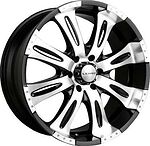
Tires on Mahindra Goa
- Tyre size from R16 to R16, width from 235 to 245 and profile from 70 to 75.
- Minimum tyre size: 235/70 R16, maximum: 245/75 R16




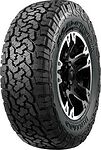







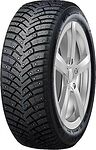


Tires on Mahindra Goa (Махиндра)
The compact SUV "Mahindra Goa" debuted in the Indian brand's production lineup in 2006. It was an export version of the Scorpio model, primarily intended for Europe and several Asian countries. The use of a different name was due to marketing, as it was supposed to evoke associations with a popular Indian resort and the spirit of adventure. In technical terms, the model was a classic frame SUV with four-wheel drive and a transfer case, which received equipment not available on the original version.Differences from the Indian Scorpio
The most noticeable differences were in the equipment and design of the front end. The export version received a modified radiator grille, different optics, and more restrained body styling. In some countries, the SUV was equipped with additional safety systems necessary for certification.
To access the European market, Mahindra modernized the sound insulation and refined the suspension settings. This was important since the base "Scorpio" was created for Indian roads, where the requirements for acoustic comfort and smoothness were significantly lower. In some versions, the Goa received improved interior materials, a more advanced multimedia system, and an expanded set of equipment. The salon retained a significant part of the initial utilitarianism. Interestingly, in some markets, this model was positioned not only as an SUV for private owners but also as an alternative to light commercial models due to its frame construction and high payload capacity.
Technical differences
At the time of its release, the SUV stood out from its "classmates" among SUVs with conservative technical solutions. First and foremost, this was a massive ladder frame designed for heavy operating conditions. Such an approach significantly distinguished the model from most crossovers, which, at that time, had already switched to a bearing body. The front suspension had an independent scheme with torsions, and a non-split axle with springs was used in the rear. This design worsened handling on asphalt but provided high reliability and stability when fully loaded.
One of the key features was a full-fledged off-road transmission with a rigidly connected four-wheel drive and a reduction gear. For its segment, this was an important advantage, especially in markets with poor road infrastructure. The ground clearance exceeded 180 mm, and the short overhangs allowed confident movement on difficult terrain. The car was not initially created as an extreme off-roader — the main focus was on versatility and reliability.
Most of the released instances had a 2.6-liter turbodiesel of the NEF series under the hood. Depending on the market, its power ranged from 109 to 120 hp, and the torque reached 270 Nm. Later, it was replaced by a more modern power unit with a volume of 2.2 liters of the mHawk series, developing 140 hp. In addition to higher power, it stood out from its predecessor with a significantly lower noise and vibration level at a lower fuel consumption. Most versions were equipped with a 5-speed manual transmission. Automatic transmissions were practically not used, as the basis of the model concept was a combination of practicality, functionality, and reliability.
Interior features
The salon reflected the character of the entire model — practical and maximally simple. The front panel had a massive architecture with large buttons and well-readable instruments. The trim predominantly used hard plastic designed for long-term operation in harsh conditions. Export versions were significantly richer than Indian Scorpios. Depending on the configuration, they offered air conditioning, leather seat trim, an electric package, multimedia, and even a third row of seats. The driver's seat was almost vertical, which, in combination with large windows, provided excellent visibility from the inside. Thanks to the frame construction and high roof, the salon was perceived as spacious, especially by the standards of mid-size SUVs of that time.
Behavior on the road
On the asphalt, the car behaved typically for a frame SUV of the mid-2000s. The high center of gravity and dependent rear suspension made handling less precise compared to modern SUVs. However, off the paved roads, the construction revealed its advantages. The four-wheel drive with a reduction gear, a sturdy frame, and long-travel suspension allowed confident movement on dirt roads, sand, and rocky terrain. It was the combination of simplicity, durability, and relatively low cost that became the main advantage of the Goa on export markets. In several countries, the model was actively used not only by private owners but also by government services, construction companies, and tour operators.
Standard were wheels with diameters from 15 to 17 inches with tires in sizes 235/75, 245/70, and 255/60. Such wheel products are widely represented in the online store "Mosavtoshina", allowing you to choose both models for heavy off-road use and more universal options, effective for use on paved roads as well.
Advantages of selecting tires for Mahindra Goa on our website:
- the ability to select tire products taking into account the most specific conditions of using the SUV;
- a large selection of wheels with "factory" parameters, including models with a assembled structure, designed for the most difficult off-road conditions;
- warranty service for wheel products makes their purchase particularly relevant, as it directly affects reliability and operating expenses;
- the possibility of receiving comprehensive assistance in finding optimal tires and wheels, information on compatibility with your SUV in each specific modification.