Tyres and wheels for Land Rover Range Rover, wheel size on Ланд Ровер Рэндж Ровер
Подбор шин и дисков по автомобилю Ланд Ровер Рэндж Ровер

Другие модели Land Rover
Land Rover Defender, Land Rover Discovery, Land Rover Discovery 2, Land Rover Discovery 3, Land Rover Discovery 4, Land Rover Discovery 5, Land Rover Discovery Sport, Land Rover Evoque, Land Rover Freelander, Land Rover Freelander 2, Land Rover LR2, Land Rover LR3, Land Rover LR4, Land Rover Range Rover, Land Rover Range Rover Evoque, Land Rover Range Rover Evoque L, Land Rover Range Rover Sport, Land Rover Range Rover Velar,Параметры дисков на Ланд Ровер Рэндж Ровер
- PCD 5x120 диаметром от 16 до 22, шириной от 7 до 9.5 и профилем от ET39.5 до ET57как у Lucid Air
- PCD 5x165.1 диаметром от 16 до 16, шириной от 6 до 7 и профилем от ET33 до ET33как у Honda Crossroad
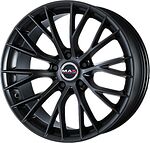
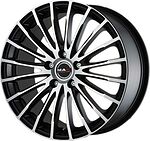


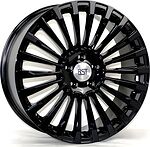
Tires on Land Rover Range Rover
- Tyre size from R16 to R22, width from 235 to 285 and profile from 40 to 70S
- Minimum tyre size: 235/60 R19, maximum: 295/40 R20
Favorite winter tires
Наиболее популярные модели шин
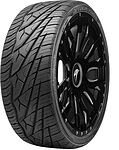






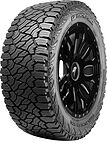


Tires on Land Rover Range Rover (Ланд Ровер)
The Land Rover Range Rover is a luxury SUV. The line of these cars appeared in 1970, presented by the British company British Leyland. To date, four generations of this model have been replaced.Creation History
Experiments to create a larger SUV than the classic Land Rover began back in 1951, when a full-wheel drive model was developed based on the Rover P4. At that time, British Leyland did not have the means to implement it, and it was postponed, remaining in this state until 1966, losing its relevance by this time. Currently, two prototypes that survived from recycling are in the British Automobile Museum. Nevertheless, the concept remained, and in 1967, the first prototype appeared, and two years later, 26 more pre-production examples were developed, which were called Velar.First Generation
Serious production of the model began in 1970. Initially, it was a 3-door "station wagon" that became a 5-door only in 1981. At the same time, the car was not initially a luxury SUV. All versions had a fairly utilitarian interior with vinyl upholstery and plastic panels that can be easily washed with a hose. It was just bigger than other Land Rover models. Another difference was the ladder-type frame with a box-shaped cross-section, the use of coil springs instead of leaf springs, and disc brakes on all wheels. The engine range initially consisted of one engine - a gasoline V8 with a capacity of 127 liters. s., a modified version of the Buick engine. In 1984, it received a Lucas fuel system, which increased power to 155 liters. s., and in 1990 - a working volume of 3.9 liters instead of the initial 3.5 liters. This was largely due to the appearance in 1981 of a 4-door body on a modified extended frame, which significantly increased the weight of the car. In addition to the gasoline engine, in 1988, it began to be equipped with a turbocharged diesel engine with a volume of 2.4 liters and a capacity of 112 liters. s. from the Italian VM Motori. Serial production continued until 1996, two years after the appearance of the model of the next iteration.Second Generation
After almost a quarter of a century after the debut of this model, in 1994, its successor was presented. The design retained the stylistic features of the predecessor, becoming more perfect from the point of view of aerodynamics. Since at that time the brand belonged to BMW, a diesel turbocharged engine of this manufacturer with a volume of 2.5 liters appeared in the engine range, along with a power unit of its own design with 8 cylinders in a V-shaped configuration in two versions - with a volume of 4 and 4.6 liters. In 1999, it received the Bosch Motronic control system from the BMW 7-series.Third Generation
In 2001, the premiere of the car of the third generation took place, which continued to use components from BMW, mainly from the 7-series sedan. At the initial stage of production, the car was equipped with a 4.4-liter BMW M62 engine, and from 2006 - Jaguar engines with a capacity of 4.2 and 4.4 liters. They were combined with a 6-speed "automatic" ZF. In turn, the "electronics" was shared with the BMW "five", which in 2005 was replaced by components from Jaguar, including the characteristic rotary "jellyfish" transmission control.Aluminum L405
In 2012, the brand presented a model of the fourth generation. The fundamental difference from the predecessor was the use of a body representing an aluminum monocoque, which was the first case of the use of such a solution in a serial all-wheel drive car. This made it possible to reduce the weight by 420 kg. For these purposes, the brand had to build its own plant for the production of aluminum parts in the English Solihull. At the start of sales, the SUV was offered with two gasoline V8 engines with a capacity of 375 and 510 liters. s., as well as two diesel engines - a 258-strong V6 and a V8, developing 339 liters. s. All power units were combined with an 8-speed "automatic" from ZF. In 2014, a "hybrid" version appeared with an in-line "four" of the Ingenium series, which was combined with an electric motor with a capacity of 48 or 116 liters. s., an accumulator battery with a capacity of 13.1 kW / h. Even today, on domestic roads, you can meet a car of the first generation, not to mention models released much later. For all modifications of this car, the online store "Mosavtoshina" offers a wide range of wheels and tires.Advantages of selecting tires for the Land Rover Range Rover on our website:
- the catalog contains a large number of positions even for a car of the very first generation;- the automated selection system requires only the entry of the brand and model name for full-fledged work;
- the possibility of purchasing models, both from the original equipment and from third-party manufacturers;
- managers will quickly resolve all issues with the selection of wheels and tires, offering optimal options, taking into account the technical characteristics of any version of this SUV.