Braking properties on wet and dry asphalt driving stability on wet asphalt.
Insufficient resistance to aquaplaning
Beautiful tires for everyday use on powerful speed cars
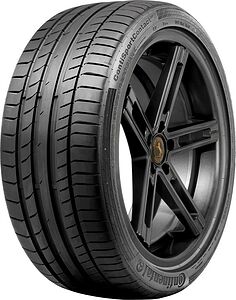
The ContiSportContact 5R tires have already won comparative tests by AvtoReview - three years ago, they performed better than others on Ford Focus RS and Volkswagen Scirocco R cars. The tires turned out to be good for the Mustang as well! On a "wet" track, you can boldly pass turns in a light skid - the car starts to slide softly and predictably. However, the recovery of gripping properties after a skid is sometimes abrupt - that's why the reliability rating is lowered.
On dry asphalt, the accuracy of control on the track is not as high as that of Michelin or Pirelli tires: in turns, there is sometimes a lack of "firm support" of the rear axle. But the lap time is good, and in terms of braking properties, Continental tires are even the best. There are no problems with wear, and the comfort ratings are average.
A great option for those who want to get pleasure from fast driving - but only on dry asphalt
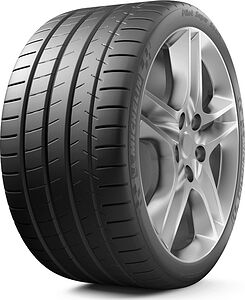
Tires are created using technologies tested in the 24-hour Le Mans race. And this is felt on the track "dry" handling. The car stands great on a high-speed arc, softly starts to slide in sharp turns. The lap time is one of the best! And, importantly, after driving on the track, after drifting, the tread does not look worn out, an indirect sign of the durability of Michelin tires.
On wet asphalt, the tires performed slightly worse. Resistance to aquaplaning did not cause any complaints, but on the handling track, the driver is forced to work on the edge of their capabilities: the car sharply and unpredictably skids, making it difficult to move along the optimal trajectory. As a result, the largest spread of results from lap to lap.
However, these are the quietest and "softest" tires among their peers.
wet grip performance wet handling performance high aquaplaning resistance
noise low ride smoothness insufficient handling reliability on dry asphalt
An excellent choice for those who prioritize safety on wet roads
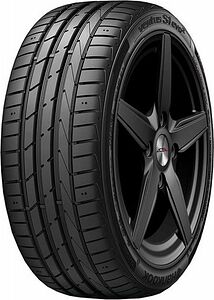
The new Hankook tires have performed well on wet asphalt, with high grip properties complemented by reliable behavior on winding roads. And although they lose to Goodyear or Continental tires in terms of lap time, it's easy and even pleasant to control the car on the track.
And you don't have to be afraid of puddles, the Hankook Ventus S1 Evo2 tires successfully resist aquaplaning. On dry asphalt, the indicators are more modest. On the ring road, there is a good "grip" on the verge of skidding, but the skids themselves are sharp. And the main drawbacks are noise and mediocre smoothness: Hankook tires transmit all minor irregularities to the car's body.
Braking properties on wet and dry asphalt, handling on wet asphalt.
insufficient resistance to aquaplaning
Good tires for safe driving on wet asphalt, but beware of fast driving through puddles.
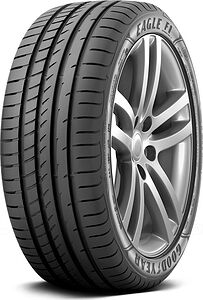
In the past, Goodyear Eagle F1 Asymmetric 2 tires won the comparative test of 17-inch UHP-class tires. They still look very convincing on wet asphalt: minimum braking distance, best time on a winding track. It's very pleasant to pass turns with light skidding!
The main enemy of these tires is puddles. Especially early "float" wide rear tires. It seems that the tread pattern of these tires was optimized for a smaller width, because a year ago, 225/45 R17 tires had no problems with aquaplaning.
On dry asphalt, moderate grip properties, on the handling track the car lacks clarity of reactions. And skidding starts earlier than on Michelin or Pirelli tires. As a result, only fifth place in the lap.
The tires are quiet, of medium hardness. The tread after drifting lost a little more rubber than the other tires, but due to the initially greatest tread depth, it remained quite functional.
Aquaplaning resistance High treadwear resistance during aquaplaning, comfort.
Handling on dry asphalt
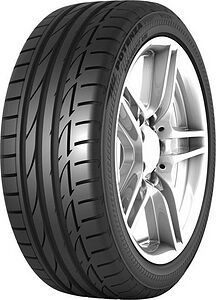
Good tires for everyday driving, but for track days, it's better to choose something else.
The traction and handling performance on wet asphalt is moderate. On the handling track, the rear axle "floats" earlier than Goodyear or Continental tires, but controlling skidding is not a problem.
There are no problems with aquaplaning, especially with the front, narrower tires. On dry asphalt, the Bridgestone tires somewhat reduce the sports ambitions of the Ford Mustang. In turns, it goes into skidding early and sharply, which increases the lap time of the almost three-kilometer circle by more than three seconds compared to "fast" tires.
It's nice that the tread wear was minimal. And the comfort is also excellent.
Braking properties on dry asphalt handling on dry asphalt
Traction properties and handling on wet asphalt
low resistance to aquaplaning
low ride smoothness
Good track tires, but for everyday use, it's better to use more universal tires.
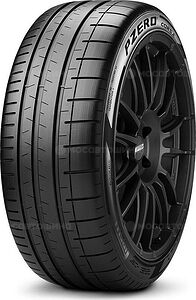
Actually, it would be more correct to compare with our competitors, Pirelli P Zero tires, but we couldn't get the right size, so the honor of Pirelli was defended by the "track" model P Zero Corsa.
By the way, these are the tires used for the initial equipment of Ford Mustang cars. Moreover, directional tires Direzionale are installed in the front, and asymmetric Asimmetrico are installed in the back. What's the point of such complexities? It's all for the sake of high speed on the track. That's true, although the gain over "just" asymmetric Michelin Pilot Super Sport tires is minimal.
But the loss on wet asphalt is obvious - both when braking and turning, the tires of the "Pirelli system" slip early. And on puddles, these tires "float" early, especially the front Direzionale: the tread is directional, but the groove depth is small! And after drifting, there's almost nothing left of these grooves.
For those who are into drifting, Kumho tires are more suitable than others, partly because they are about one and a half times cheaper than the best samples.
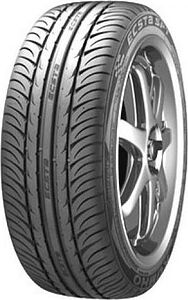
Kumho tires look stylish: a directional tread pattern with sloping blocks, a lateral notch in the diagonal grooves, and the "ECSTA" embossing on the central rib. However, unfortunately, all this design did not help to equally compete with competitors.
On wet asphalt, the coupling properties are mediocre - entering turns is hindered by the plow of the front axle, and when exiting, there is a high risk of skidding in response to an increase in fuel supply. And the Kumho tires also poorly resist aquaplaning.
On dry pavement, the braking distance from 100 km/h turned out to be almost four meters longer. In other words, when a car on ContiSportContact 5R tires has already stopped, the same car but on Kumho Ecsta SPT KU31 tires will still be moving at a speed of 31 km/h! And on the track, the times are bad - the Mustang slips early and stays in skidding for a long time.