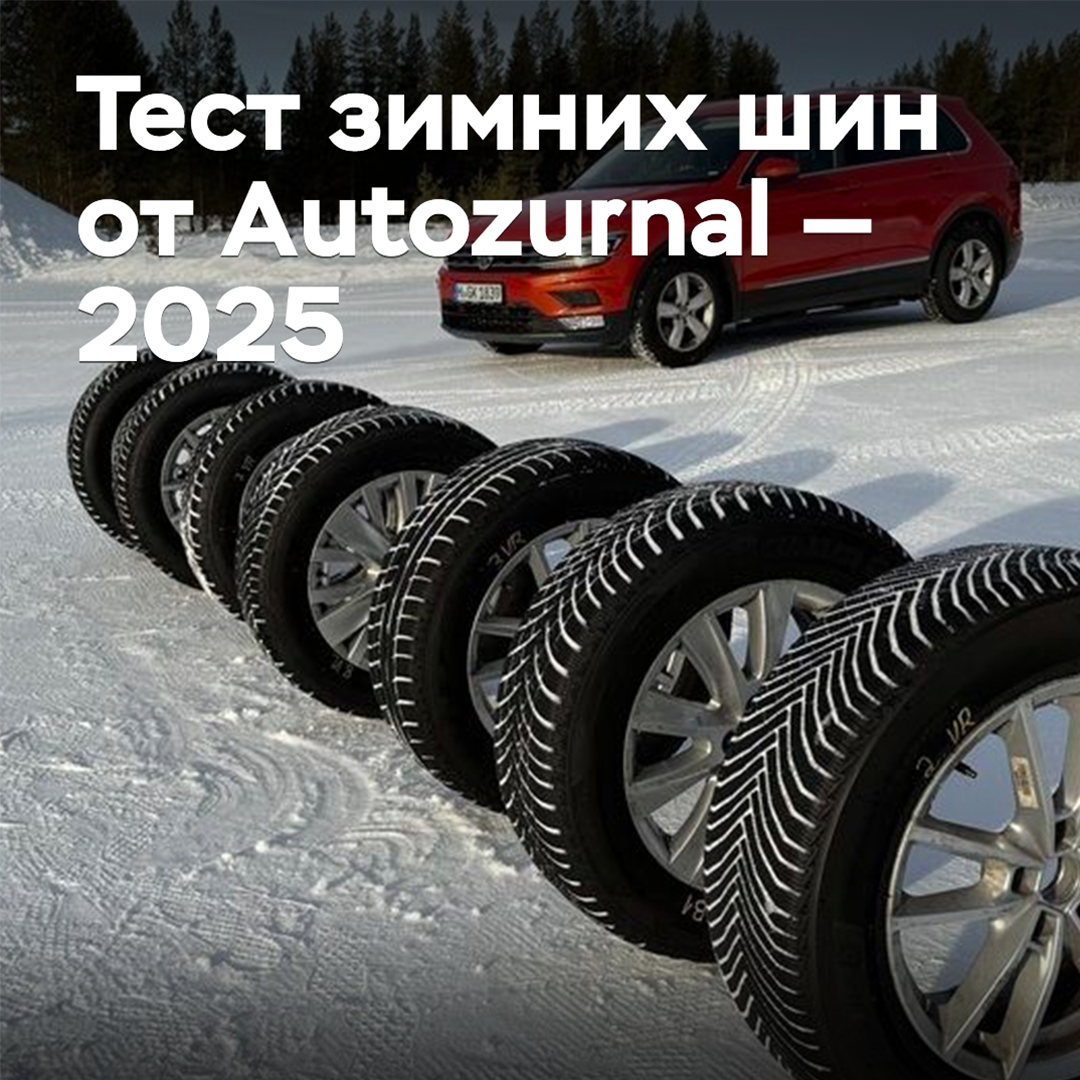
Winter Tire Test by Autozurnal — 2025
The 2025/2026 winter tire testing season is opened by the Slovakian edition of Autozurnal, which this time took two tires from brands from neighboring Czech Republic for testing: Barum Polaris 6 from Continental and Tomket Snowroad SUV3 from Tomket, whose tires are manufactured in China. Also tested were budget tires Ceat Winter Drive SUV, Lassa Competus Winter 2+, Kormoran SUV Snow, Riken SUV Snow, and as a sample of a premium product, Michelin Alpin 7 was chosen. The tires were compared in size 215/65 R17 for compact crossovers such as the Volkswagen Tiguan, Skoda Karoq, Hyundai Tucson, or Kia Sportage.
Snow tests were conducted in Swedish Arvidsjaur, where representatives of the automotive industry gather in winter to conduct various tests, and Barum turned out to be the best on this type of surface, surpassing all competitors in both braking and traction properties, and in the handling test, they only gave way to Michelin. At the same time, Tomket had a clear lack of grip on snowy surfaces.
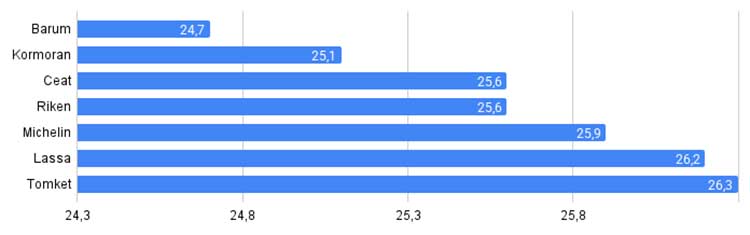
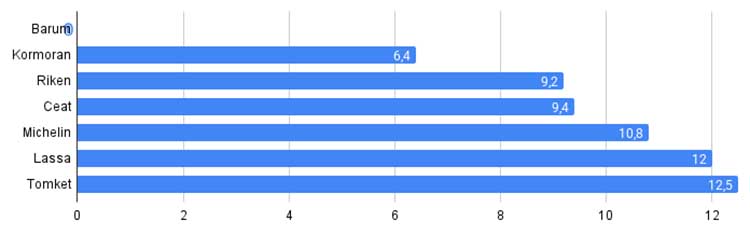
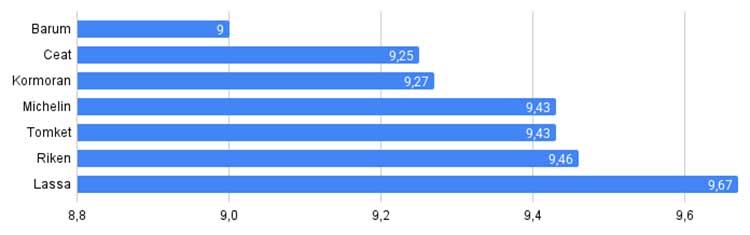
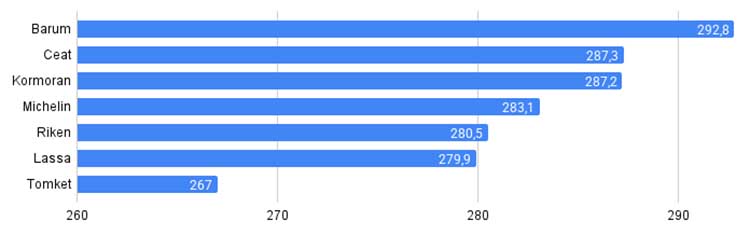
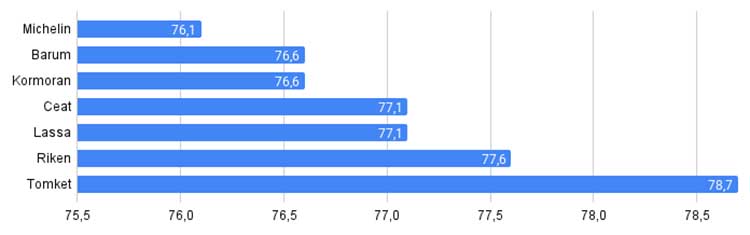
On wet surfaces, Michelin took first place, with excellent handling and the shortest braking distance, and silver was awarded to Lassa tires from the Turkish company Brisa, which, although they did not win in any discipline, several times entered the top three. The last line again went to Tomket tires.
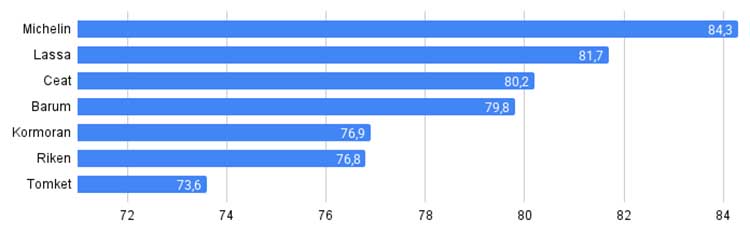
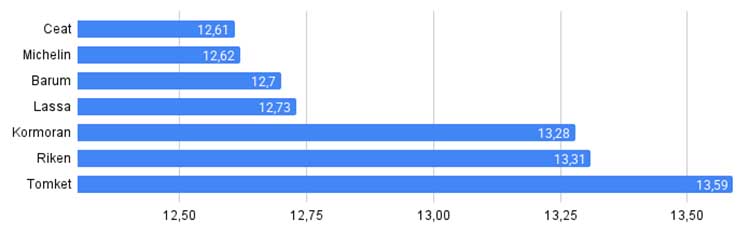
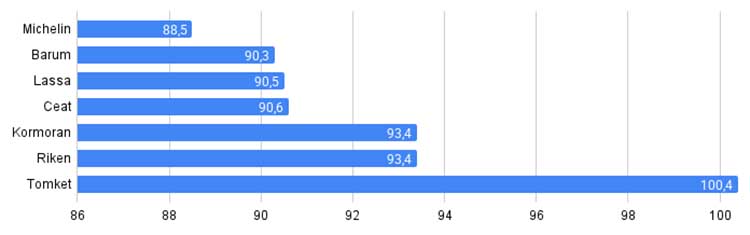
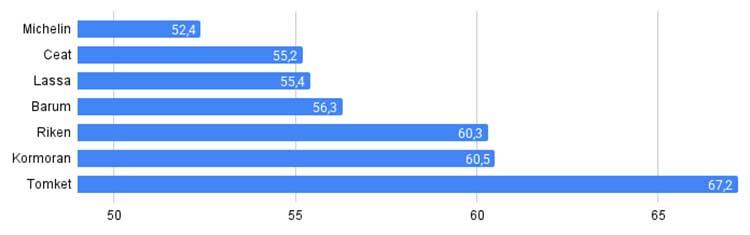
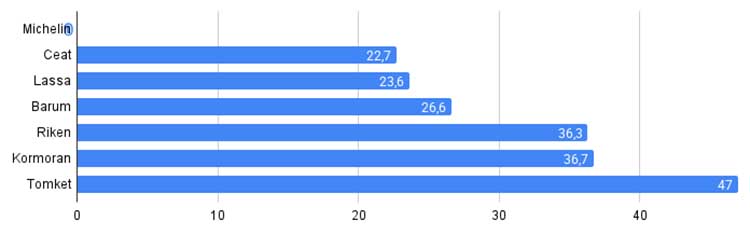
On dry surfaces, Indian Ceat had the shortest braking distance, while Lassa had a very weak result, and Michelin had both effective braking and good handling characteristics.
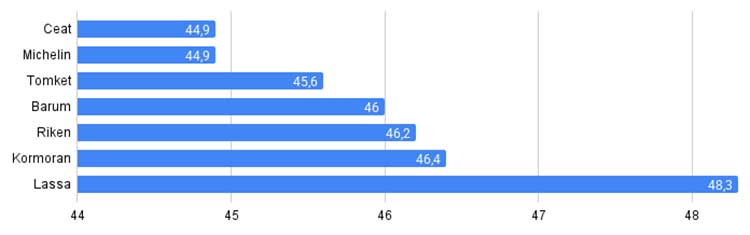
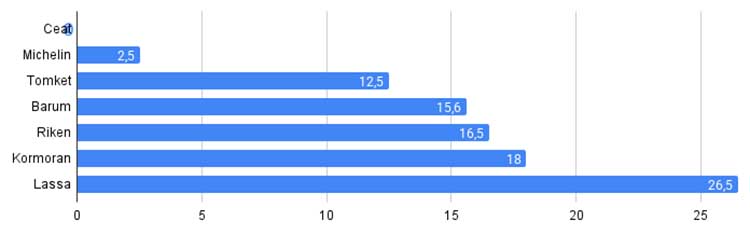
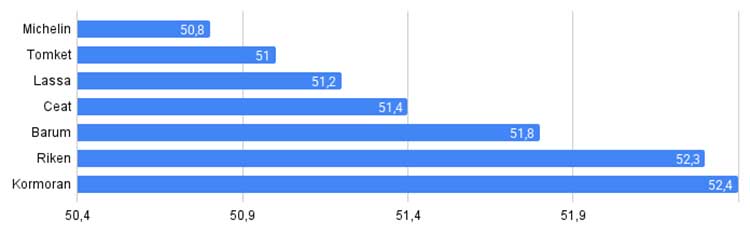
Michelin was also one of the most economical tires in the test, and in this test, only Barum performed better.
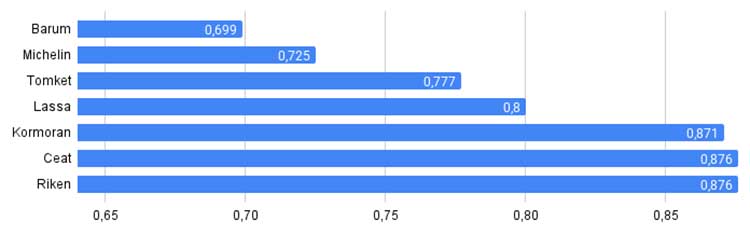
Barum turned out to be the quietest tires in the test, but overall, in the dry surface tests, Michelin won, and Barum took second place. The worst results in this part of the tests were shown by the "twins" Kormoran and Riken, both from Michelin.
Verdict
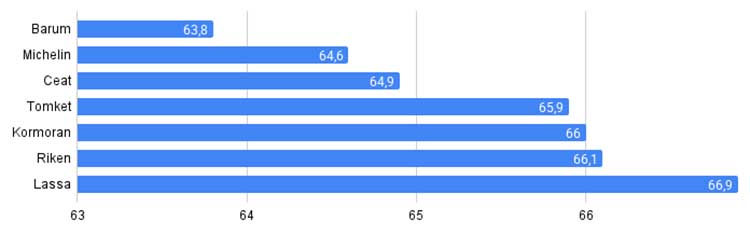
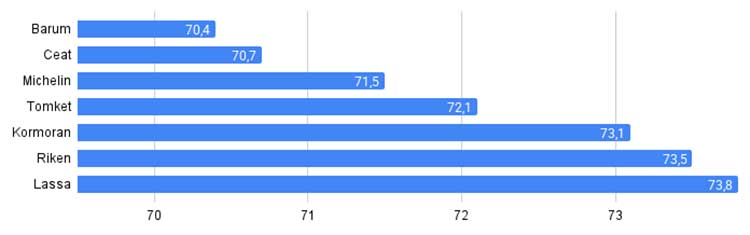
According to the results of all tests, Michelin Alpin 7 was expectedly recognized as the best, the only premium tires in the test that scored the maximum number of points on dry and wet surfaces, and second place was taken by Barum Polaris 6, which was the most effective on snow and took second place on the dry track. Bronze went to Ceat WinterDrive SUV tires, which were third on snow and wet surfaces and fourth on dry asphalt, and behind them were Lassa, which showed good results on the irrigated track but dropped to the lower part of the rating in other conditions. Even lower were Riken SUV Snow and Kormoran SUV Snow, which have the same tread pattern and similar characteristics, and their final results differed by only 0.6%, and the last place was taken by Tomket, which had a very long braking distance on wet surfaces and weak grip on snow, and which were able to show acceptable results only on dry surfaces, which is why they received a "Poor" rating and are not recommended for purchase.
Source: Autozurnal. Photo: Michal Karpat / Autozurnal