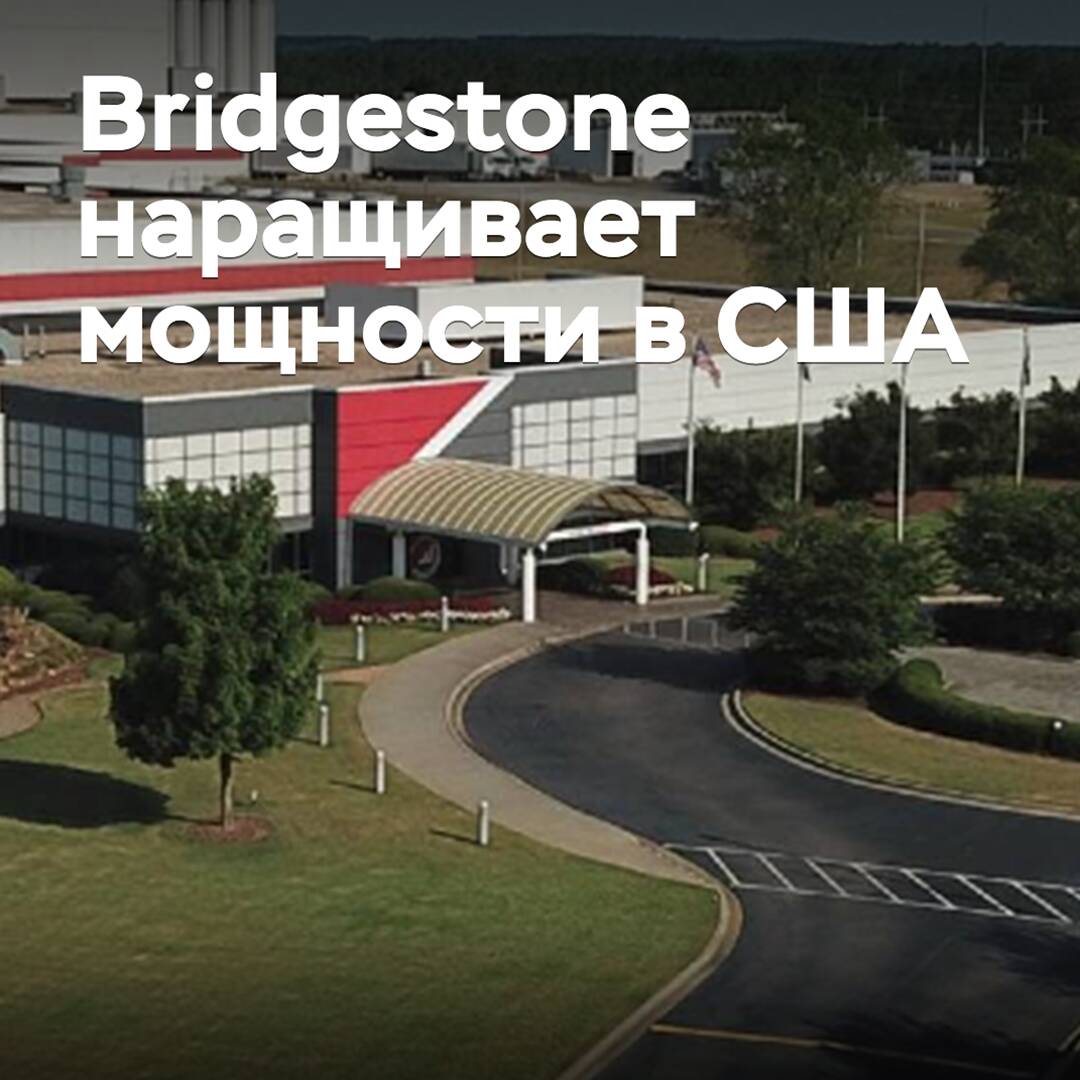
Bridgestone Expands Capacity in the USA
Tire companies continue to respond to the 25% tariffs on auto parts imports introduced by the Donald Trump administration, and Japanese Bridgestone has announced that due to the new tariffs, it plans to increase the capacity of at least two of its US plants.
According to Bridgestone's Q1 2025 report, by 2027, the capacity of passenger and light truck tire plants in Aiken (South Carolina) and Wilson (North Carolina) will be increased by 2 million units per year. It is noted that the expansion of capacity will require "small investments" in Aiken, and in Wilson, production will be maximally loaded.
Earlier, it was announced that Bridgestone plans to close its truck tire plant in LaVergne (Tennessee) and redirect production to other sites in North and South America. There is no report of a change in these plans.
The report states that Bridgestone intends to "maintain or increase production" in the US to be able to meet 60% and 70% of the demand for passenger and truck/bus tires in the country through local production. In addition, optimization of raw material supply chains is planned, and currently, Bridgestone in the US already uses 80% to 90% of materials from local sources (excluding natural rubber, which is not subject to increased tariffs).
Bridgestone is also "maximizing" the load on its plants in North and South America, including in Canada and Mexico.
It is expected that the new tariffs will affect Bridgestone's operating profit for 2025, and the company forecasts that additional costs will be around $310 million.
In Q1 2025, Bridgestone's sales in North America decreased by 2% to $2.87 billion, and operating profit increased by 10% to $249 million. Total sales in the global market decreased by 1% to $7.27 billion, and adjusted operating profit fell by 7% to $770 million. Operating margin decreased by 0.8 p.p. to 10.5%.
The forecast for 2025 has been maintained, and Bridgestone expects sales to decrease by 2% to $29.8 billion, and operating profit to increase by 4% to $3.47 billion.