Tyres Samson
Summer and all season tires
Not available
The Samson brand belongs to the Chinese company Guizhou Tire, founded in 1958. Currently, it is a holding company that unites enterprises forming a continuous production chain for the manufacture of a wide range of automotive tires. At present, it is one of the leaders in the industry in China. The Samson brand was established in 2004 to promote commercial tires with an all-steel carcass, which was mastered in 2002, in foreign markets. The enterprise where they are produced is equipped with the most modern equipment and uses advanced technologies from leading European companies in the industry.
In the segment of commercial and special tires, the brand offers more than fifty models of the following categories:
- for asphalt roads;
- for mixed conditions - asphalt/dirt.
The most significant part of the brand's commercial model range is designed for use on asphalt roads. The extensive selection of options covers almost all scenarios of using trucks and large-capacity buses. All tires are distributed across several lines, mainly by axle installation. The manufacturer offers tires designed for use on driving, trailer, steering/trailer, or all axles. All models have a design based on an all-steel carcass, differing from each other in the tread pattern design and depth of its tread. Some tires are designed for use in regions with a cold climate, on snowy and icy roads. Externally, they are distinguished by a tread pattern of many small blocks, as well as a rubber compound that practically does not lose its elasticity at temperatures below zero degrees.
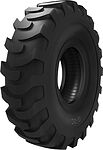
The second part of the brand's commercial tire range is designed for trucks and special equipment operated on both asphalt roads and dirt surfaces. Externally, such models are distinguished by "toothed" tread patterns with massive blocks and wide grooves. They provide excellent traction and stability, primarily on dirt surfaces. They also use an all-steel carcass, but the number of cord layers is significantly increased, as well as the thickness of the tread and sidewalls. A special rubber compound with increased resistance to abrasive wear, punctures, and tears is also used. Another important feature is the increased width of the tread and its profile, which additionally expands the contact patch. This improves grip on asphalt roads, reduces pressure on the ground, and provides additional resistance to abrasive wear.