Auto LR FR 2 + RR Evoque.
The main habitat is KhMAO.
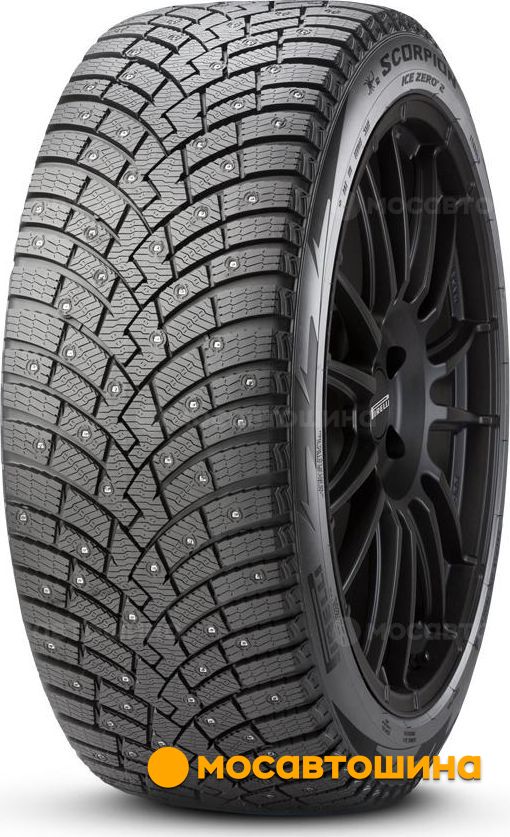
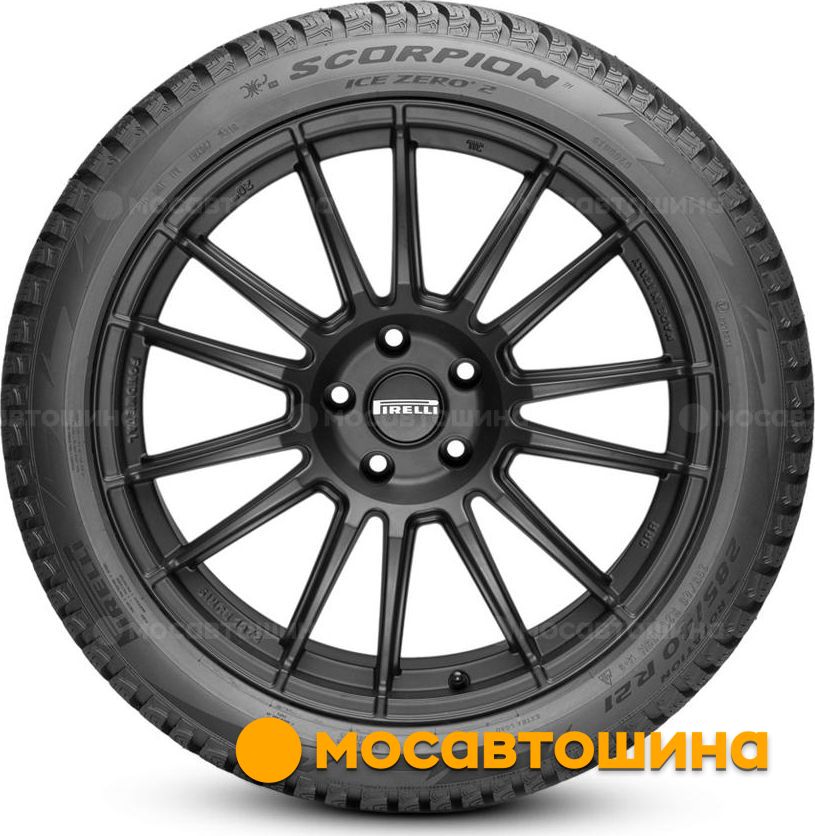
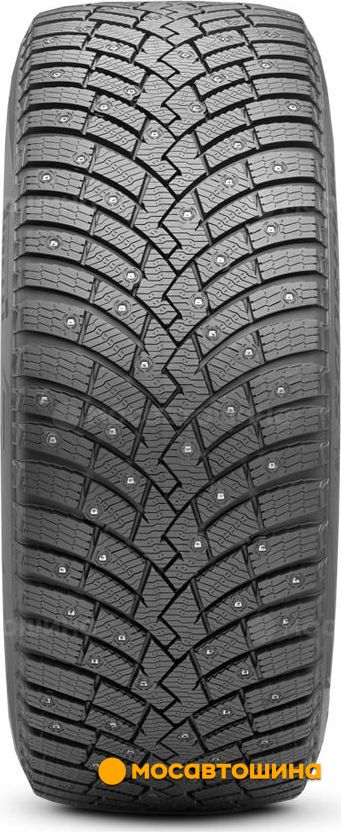
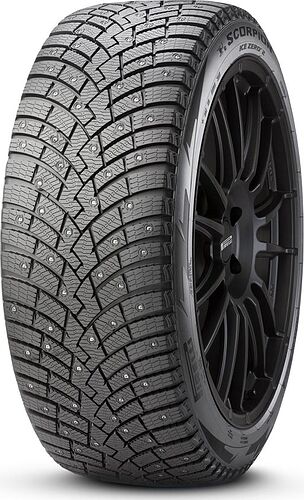
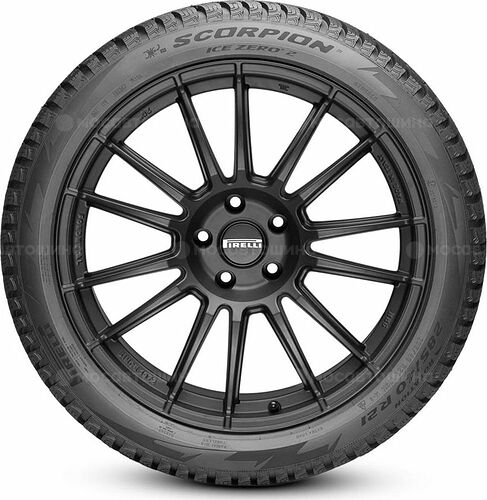
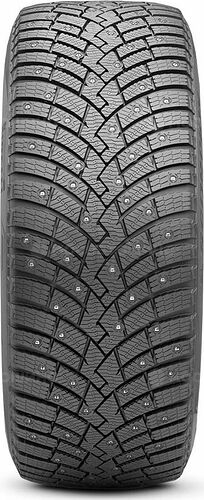
It so happened that over the past year, I have tested the top 3 of our market. Michelin X-Ice North 4 SUV, Pirelli Scorpion Ice Zero 2, and Nokian Hakkapeliitta 10p SUV. Before them, I had Nokian Hakkapeliitta 5 Sport Utility and Bridgestone BLIZZAK Spike-01. In total, 5 tires, all with the same size (235/60 R18), the same all-wheel-drive vehicle, the same driving style, and the same environment.
In general, about the new products, it can be said that if you have a simple sedan or a light crossover, and you prefer a calm driving style at permitted speeds, you can take any of them. For you, they will not differ much. They all meet the standards for noise, braking, and so on.
But there are small differences between them. Due to the lack of this information on the internet, I had to find it out myself, through trial and error. I hope it will be useful to you.
1. Real sizes. In the same size (235/60 R18), the tread width is different. Hakka 5, Pirelli 2, and Bridg 01 - 200 mm, Hakka 10 - 190 mm, Michelin 4 - 180 mm. Yes, I know that according to their rules, it's not possible to measure it that way, and the real width depends on different foreign letters (I corresponded with MICHELIN experts), but I rely on my own experience, not on press releases. Therefore, for heavy and powerful machines or for an active driving style, it's better to take Hakkapeliitta 10 - one size wider, and Michelin 4 - two sizes wider than recommended by the car manufacturer. These two new products have no reserve, everything is on the edge.
Another difference between Hakkapeliitta 10 and Michelin 4 and the others is the absence of protruding edges on the tread, they are cut off. It seems like nothing significant, but the cut affects safety and handling in complex situations when crossing the edge and the car goes into a skid. For example, the width of the old Hakkapeliitta 5 was quite enough, and it quickly and controllably stopped skidding. I understand that with the narrowing, the consumption and noise decreased, but I wouldn't trade these improvements for safety.
2. Noise. The most controversial discipline. It's tempting to write to Mitsubishi owners that they have no right to complain about the noise of the tires, since they didn't pay for it when buying the car, but I won't. Noise is present in all studded tires, there is no quiet studded tire, and this is a fact. All four tires make about the same noise in winter. The differences between them are minimal and do not affect the LR driver, because the noise is in a calm, non-irritating range. If you nitpick, Hakkapeliitta 10 is the quietest, especially at speed. I was most afraid of noise from Pirelli 2. Huge studs, wide tread. But it turned out to be surprisingly quiet, at least the noise doesn't irritate at all. The only remark about noise appears at positive temperatures. In this case, the noise is mainly caused not by the studs, but by the large contact patch of soft lamellas with the road. You can directly feel how it clings to every millimeter and bump, even the steering wheel is hard to turn. And Michelin 4 is a disappointment. Yes, it can be quiet, almost noiseless, as some write in reviews, but at certain temperatures and speeds. On average, it's just as noisy as the others. And it can be very noisy, especially with increasing speed. Of course, it doesn't make your blood come out of your ears, but some ranges of this noise are a bit annoying. And what irritates the most is not the noise itself, but these constant jumps. From silence to the sound of a helicopter or a tube. I couldn't get used to it.
3. Braking. Here, in principle, everything is the same, and the differences are minimal, except for some nuances. On packed snow, the best deceleration is with M4. On a wet road, with R2. On loose snow, with N10. On frozen slippery asphalt, everyone is "good", except for M4. It just skids, as if there were no studs, but mini-skates. But all this is only relative to deceleration in a straight line. As soon as there is a slight skid, the picture changes completely.
4. Course stability. For me, this is the ability of the tire to safely perform an overtaking maneuver. If more precisely, then with acceleration, it cuts through the inter-row porridge, ice, or snow drift, straightens out, and also safely returns to its row. The most calm and safe feelings during this maneuver are given, surprisingly, by Hakka 5 Sport Utility. No one from this list provides more safe and predictable behavior. Bridg 01 - to improve traction, it asks for "a little gas". Hakka 10 - holds perfectly only until skidding. Pirelli 2 - gives a sense of its width. Michelin 4 - for some reason, always only with a prayer.
5. Handling. Predictability and the ability to maneuver during skidding is perhaps the most important characteristic for all-wheel-drive car owners. Because in most such cases, for a safe exit from the situation, it's better to work with the gas than the brake. I don't know what the Japanese "engineered" there, but Bridg 01 is really the best in this discipline. On any surface, even on a frozen slippery road, it holds the road perfectly. On RR Evoque, sharp acceleration from 60 to 100 goes with a slight wheelspin, but everything is confident and controlled. Skids and turns are also always under control. I pass the mini-ring on the second turn at 60, as if it's supposed to be like that. It's even scary, but it bites into the road and goes. None of these 4 tires can do that. Pirelli 2 is a little better than the others, but even it can't compare to Bridg 01. The test of Bridg 01 on LR FR 2 showed that 230 hp and 2 tons of weight can't use its full potential. Sharp acceleration with wheelspin or an attempt to skid it is simply mockery of the engine. The other tires can be driven on gravel roads with ease, not to mention Evoque.
Hakka 5 and Pirelli 2 work on a "four" in this discipline. The cut and narrowed Hakka 10 is a little worse. After skidding, it's quite difficult to control its behavior. The constant angle of the tread pattern helps a bit, but only when it stands clearly across the skid direction. But the most disgusting behavior during skidding is with Michelin 4. In addition to being very narrowed and cut, it's also very soft and without clear reinforcement zones, like a ball. On RR E, it skids at every traffic light and with any acceleration. After any skidding, it's impossible to predict its behavior, it skids like on a sled. I drove on it sideways until I sold it. Not my thing, I've had enough on SUBARU.
In total, after all the tests and trials, I ranked these tires as follows:
1 - Bridgestone BLIZZAK Spike 01. The best in handling, and in other parameters, it's not worse than the others.
2 - Pirelli Scorpion Ice Zero 2. It holds the road a little worse.
3 - Nokian Hakkapeliitta 10p SUV. If it weren't for the narrowing and cuts, it would have overtaken R2.
4 - Nokian Hakkapeliitta 5 Sport Utility. A solid "four" in all parameters, even despite its age.
5 - Michelin X-Ice North 4 SUV. Noisy, slippery, and the worst in handling.
Now, with this experience and knowledge, what would I buy now?
For RR Evoque - Bridgestone BLIZZAK Spike 01
For LR FR 2 - Nokian Hakkapeliitta 5 Sport Utility
I wouldn't take any of the new products, definitely. I'm too old for such experiments. And as practice has shown, it didn't lead to any improvements.
Good luck on the roads!
And why do we always think that for a 2010 car, you necessarily need to take tires developed in 2020?

 Enlarge
  Enlarge
  Enlarge