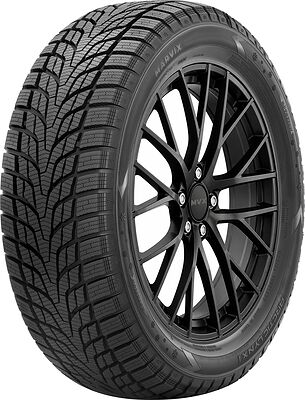
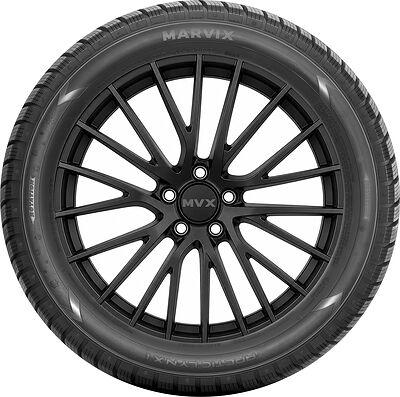
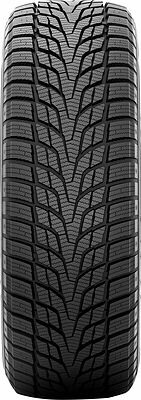
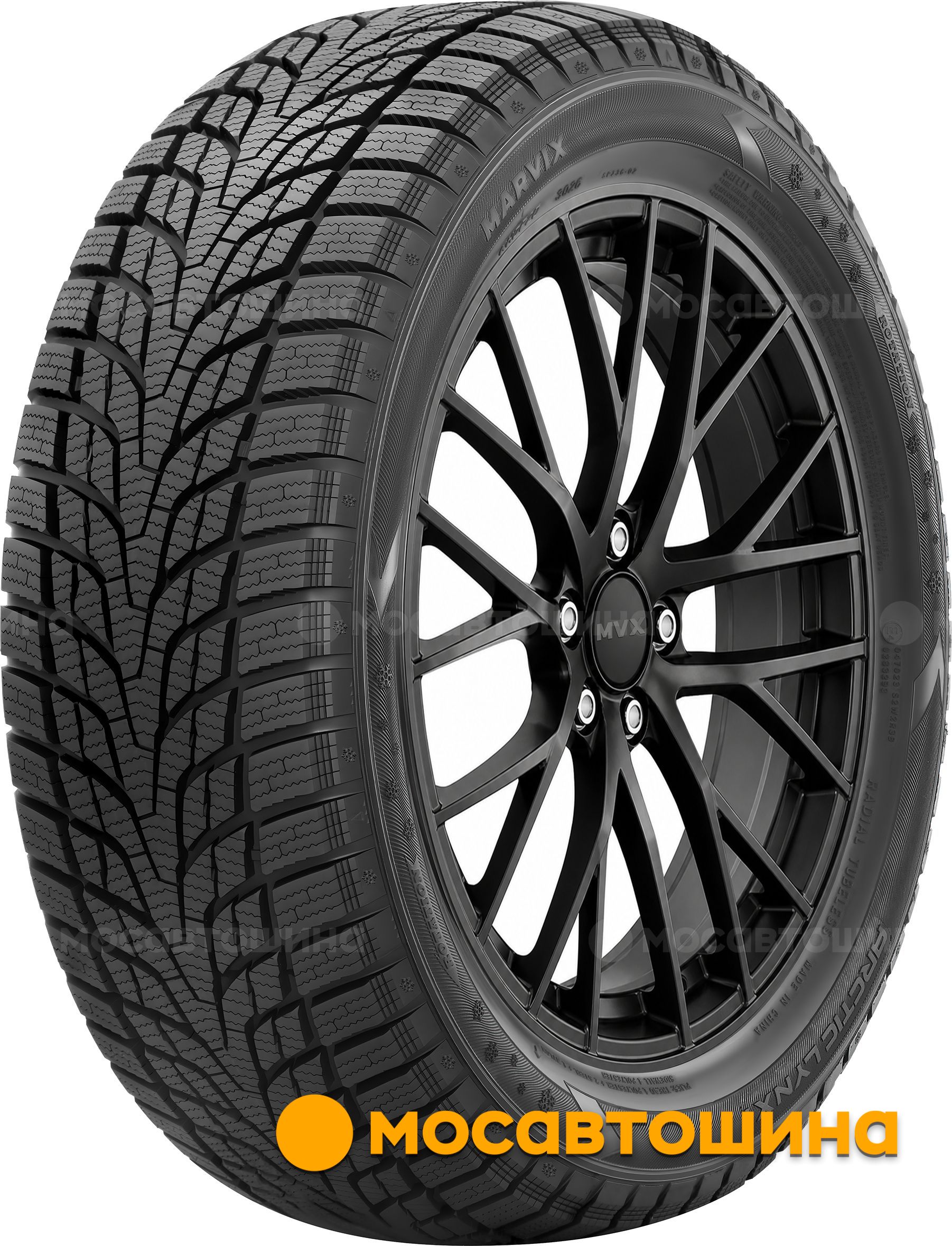
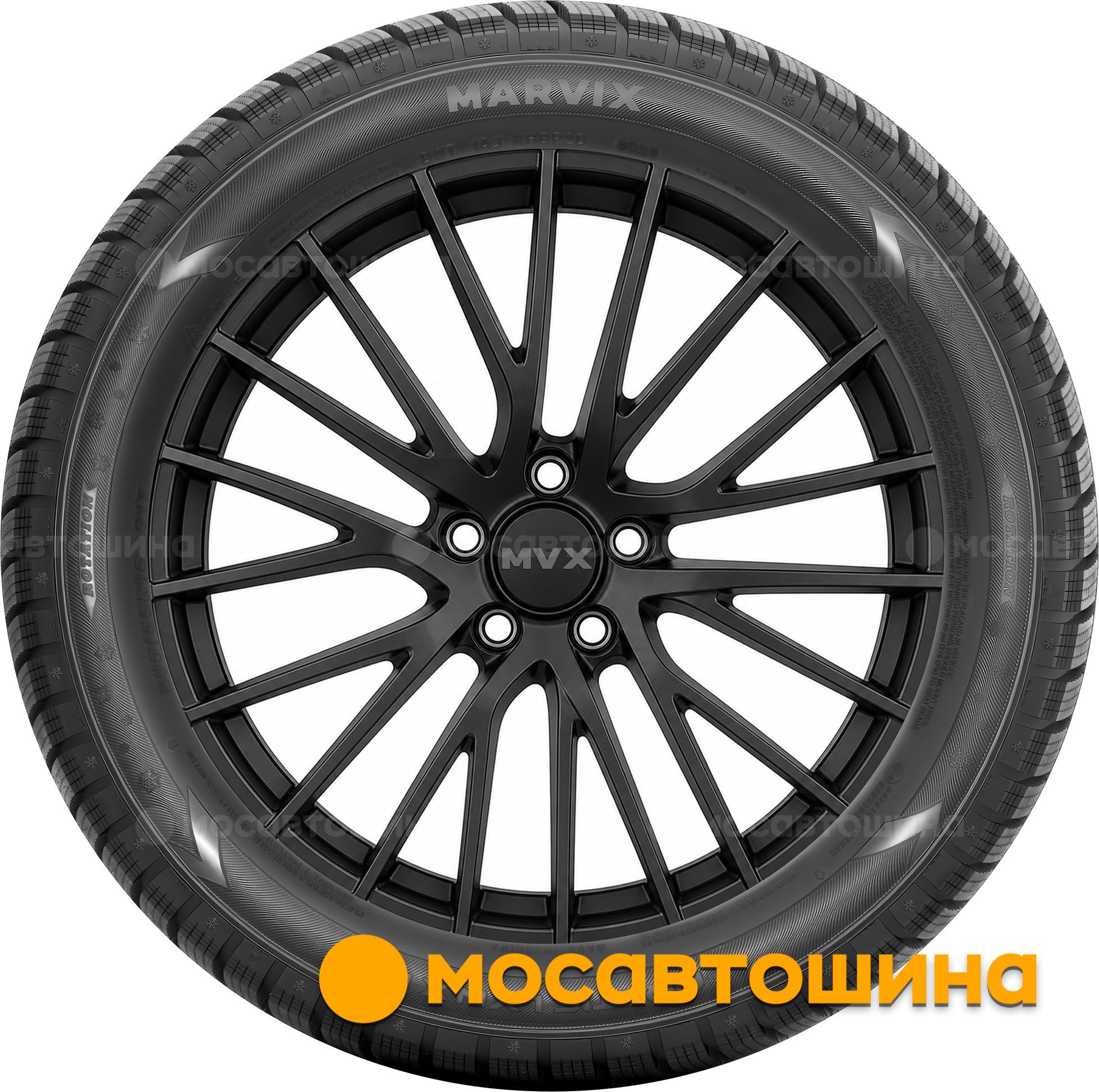
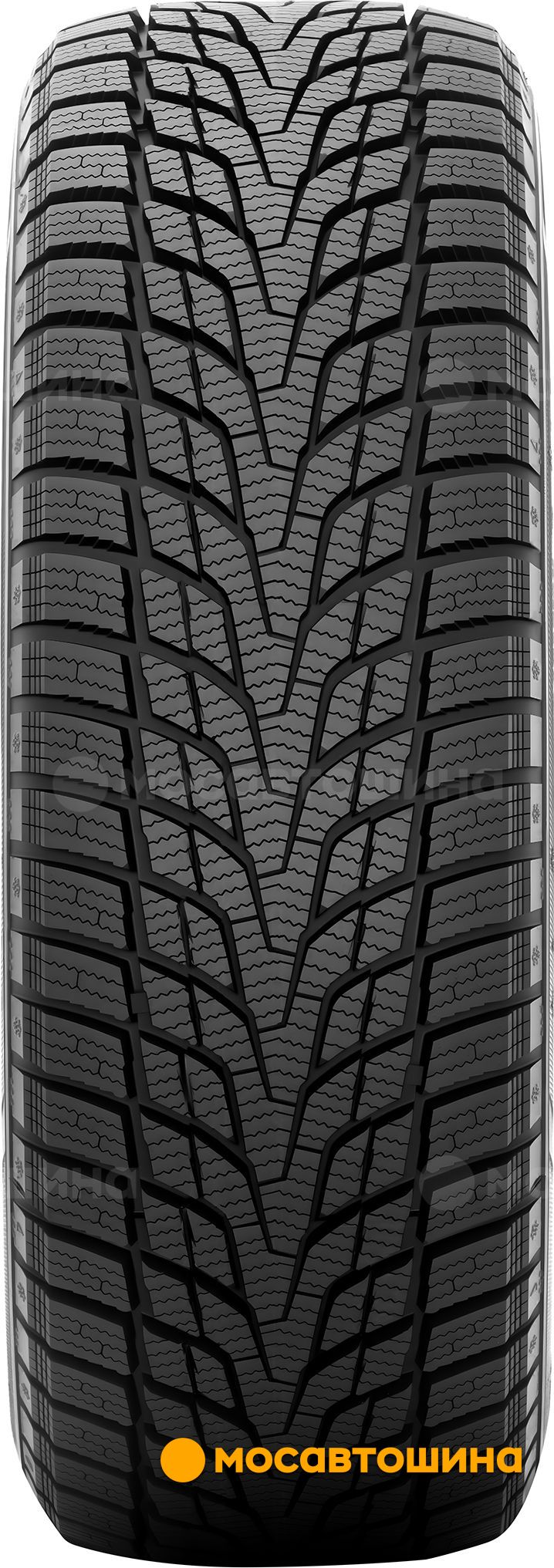
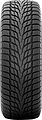
The Marvix Arctic Lynx I is a winter non-studded tyre designed for passenger cars. Its symmetric directional tread features a distinctive V-shaped pattern and numerous wavy sipes. The main working elements are oriented to provide grip on snow, while grooves diverging from the centre ensure pathways for water and slush evacuation.
Directional V-shaped pattern
Angled blocks converge at the tyre's longitudinal axis, forming a sequence of arrow-like elements. Their edges are oriented at various angles to the direction of travel, giving the tread multiple biting edges for acceleration and braking on snow. Closely spaced peaks of the central blocks create a stable support in the middle of the tread, helping maintain straight-line stability.
Grooves leading to shoulder areas
Diagonal channels spread from the tread centre towards its lateral edges. In the shoulder zones, they transition into transverse gaps between blocks. This design allows water and melting snow to exit the contact patch, while branches between adjacent rows connect separate sections of the drainage system. This helps the tread perform effectively on mixed winter road conditions, where snow-covered sections alternate with wet asphalt.
Wavy sipes across the entire width
The surface of the tread blocks is covered with thin, wavy sipes. When in contact with the road, their edges supplement the larger edges of the main grooves, increasing the number of contact points with snow. The sipes are located both in the center and at the edges of the tread: gripping elements remain effective during straight-line driving and when load shifts occur in turns.
Large shoulder blocks
The shoulder zones consist of wide blocks with a relatively smooth outer boundary. They provide support areas to withstand lateral forces during lane changes and cornering. The transverse grooves between them perform two tasks simultaneously: they continue to channel water toward the tyre edges and form additional biting edges for driving on snow.
Key features of Marvix Arctic Lynx I
- winter non-studded tyre model for passenger cars;
- directional V-shaped tread pattern with angled gripping edges;
- diverging grooves for efficient water and slush evacuation;
- wave-shaped sipes in central and shoulder blocks;
- wide shoulder elements for enhanced stability during maneuvering.
 Enlarge
 Enlarge
 Enlarge
 КИТАЙ
