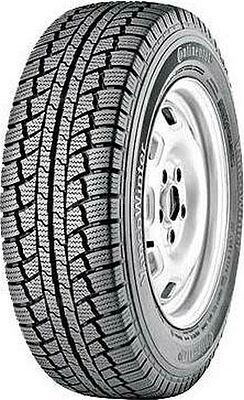
The Continental VancoWinter winter tire is ideally suited for use on light trucks and vans, for which it was specially designed. In addition to the traditional operating properties of commercial models, it demonstrates excellent traction on any winter roads. This is due to the use in its design of experience gained in the creation of conventional passenger car tires.
Two longitudinal ribs in the center
One of the main features of the tread of this tire is the design of its central part. It contains two longitudinal ribs separated by a wide drainage groove. The combination of such design features gives these tread elements multifunctionality. Due to the fact that the longitudinal ribs are spaced at a great distance from each other and have increased stiffness, they optimize the distribution of load on the contact patch, which, on the one hand, increases the stability of the traction properties, and on the other hand, reduces fuel consumption and improves resistance to uneven wear. In addition, these two ribs allow the tire to demonstrate reliability at high speeds, as well as quickness and accuracy in response to steering wheel turns when maneuvering.
Excellent braking performance
In the development of this model, particular attention was paid by German tire makers to ensuring maximum efficiency when braking, especially on slippery surfaces. It is for this reason that there are several thousand lamellas on its tread. All these numerous elements are located almost perpendicular to the direction of movement. It is for this reason that they demonstrate the greatest efficiency when braking. Due to the small height of the engagement edges formed by them, as well as their large number, it was possible to significantly reduce the length of the braking distance, primarily on ice, rolled snow, and wet asphalt.
Main features of Continental VancoWinter
- a separate design of a double longitudinal rib in the center improves the stability of the tire at high speeds, as well as facilitates maneuverability, reduces fuel consumption, and increases the resistance of the tread to uneven wear;
- several thousand transversely arranged lamellas reduce the length of the braking distance, especially on ice, rolled snow, and wet asphalt.
 Enlarge
 РОССИЯ