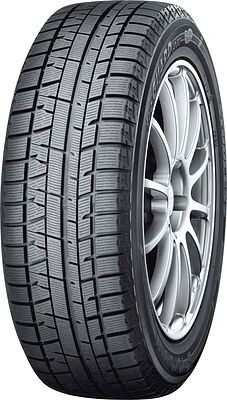
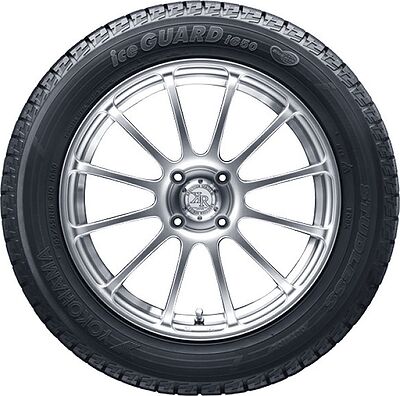
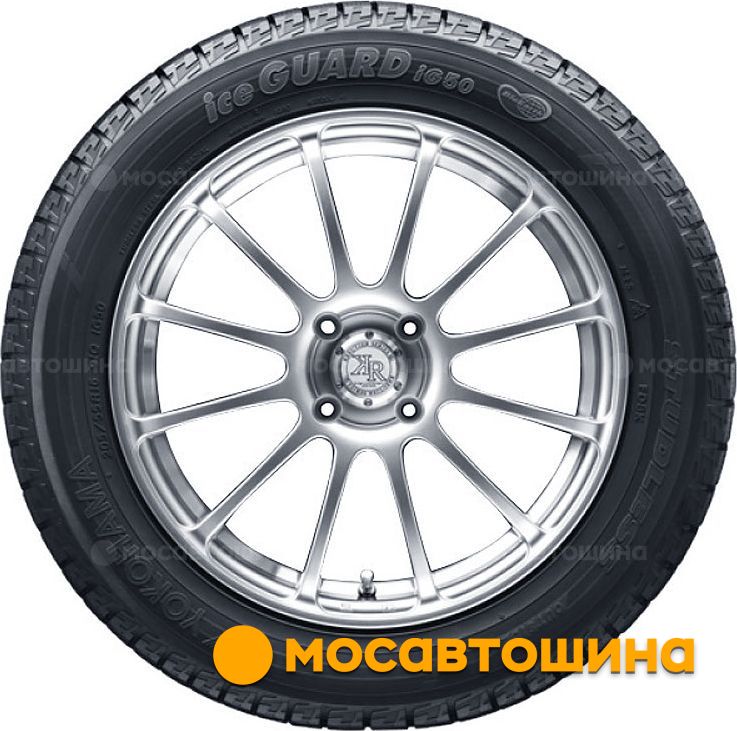
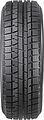
Despite its very recent appearance on the domestic market, the Yokohama Ice Guard IG50+ winter tire cannot be called a novelty, as it is an improved version of the same-name model released several years ago. Compared to the "original", it differs in improved ice traction characteristics, as well as increased fuel efficiency. At the same time, its tread pattern has remained the same. All changes affected the internal components of the tire's design.
Improved rubber compound
Like the previous model, the tread of this tire has the ability to absorb water formed as a result of its friction on ice. This is provided by numerous micropores that, when in contact with the road surface, behave in exactly the same way as a conventional pump. The insufficient effectiveness of this technology in the predecessor was explained by the uneven distribution of these micropores in the tread. The use of a new version of the absorbing element White Gel, as well as the application of new technologies in the manufacture of the rubber compound, made it possible to almost completely eliminate this drawback. Moreover, the Japanese tire makers were able to significantly increase the number of micropores in the tread. The ultimate result of all these improvements was a 7% reduction in the braking distance on ice.
Two-layer tread
Another difference between the version with the "+" sign in the name from the previous tire Yokohama Ice Guard IG50+ is the tread design. It is still two-layered, but the characteristics of both layers have been significantly changed. In particular, the inner part of the tread is made of an even more rigid compound. In addition, it is characterized by reduced heating during movement. All these changes were aimed at maximizing the reduction of rolling resistance. At the same time, the Japanese tire makers were able to significantly improve a number of other operational properties, ranging from handling to resistance to premature wear.
In turn, the outer layer of the tread is made of a compound that can maintain elasticity at an optimal level in a very wide temperature range. Such physicochemical properties are achieved due to the presence of an additional amount of silica and special polymeric compounds in its composition, which give the compound increased homogeneity and ensure the integrity of the tread during high-temperature exposure.
Stability of traction properties in any conditions
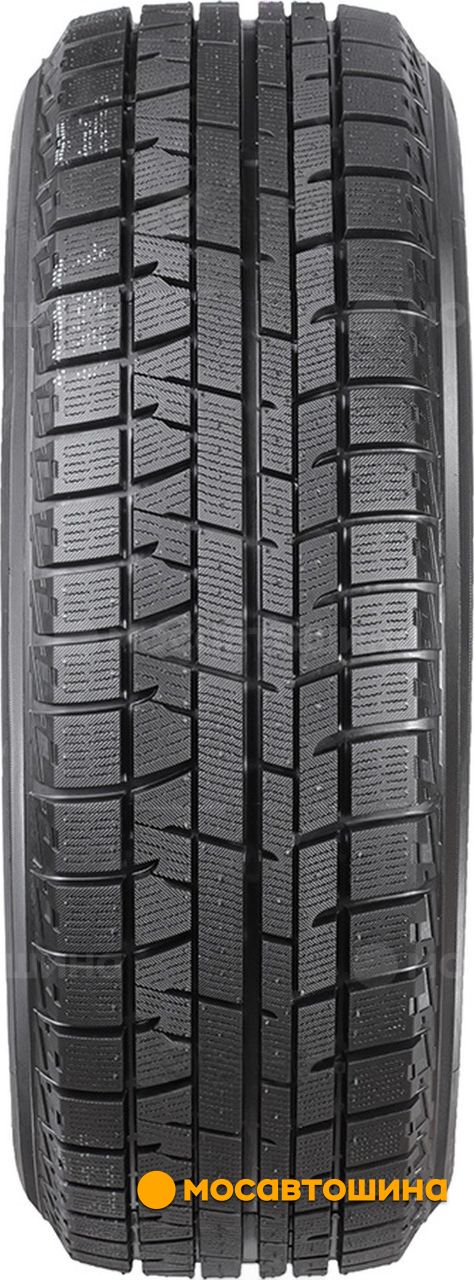
Another characteristic feature of this model is the stability of traction characteristics in any road and weather conditions. This is achieved due to the ability of the tire to maintain the shape and size of the contact patch unchanged, the configuration of which is close to square. This feature appeared due to the application of a whole complex of technical solutions. The main one is the optimized tread profile, which is flat in the central part and has a small radius in the shoulder zones. In addition, the Japanese tire makers strengthened the breaker with an additional synthetic cord, which made it even more rigid and resistant to dynamic deformation. It is also worth noting the increased stiffness of the lower "basic" layer of the tread, which further increased the stability of the contact patch to deformative changes. The ultimate result of all these technical solutions was the exceptional stability of traction characteristics in any conditions.
Increased number of traction edges
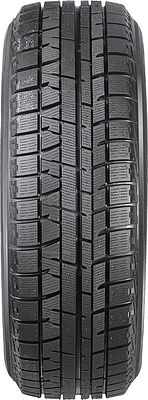
Along with the water-absorbing rubber compound of the tread, good traction of this tire on ice is provided by an increased number of traction edges. In total, there are more than 5 thousand of them, and the majority are formed not by blocks, but by lamellas cut into them. These miniature elements, due to their large number, completely neutralize the absence of studs in this tire, allowing movement on winter roads not only safely but also with a high level of acoustic comfort.
At the same time, the Japanese tire makers were able to increase the number of lamellas without compromising other operational properties, primarily handling. They used a wavy profile of their walls to limit the mobility of the blocks, which, in turn, gives them rigidity. As a result, the tire demonstrates not only reliable traction but also good handling on ice.
Main features of the Yokohama Ice Guard IG50+ tire
- Optimized rubber compound with improved ability to absorb water from the road surface, providing more reliable traction properties on ice and rolled snow;
- A more rigid lower layer of the tread improves handling, reduces fuel consumption, and increases the service life of the tire;
- Optimal elasticity in a very wide temperature range due to the increased silica content and special polymeric compounds in the composition of the rubber compound of the outer layer of the tread;
- The breaker reinforced with an additional synthetic cord and the multi-radius tread profile give the tire excellent stability and predictability of behavior, despite continuously changing road and weather conditions;
- An increased number of traction edges, achieved by increasing the density of lamellation, reduces the braking distance on ice.
 Enlarge
  Enlarge
  Enlarge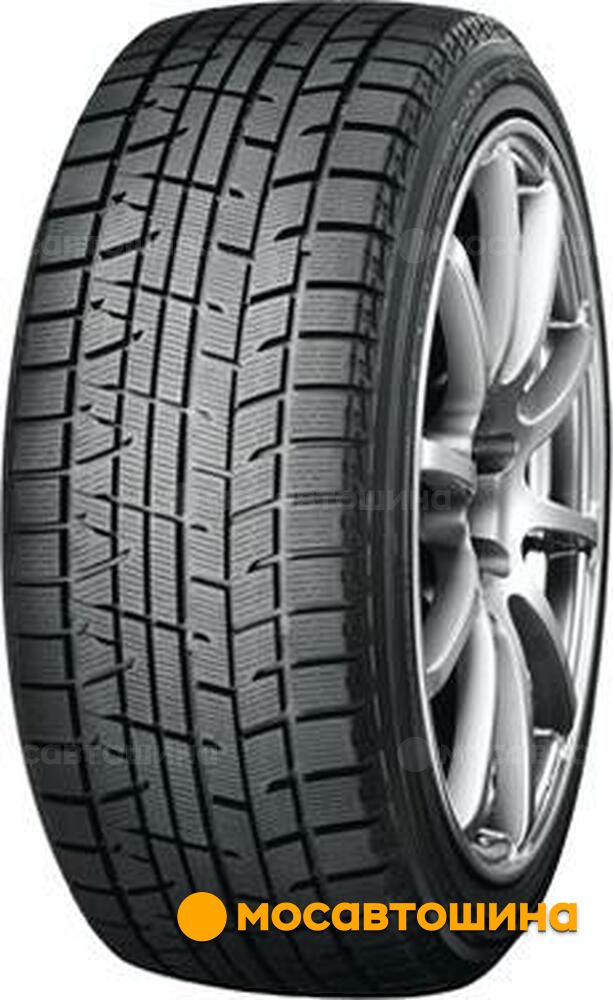
 РОССИЯ
Approximate calculation.
Credit amount from 2 000 to 300 000 rubles.
Initial payment from 0% to 90%.
Loan term from 3 to 36 months.
The interest rate is calculated individually.
Read more