Despite the extremely small fame of the Ceat Formula Winter non-studded winter tire manufacturer, it has quite decent operational characteristics. They are provided by a thought-out design, almost all solutions of which can be found in modern tires from leading world brands.
Composite design of the central part of the tread pattern
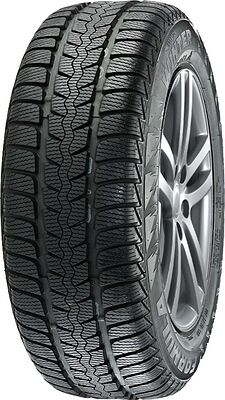
One of the characteristic features of the tread pattern of this model is the structure of its central part. It contains three longitudinal ribs, spaced at a minimum distance from each other, while differing in design. The main advantage of such a design is to provide maximum contact patch sizes and two longitudinal drainage grooves that separate the central part of the tread from its shoulder zones. Another significant advantage of this design is reduced rolling resistance and directional stability.
A large number of massive blocks in the shoulder areas
In contrast to the central part, the shoulder areas of the Ceat Formula Winter are made in an open design, containing a large number of very massive blocks, the shape of which is close to rectangular. Due to the transverse arrangement of these tread elements and resistance to deformation, the tire demonstrates increased stability in turns and excellent efficiency when braking, especially on slippery roads.
Excellent grip on ice
As mentioned earlier, this model is non-studded. The absence of studs was compensated by the placement of a huge number of wavy lamellas on the tread. During movement, these tread elements form a countless number of sharp edges that easily penetrate the water film on the surface of the ice, allowing the tire to grip it and thus ensuring confident and reliable behavior on this type of road surface.
Main features of the Ceat Formula Winter tire
- the original V-shaped design of the symmetric directional tread pattern provides excellent grip on any winter surface, regardless of road and weather conditions;
- excellent directional stability, low rolling resistance due to the composite design of the central part, which contains three longitudinal ribs, spaced at a minimum distance from each other;
- increased stability in turns, short braking distance due to massive transversely arranged rectangular blocks in the shoulder areas of the tread.
 Enlarge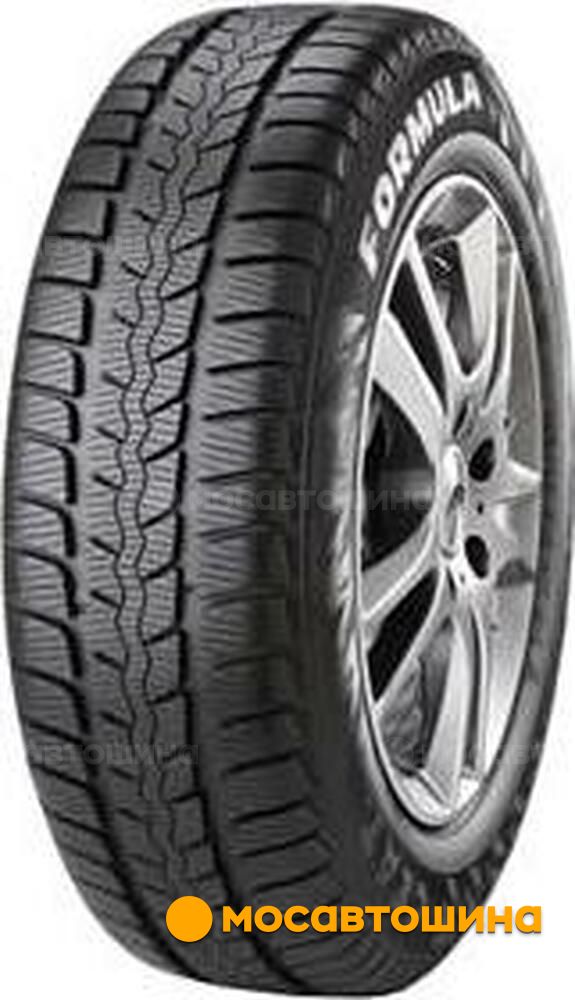
 ИНДИЯ
ИНДИЯ